 |
| MS Minecraft Certified Trainer badge |
Reading my Flipboard earlier this month, I ran across a fascinating twitter exchange between Stephen Reid and Tom Bennett. You can find source materials at the bottom of my blog entry. Curious, I decided to dig in and explore some more. As I reflected more and more, I realized that it was all too simple to label gaming a gimmick. And, when I think of Minecraft as a learning platform, it is NOT about capitalizing on student motivation. Rather, it involves asking the same question that we should ask of any technology seeking entrance into our children’s learning spaces–how does it enable learners to accomplish what had previously been impossible?
Gimmick: a trick or device intended to attract attention, publicity, or business. an ingenious or novel device, scheme, or stratagem, especially one designed to attract attention or increase appeal. (Source)
 |
| See full-size chart and slideshow this was clipped from. |
Respectful Discourse
I don’t want to be disrespectful. Let’s have fun exploring inconsistencies and ideas! My purpose for writing this blog entry is to explore my thoughts about Tom Bennett’s points and share them with the world. If they are crazy wrong, then please push back in the comments or leave a link to your thoughts in your blog or podcast.
Classroom Instruction That Works
As I pondered that question–achieving the impossible–I recalled a chart (shown above) featuring Robert Marzano’s Classroom Instruction that Works and how each of Marzano’s Strategies could enhance student achievement by a certain number of percentile points. Marzano’s points can be organized in the following way and I’m excited about the possibilities:
Classroom Instruction That Works describes nine categories of instructional strategies that have a high likelihood of improving student achievement. Source: ASCD’s Classroom Instruction that Works with English Language Learners.
I. Creating the Environment for Learning
- Setting Objectives and Providing Feedback
- Reinforcing Effort and Providing Recognition
- Cooperative Learning
II. Helping Students Develop Understanding
- Cues, Questions, and Advance Organizers
- Nonlinguistic Representations
- Summarizing and Note Taking
- Assigning Homework and Providing Practice
III. Helping Students Extend and Apply Knowledge
- Identifying Similarities and Differences
- Generating and Testing Hypotheses
Gimmicks in School
What I liked about Bennett’s gimmick points was these points:
- Minecraft will get in the way of children learning.
- We need to drain the swamp of gimmicks and keep schools cost effective.
- Strip down learning to essential elements.

Check out Minecraft Refugee Crisis! Have you seen the Empathy Projects? Or, how about the Periodic Table of Minecraft?
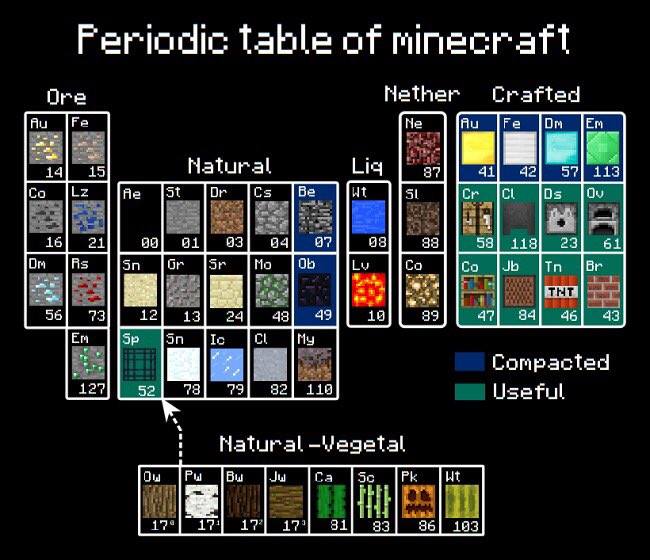
While learning aligned to the curriculum may not be taking place, it is clear that gaming engages students in a way that brings them to the table. Students are hungry for a different classroom experience. Could Minecraft make that possible?
 |
| Love this letter to Joel Levin. read the backstory online. The question it prompts for me is, “Is Minecraft making learning possible, or is it our fear of independent learning getting in the way of children’s learning?” |
Kiang’s students start with a text, such as from Harry Potter, then build a structure that externalizes their understanding of the text. In this way, students don’t go to Minecraft to learn, but rather, to show their learning.

Students, then, are using Minecraft as a way to externalize their understanding. To accomplish this, they have to distill information into “concise, synthesized form and focus on important points.” I was immediately reminded of my work with second language learners and helping them de-construct fairy tales. What’s more, in Minecraft, students can also develop command blocks that help them arrange events as if they were directors and film crew, all rolled into one, to create what a video tales.
Percentile Gain: 27
Note: If you’re interested in seeing more connections between Minecraft to Classroom Instruction That Works, be sure to grab a copy of an upcoming issue of TCEA’s TechEdge magazine. Or wait a few months and I’ll get around to posting the full version.

#2 – Drain the swamp of gimmicks and keep school cost effective.
The question, I suppose Tom Bennett is asking, is, “Should government or public school system (taxpayers) pay for fancy experiments that may go nowhere?” The answer is, “Absolutely!” Take a look at these Minecraft creations.
Think of how expensive it is to get technology into the hands of American citizens. Our treasure, our sweat and tears should be spent on enhancing the learning and skills of every American. This is especially true as India and China, two colossal nations, outnumber us and are siphoning jobs away. Good for them, but their efforts should spur us to greatness. We need to deploy as gimmicks as possible in today’s schools, and see which fail, which succeed, then focus our efforts. The tremendous expense won’t be in taxpayer funding spent without direct result, but rather in minds that lie fallow because they had to rely on paper and pencil approaches to education.
Check out this virtual 3D printer in Minecraft:
“Sometimes teachers get so wrapped up in the little stuff,” says Jean Etheridge (Education World), “that we need to be reminded of where we are going.” Assuming a minimalist approaches makes sense (of course, it does, right?). Who can’t remember a child with nothing to play with, would invent a game with an iron pot and metal spoon? The question is, as we strip down to essentials, how can we provide the right stuff?
This Digital Trends (@digitaltrends) article points out, “Building their own gadgets can be enormously appealing for kids, but it’s a lot easier to dismantle something than it is to put it together.” I can think of no better gift for a child than Minecraft.
- Young learners – Minecraft subscription for their mobile device
- Minecraft – A real 3D printer along with the mods
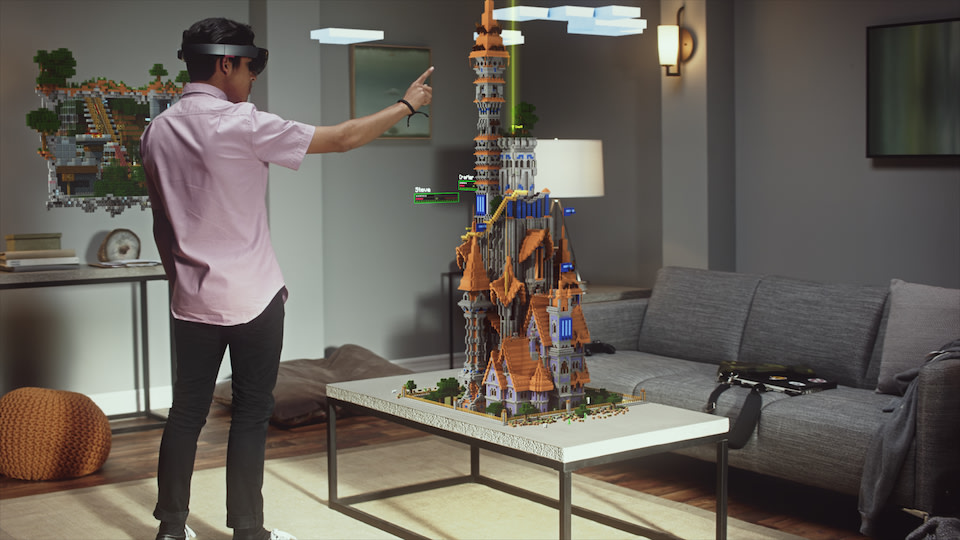
- Minecraft & controlling virtual space (Hololens)
With the HoloLens headset, you can visualize and manipulate digital images overlaid on the physical world. One of its most impressive showings to date was at E3 in Los Angeles this year, where Microsoft demoed an AR version of Minecraft. The player was able to project the game onto a wall and later place the entire world on a coffee table. (Source)
A sandbox game such as Minecraft…is part of children’s media culture and therefore should [be a] part of their educational development as literature. Source: Dean Groom
|
| Disclaimer: Miguel Guhlin is a MS Minecraft Certified Trainer (that’s my badge above) for the TCEA.org. And, yes, he is available to facilitate professional learning blending Minecraft. Sessions available in your area. That said, this blog entry is not approved or affiliated with TCEA, Microsoft, or anyone else. It’s my own mess. 😉 Find out more online at http://ly.tcea.org/jointceamie |
Another point to share…I titled this blog entry, Classroom Learning that Works. Probably because “instruction” is so often perpetrated on our children, and they learn in spite of it. Learning implies a bit of self-determination. We probably have to meet in the middle and agree to blend approaches. After all, what we often begin doing because we must may often result in something that we learn to love, and eventually, love to learn.
MyNotes on @ImmersiveMind, Stephen Reid, Radio Interview
- Based on this interview with Stephen Reid; Listen to it
- Think of Minecraft as a Learning platform or modeling software
- All children are individuals. If they can be reached on an individual level, all the better.
- Some would say this is gimmicky, displacement learning. This is a perspective if you come at things from a gaming side.
- Here is another tool that good creative teachers can use.
- Minecraft has made a staggering amount of it.
- Schools pay for pencils and iPads and whiteboards.
- There isn’t a lucrative education market.
- Tom Bennett calls Minecraft a “gimmick.”
- He says, “I am not a fan of Minecraft in lessons. This smacks to me of another gimmick which will get in the way of children actually learning. Removing these gimmicky aspects of education is one of the biggest tasks facing us as teachers. We need to drain the swamp of gimmicks.”
- “I would say to teachers: ‘Do you need to use this game or is there something that is cheaper and better — like books?’ By offering a game and a gimmicky way of learning a subject, you run a real risk of children focusing on the wrong thing.”
Discover more from Another Think Coming
Subscribe to get the latest posts sent to your email.
 Another Think Coming