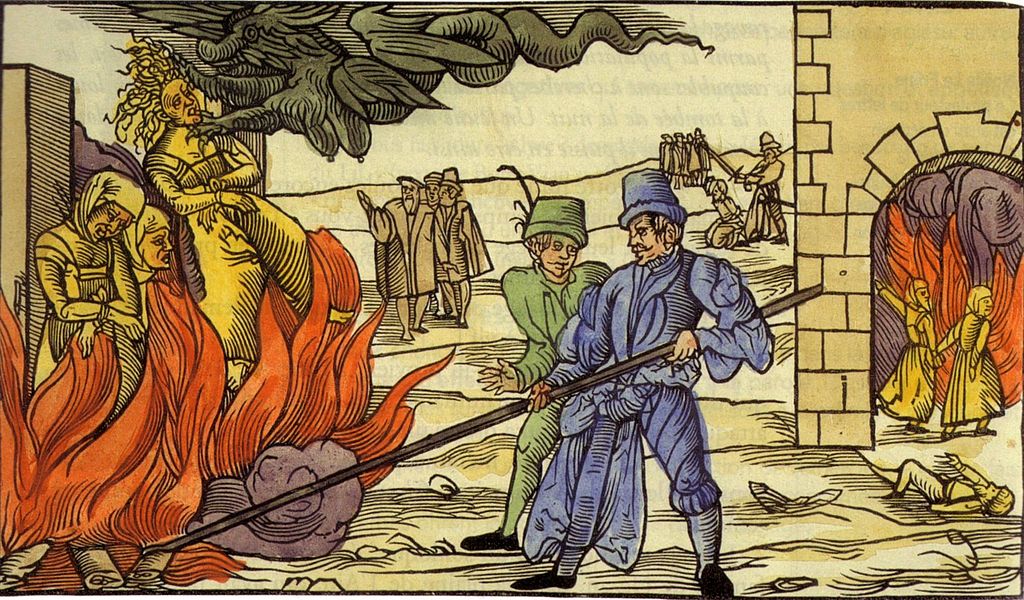
I have a story to share with you that I’m not proud of. It may help some of you understand my series of EdTech Heresies blog posts. Some of my colleagues may want to burn me at the stake for writing them. I beg your indulgence (sorry, couldn’t resist a Catholic joke).
A Changing Understanding
What we do in classrooms today must be about what works, not what we wish would work. That does not mean excluding technology, but it DOES mean changing our narrative and finding ways to make deeper connections to research in our use of technology.
My Story
A few years ago, a few colleagues introduced me to the work of Mike Schmoker, Robert Marzano (in addition to the 9 strategies he’s known for). I found myself well-insulated by my belief system.
That belief system said, “Technology-enhanced learning is the way to go. School systems, curriculum teams are failing our children because they aren’t blending technology. You can do this AND that. Technology in schools is additive, not subtractive.”
I remember seeing how a principal was running a PLC at her campus, capturing lesson plans, and now I realize, “Wow, she was doing exactly what Schmoker recommends in his book, Results Now.”
She was ruthless about getting rid of ineffective instructional strategies (and many teachers left after the first year of her reign). Unfortunately, she was later promoted to district level and, no doubt, her efforts continued district-wide. I was shocked at her results and how people felt about the changes (they left or complained). I focused on the latter, less on the former. Children learned and showed academic growth.
Since I’ve been reading that book, I realize how much of what she did flowed from or was mirrored in that book.
And, it makes me ask, “What else did I miss?”
While I still believe technology adds value to teaching, learning and leading, I missed the message my curriculum colleagues were sharing. I missed the fact that teaching reading, writing to students in early grades wasn’t happening. Instead, educators were spending time playing with other approaches, some of which included technology.
This was driven home with a conversation I had some time in September that has stuck with me.
Face of the Research
An elementary school teacher said to me this week the following, and I felt a bit of shame. This teacher stated that growth among her children has been consistent every year for many years at a time, but that the rest of her grade level, kids stayed at the same level or barely grew academically. This teacher used little technology (I had to check), relying on effective, age-appropriate instructional strategies.
“In my grade level, I’m the only teacher who’s teaching in line with the curriculum. Some of the other teachers are weeks behind already, and have been doing other things like getting kids logged into Seesaw and Google Classroom. They’ve also been doing other activities [non-instructional but fun].”
“Today, the principal called them on it. She caught them not teaching according to their lesson plans, found out that some of their kids can’t read, and that they don’t have a plan for helping those kids.”
“I felt vindicated that after so many years, someone finally called these teachers out…not to get them in trouble but to make sure they started working with those kids. Teaching is HARD work. “
As we conversed back-n-forth, this story and the follow-up conversations put a face on the research I’ve been reading these past few weeks. So, I thought I’d share my list of books. Perhaps they will serve as kindling. Or, they may spur you to question everything and try to find a better way ahead.
On A Journey of Learning
I am on a journey of learning and discovery that is challenging my beliefs, what I know. I intend to write about it here. Will what I write today change over time? Certainly. After all, I’m an edublogger. The purpose of being transparent should be obvious, and I have learned so much already. You can follow my voyage of discovery via the EdTechHeresy tag on this blog.
If you are one of the faithful “technology integration at all costs,” then recognize someone who is on the path of doubt and uncertainty. And, that’s OK.
Learning is messy.
Here’s my reading list…I’ll be back to add to it from time to time.
My Reading List
Here’s my reading list, and I’m looking to add a few new items. A part of me feels like it’s catching up to what school leaders have been reading and saying over the last few years. Now that I’m reading this, I understand their sense of urgency in a different way and how they have managed to push what I have enjoyed for so many years, instructional technology approaches, out. Instead, their focus has been on the more T1/T2 uses of technology.
I have felt compelled to read these books, having starting with John Hattie as a result of my day job, then expanded to consider the other authors.
Note: Books with asterisks have already been read,
This list has been moved. I decided to give the list its own page (click here to see it).
While many of the “effective instructional strategies” listed in these books do not involve technology, they can be adapted. The concern is similar to what James says in this blog entry. Read it carefully, letting go of any pro-tech bias you may have.
We may argue that more training will address this, the research Schmoker presents frames what happens in the classroom in a stark manner. Simply, we change what we’re doing and focus on effective instructional strategies or children continue to leave at the end of the year unprepared.
Discover more from Another Think Coming
Subscribe to get the latest posts sent to your email.
 Another Think Coming