Disclaimer: This blog entry is all over the place. Ideally, I would have written my notes and responses to each text then slowly woven the ideas together in a masterful blog entry. Well, that didn’t happen. I didn’t have time, so instead, I dumped it all and tried to fit the pieces together as I was seeing them, perhaps, probably, incorrectly. Enjoy the journey.
Whose Fault Is It, Anyway?
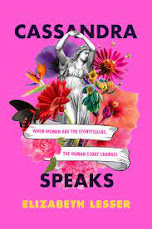
Of course, reading this book while watching the evening news, the Taliban’s treatment of their countrywomen, I couldn’t help but see Lesser’s words playing out again and again with every bit of news.
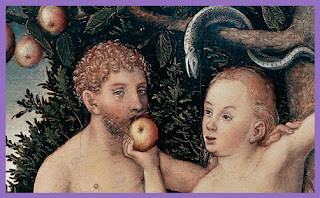
“Both Eve and Pandora bring death into the world. This is a curious reversal of the fact that women bring life into the world, but it says something about the meaning of “woman” within a religion dominated by male gods.”
False Stories

The story of Old Testament paradise, a man-made creation according to any Jewish rabbi you may speak to rather than the literal account of how things came to be, is one that has many problems with it. As Greg Epstein pointed out in his book, Good Without God, the problem is that we started at paradise and then went downhill from there.
- The Humpty Dumpty mentality says that the world–be it our personal lives or society as a whole or whatever–needs to be repaired.
- Things were once perfect and round and bright and shiny like an egg until they fell and broke into a million pieces, and now it’s our job to reassemble all the pieces.
So many stories impart the same themes: Men are the morally pure and noble. Women are the ones who succumb to evil and tempt the man.
Ceasing to believe in God or religion becomes a truly meaningful, worthwhile position when it also means ceasing to live in the past. We move on. We focus not on who wronged us, but on what we can do, what we can build, how we can grow, to make our lives better.
Equity is “reducing the predictability of who succeeds and who fails, interruptive reproductive practices that negatively impact struggling students of color, and cultivating the unique gifts and talents of every student,” according to the National Equity Project.
According to the United Nations Food and Agriculture Organisation (FAO), women contribute more than 50 percent of food produced globally and make up over 40 percent of the agricultural labour force. But while women keep families fed and nourished, they are disadvantaged in accessing critical resources for food production compared to men. They lack access to land, inputs, extension, banking and financial services.“Until we end the discrimination of women around the globe, I doubt these things will change even though women are in the largest part of the world’s food producers,” said Nierenberg, who co-founded and now heads the global food systems think tank, Food Tank. (Source: Global Issues)
Lies My Teacher Told Me
- Helen Keller was a radical socialist. I had no clue. I even watched the documentary on Helen Keller. I had no idea she wrote books, marched, and supported socialism.
- President Woodrow Wilson was a white supremacist. Wait, what? He was prejudiced against Blacks, and put into effect a variety of policies and programs to hurt various peoples. After reading what Loewen had to say about Wilson, which was excluded, my perspective changed.
I began with Helen Keller because omitting the last sixty-four years of her life exemplifies the sort of culture-serving distortion that will be discussed later in this book. We teach Keller as an ideal, not a real person, to inspire our young people to emulate her. Keller becomes a mythic figure, the “woman who overcame” but for what? There is no content!
Consistent with our American ideolog of individualism, the truncated version of Helen Keller’s story sanitizes a hero, leaving only the virtues of self-help and hard work.Keller herself, while scarcely opposing hard work, explicitly reject this ideology.
“Cuando reclamamos nuestra historia, reclamamos nuestro destino”: When we claim our past, we claim our future. (source: Texas Monthly)
Forget the Alamo
- It was about upholding slavery, not freedom
- Mexican allies were written out of Texas history, an act of ethnic cleansing
- “Mexican American kids can grow up in Texas believing they’re Americans, with the Statue of Liberty and all that, until seventh grade when you were taught, in essence, that if you’re Mexican, your ancestors killed Davy Crockett, that that’s kind of the original sin of the Texas creation myth. It has been used just anecdotally for generations to put down Mexican Americans, a big beefy white guy going up to the little Mexican guy and punching him in the arm and saying, “Remember the Alamo,” that type of thing. (source)
“Telling the truth about the past helps cause justice in the present,” was his guiding principle, he wrote. “Achieving justice in the present helps us tell the truth about the past.” (source)
I didn’t know much about Texas when I moved there for graduate school. In my first or second semester, I took a class in life and literature of the Southwest, and that’s where I first heard about these events along the border in 1915-1918, what Anglos called the Bandit Wars. It involved a series of attacks on ranches and infrastructure that were basically minor.
The result of those attacks was a long series of massacres of Mexican-Americans, or tejanos, all along the Texas border from Brownsville up to West Texas. It was a major part of Texas history… and I’d never heard of it. And that was the seed of the first part of the book. Source: Bustle
When the stories that have glued together a culture lose their potency, things begin to fall apart. But new things rise up. (Source: Elizabeth Lesser, Cassandra Speaks)
Fable Factory: From Murderers to Heroes, Liars to Truthtellers
The heroism and exploits of the Rangers have been portrayed for decades in Broadway plays, dime-store novels, radio dramas and movies and TV shows, most notably “The Lone Ranger.” But in the five years he spent researching the Rangers, Swanson also found a dark side to their story. They burned villages and slaughtered innocents. They committed war crimes, hunted runaway slaves and murdered so many Mexicans and Mexican Americans that they were as feared on the Mexican border as the Ku Klux Klan was in the Deep South. Throughout it all, Swanson writes, the Rangers operated a fable factory to burnish their image as heroic defenders of the innocent. (source: Cult of Glory: The Bold and Brutal History of the Texas Rangers, as cited in NPR).
Toxic positivity: The Garden of Eden?
Toxic positivity is an obsession with positive thinking. It is the belief that people should put a positive spin on all experiences, even those that are profoundly tragic.
Culturally Responsive Teaching
The first step in being culturally responsive is to do an internal audit—yes, you read that right, an audit: truly digging deep inside of ourselves and recognizing and naming those things we don’t want to look at or talk about. The experiences we’ve had along our journey in life have formed stereotypes which have then turned into implicit bias. These unintentional, unconscious attitudes impact how we relate to our students and their parents, and how we choose curriculum, assess learning, and plan lessons.
Culturally responsive teachers also have to be aware of the sociopolitical context schools operate in and dare to go against that status quo. Students need to understand the system that is working around them in schools. Give them context and don’t be afraid to talk about the tough subjects that may not be addressed in your school.
This sociopolitical context refers to contemporary ideologies, regulations, policies, conditions, laws, practices, traditions, and events that define America’s education. … The sociopolitical context affects every society due to the connection between democracy and public schools…At an individual level, teachers, school leaders, and other educators are largely influenced by the ideologies and beliefs in society. They act on them whether they believe them or not. Racism and other biases manifest themselves through school policies and through school staff practices and decisions. (source)
Update: I watched the video. Wow. I’m going to go watch it again.
Discover more from Another Think Coming
Subscribe to get the latest posts sent to your email.
 Another Think Coming