We’ve never taught critical thinking as well as our students needed. You may have, but given my own experiences with “critical thinking” as a student, I can say I barely spent time on it. Something to know about, rather than something to do. Life teaches you a rough form of critical thinking processes, you need it to survive the panic pundits, a rough approach that makes you skeptical of all.
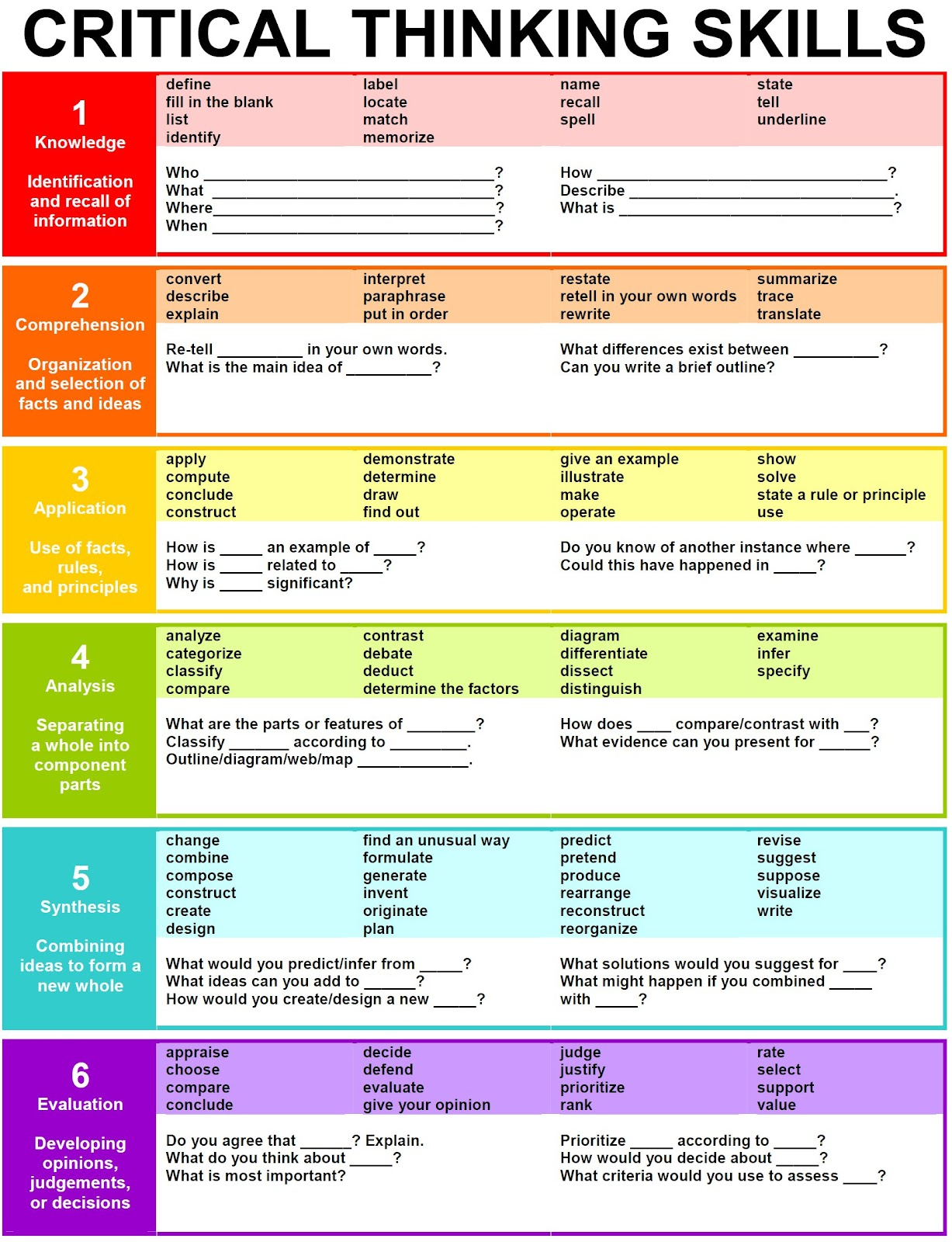 |
| Source: ResearchGate posts |
Wait, I Had a Too Simple Idea
- Identify what is meant by critical thinking in each domain. Be specific. What tasks showing critical thinking should a high school graduate be able to do in mathematics, history, and other subjects?
- Identify the domain content that students must know. What knowledge is essential to the type of thinking you want your students to be able to do?
- Select the best sequence in which to learn the skills. The right preparation makes new learning easier.
- Decide which skills should be revisited across years. Plan on 3-5 years of practice, and it should be coordinated over the years.
How To Teach Critical Thinking
- Identify the simplest tasks as problem for students to solve.
- Engage in prediction prior to reading a text or doing something, have students write it down, then revisit afterwards to check prediction.
- Compare and contrast anything and everything.
- Categorize…sort sets of objects and be open to each students’ ideas. It is the process of thinking and self-questioning that is valuable.
- Encourage creativity, including having students make a plan to accomplish something, test it, and come up with a solution.
- Try to engage students in critical thinking in different content areas.
- I – Identify the Issue or Problem: What is the real question we are facing?
- D – Define the Context: What are the facts that frame this issue or problem?
- E – Enumerate the Choices: What are plausible options (solutions)?
- A – Analyze Options: What is the best course of action?
- L – List Reasons Explicitly: Why is this the best course of action?
- S – Self-Correct: Look at it all again…What did we miss?
Social Media Problem-Solving
As a college professor and former K-12 teacher, I am worried about the pandemic’s impact on an entire generation’s ability to navigate adulthood with a finely tuned capacity to discern fact from fantasy and science from conspiracy. In other words, I’m concerned about what will become of our children’s ability to think, particularly as teachers’ freedom to teach about real-world and contentious issues is increasingly threatened by circumstances beyond their control. Source: Dr. Christina Wyman, Afraid to Teach Critical Thinking via Salon.com
Research suggests that explicit instruction in critical thinking may make kids smarter, more independent, and more creative. The most effective way to foster critical thinking skills is to teach those skills. Explicitly. The teaching approach with the strongest empirical support was explicit instruction–i.e., teaching kids specific ways to reason and solve problems.(Abrami et al 2008 as cited in Parenting Science).
Gouveia e Melo…has logged the most hours at sea of any serving Portuguese naval officer.He is unapologetic about couching the vaccine rollout as a battle and has worn combat fatigues ever since taking over the effort. He said he wanted to send a message that it was a call to arms.“This uniform…was symbolic for people to comprehend the need to roll up our sleeves and fight this virus,” he says. (source)
“Question everything. Myself, everything you read, everything you hear. Fact-check, fact-check, fact-check. Don’t believe anything if it makes you comfortable.”
Discover more from Another Think Coming
Subscribe to get the latest posts sent to your email.
 Another Think Coming