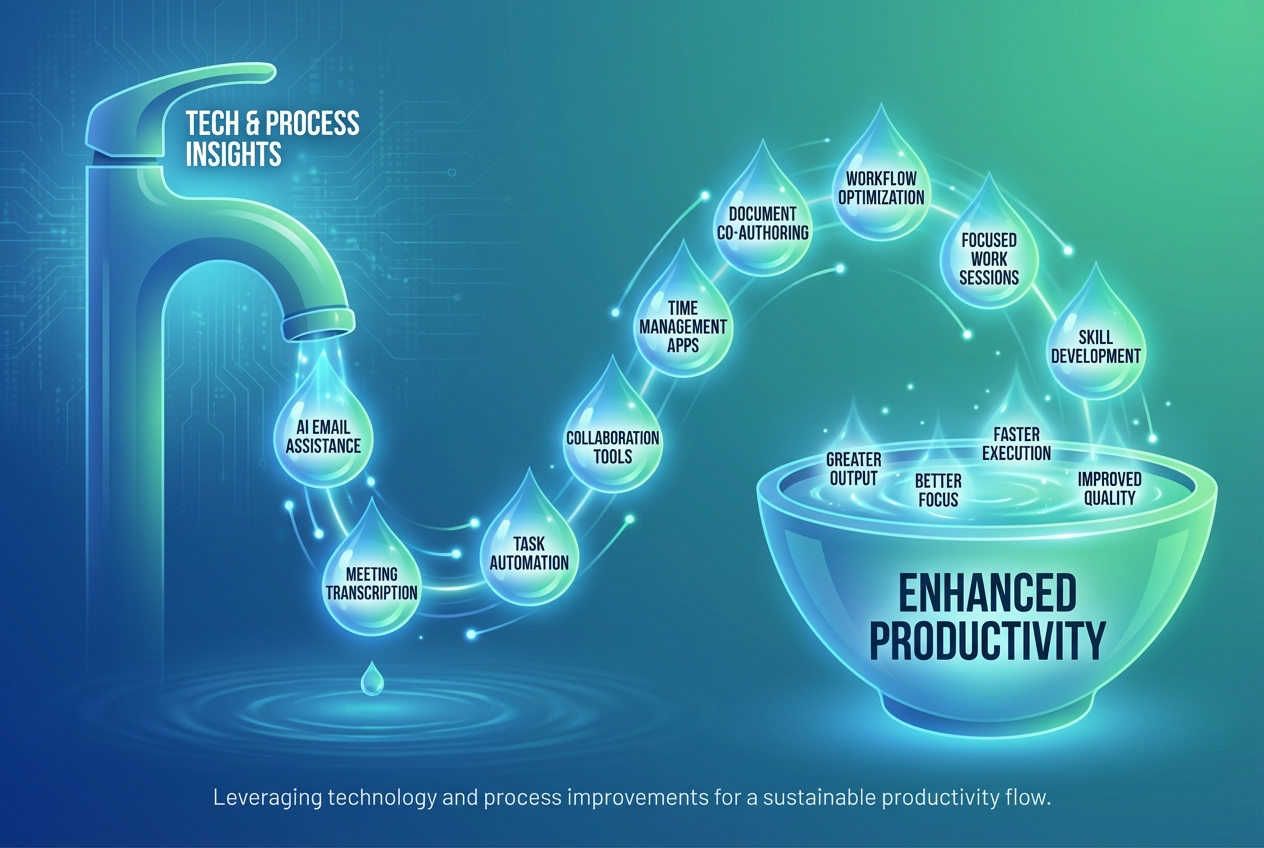
It was startling to read this and see where I am and my organization are amidst Ai adoption.
Enterprises can achieve AI value through small-scale efforts on three levels: boosting individual productivity, incorporating AI into defined tasks, and automating production processes. (source)
If I had to gauge where I am in this, it’s at boosting individual productivity, then showing others how to do the same. It’s not an easy thing to get a grasp on because it means re-thinking and being meta cognitive about your work…and those insights are a slow drip rather than a fast flow…but AI tools are getting better, and the speed of the drops increasing ever so slowly (more my limitations than AI).
Scaling AI Results: Strategies from MIT Sloan Management Review
I. Introduction: The Reality of Enterprise AI Transformation
“When MIT Sloan senior lecturers sought examples of enterprises that had achieved major transformations using generative AI, they didn’t find any.”
- Current state: No major enterprise transformations achieved through generative AI yet
- Key finding: Smart leaders achieve big value through small-scale, systematic AI efforts
- Focus: Practical strategies for achieving real results from AI investments
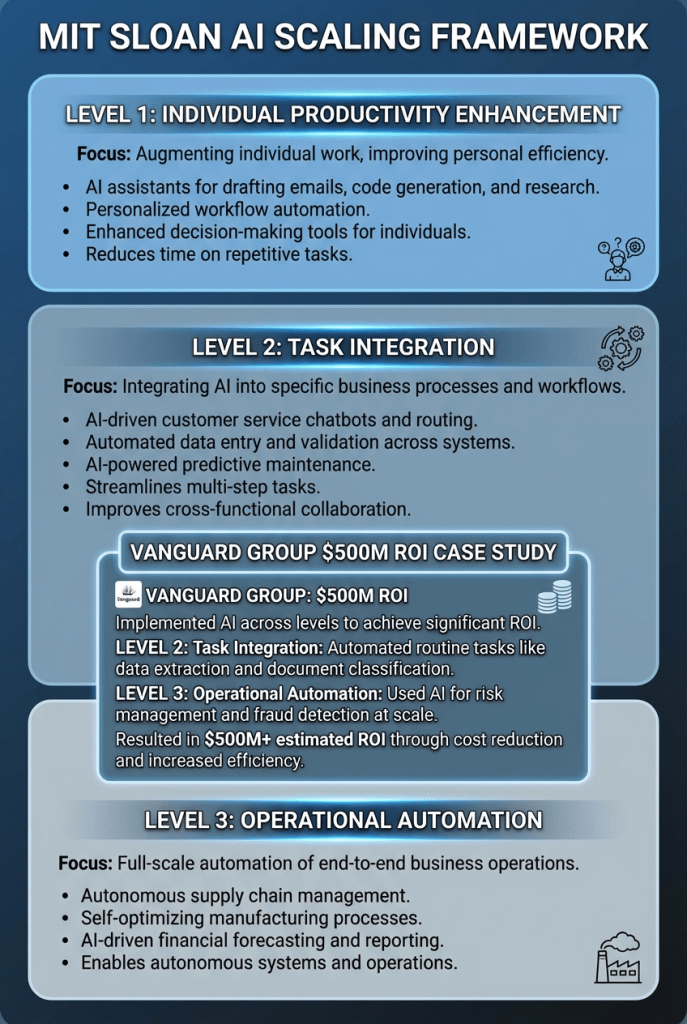
II. Three-Level Framework for AI Value Creation
“Smart leaders get big value from small-scale AI efforts deployed through a measured, systematic approach.”
A. Level 1: Individual Productivity Enhancement
- Create safe environments for employee experimentation
- Common use cases:
- Inbox management and email optimization
- Meeting transcription and summarization
- Calendar optimization
- Briefing preparation
- Cross-cultural communication support
- Adapting tone and cultural norms in business writing
- Example: Europeans addressing American audiences
B. Level 2: Task and Role Integration
- Developer support functions:
- Code writing assistance
- Data analysis
- Documentation creation
- Customer-facing applications:
- AI agents for sales representatives
- Call center quick answer systems
- Design team capabilities:
- Proposal generation from minimal text input
- Real-time visualization during client meetings
C. Level 3: Production and Operational Automation
- Marketing automation:
- Complete campaign creation beyond just content
- Enterprise software integration:
- Supply chain management automation
- Workforce skills gap identification
- Conversational AI interfaces for all processes
III. Vanguard Group Case Study: Proven ROI
“Vanguard Group estimates that its ROI from AI is close to $500 million.”
A. Successful AI Implementations
- Call center AI agents:
- Draw answers from internal content
- Faster issue resolution
- Personalized adviser summaries:
- Autogenerated market perspectives
- Enhanced client communication
- Programming productivity gains:
- 25% improvement in productivity
- 15% reduction in system development lifecycle
- Financial analysis tools:
- LLM analysis of earnings calls
- Dividend cut signal detection
B. Implementation Philosophy
- Measured rollout approach:
- Dozens of pilots in testing
- Scale deployment only after “kinks worked out”
- Continuous monitoring:
- AI model performance tracking
- Utilization metrics
- Training investment:
- 50% employee completion rate for Vanguard AI Academy
IV. Understanding LLM Capabilities and Limitations
“Knowing how large language models work is a necessary foundation for making sound business decisions.”
A. Key Technical Insights
- Live data access requirements:
- Models can answer post-training questions only with live data access
- Document upload limitations:
- No guarantee of limiting responses to uploaded documents
- Models reference similar training set documents
- Context window considerations:
- Large windows can hold entire books
- Too much irrelevant information hurts performance
- Models focus on beginning and end of prompts
B. Hallucination Management
- Cannot be eliminated entirely
- Mitigation strategies:
- Use second model for verification
- Focus on structured tasks
- Employ easily validated data formats
V. Governance Model: Decentralized Rule-Making
“Executives should erect guardrails, but individual teams should define the rules for AI use.”
A. Current Problem
- Only 47% of professionals say AI policies reflect work realities
- Different departments use AI differently
- “Judgment is local” principle
B. Recommended Approach
- Executive responsibilities:
- Define privacy, security, IP, and ethics policies
- Build AI platforms
- Provide training programs
- Set guardrails, not detailed rules
- Team leader responsibilities:
- Create specific practices from broad policies
- Determine where, when, and how to implement AI
- Ensure rules match day-to-day work realities
C. Benefits of Decentralization
- Avoid back-channel AI use that creates risk
- Prevent ignoring of company AI investments
- “Decentralization is not abdication”
VI. Strategic Implementation Principles
“To make progress on strategy, leaders need to balance immediate action with long-term thinking — to ‘build the scaffolding.'”
A. Building the Foundation
- Balance immediate action with long-term thinking
- Create organizational scaffolding for AI
- Align AI efforts with core business capabilities
B. Avoiding Common Pitfalls
- Pilot projects staying on sidelines
- Misalignment with business capabilities
- Top-down rule creation that doesn’t reflect reality
VII. Next Steps and Action Items
A. For Executive Leadership
- Establish privacy, security, and ethics guardrails
- Invest in AI platform infrastructure
- Create comprehensive training programs (following Vanguard’s 50% completion model)
- Monitor overall ROI and strategic alignment
B. For Department/Team Leaders
- Translate corporate guardrails into specific team practices
- Identify high-value use cases within three-level framework
- Document and share successful implementations
- Provide feedback on policy effectiveness
C. For Individual Contributors
- Experiment within safe environments for productivity gains
- Complete available AI training programs
- Share use cases and learnings with teams
- Focus on measurable productivity improvements
D. For IT/Technology Teams
- Build and maintain AI platforms
- Monitor model performance and utilization metrics
- Support pilot programs with measured rollout approach
- Ensure technical infrastructure supports all three levels of implementation
Discover more from Another Think Coming
Subscribe to get the latest posts sent to your email.
 Another Think Coming