In This Issue
As artificial intelligence evolves from a novelty into the “operating system” of modern life, we must confront the physical reality of its digital footprint. This issue explores the staggering environmental demands of Gen AI—from the $40 billion data center surge in Texas to the “silent thirst” of servers draining local aquifers. We also look at how educators and students can navigate these ethical dilemmas while still leveraging AI’s undeniable potential for accessibility and scientific progress. It is based on articles I curated from 2025 through the present.
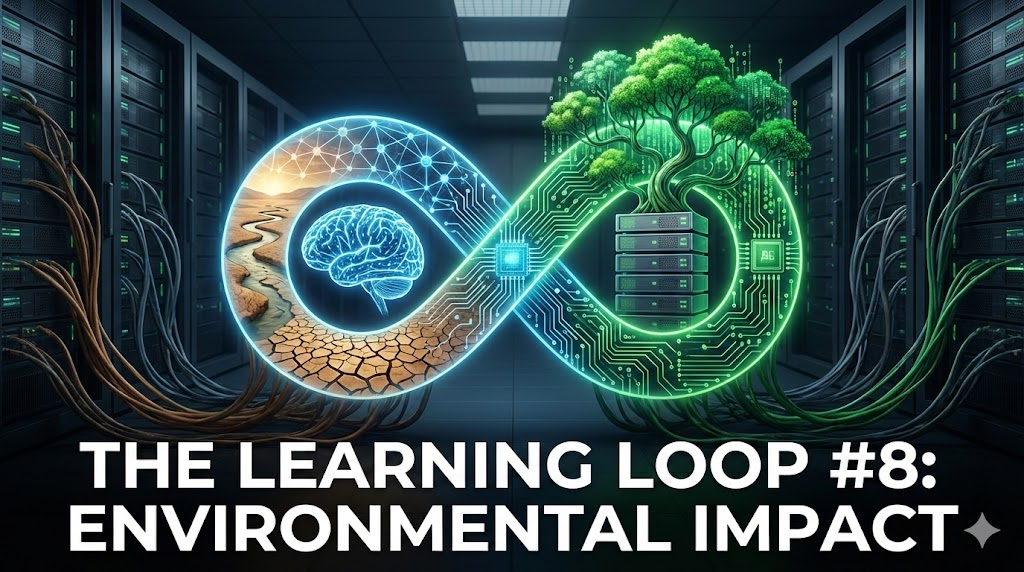
Note: It likely took about 2 standard bottles of water to research, draft, and visualize this newsletter.That’s about as much as I might drink if I had prepared a quarter of the articles in this entry, and only a fraction of what I would have consumed working on the art work (uh, no, I can’t draw). Still, while two bottles of water sounds small for one person, when multiplied by the 1 billion prompts processed daily, it equals a literal “Empire of Water.” This reinforces the “Big Idea”: digital efficiency is a powerful tool, but it doesn’t come for free.
📗 Empire of AI and the Global Water Crisis
🔥 The Big Idea:

The rapid expansion of AI infrastructure is creating a “new empire” where tech giants consolidate control over vital resources like land, electricity, and water. While some critics argue that the actual consumption figures are occasionally overstated, the localized impact on water-stressed regions—where a single 1MW data center can consume as much water as 400 people—presents a critical sustainability challenge that cannot be ignored.
✅ Putting It into Practice:
- Audit Your Usage: Encourage students to consider the “physical cost” of a prompt (roughly a bottle of water for every 100 words) to build environmental metacognition.
- Support Frugal AI: Look for models like Mistral Large 2 that are beginning to publish full-lifecycle environmental impact reports to set a global standard.
- Advocate for Transparency: Use these articles to spark classroom debates on whether tech companies should be required to disclose real-time water and energy usage per region.
Source: Bloomberg | Author: Karen Hao & Bloomberg Graphics
📗 The $40 Billion Texas AI Gold Rush
🔥 The Big Idea:
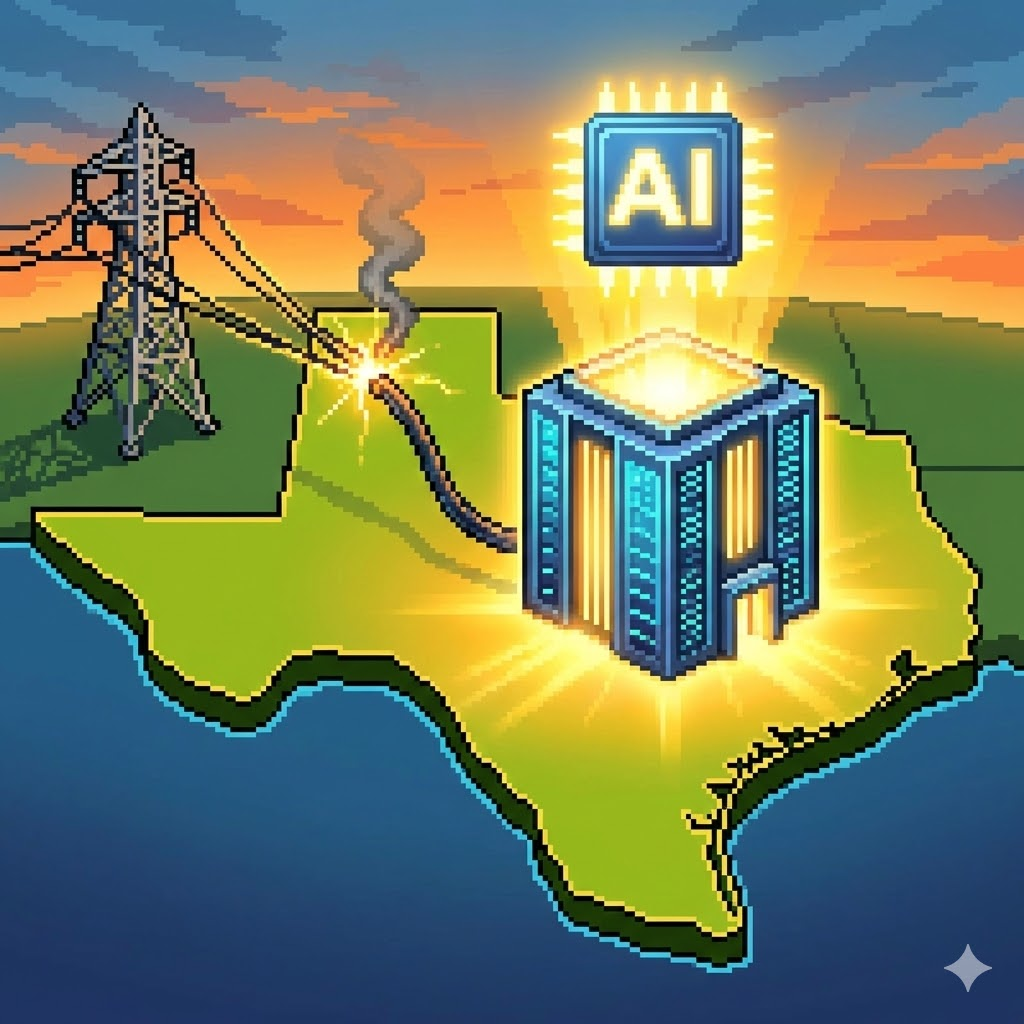
Google’s massive investment in Texas data centers highlights a strategic shift toward regions with “expanding energy,” but it also signals a looming strain on the electrical grid. By 2030, demand on the Texas power grid is projected to nearly double, forcing a tension between the state’s business-friendly environment and the long-term reliability of its infrastructure for residents.
✅ Putting It into Practice:
- Analyze Local Impact: If you are in Texas or a similar tech hub, research where your local data centers get their power (solar vs. coal) to understand the local “grid mix.”
- Discuss Infrastructure Ethics: Use this as a case study for how “critical national infrastructure” status for data centers might conflict with residential needs during peak demand.
- Explore Hybrid Solutions: Investigate how pairing data centers with solar and battery storage (as Google is doing in Haskell County) can serve as a model for more sustainable growth.
Source: Engadget | Author: Paul Cobler
📗 AI and the “Great Divergence”
🔥 The Big Idea:
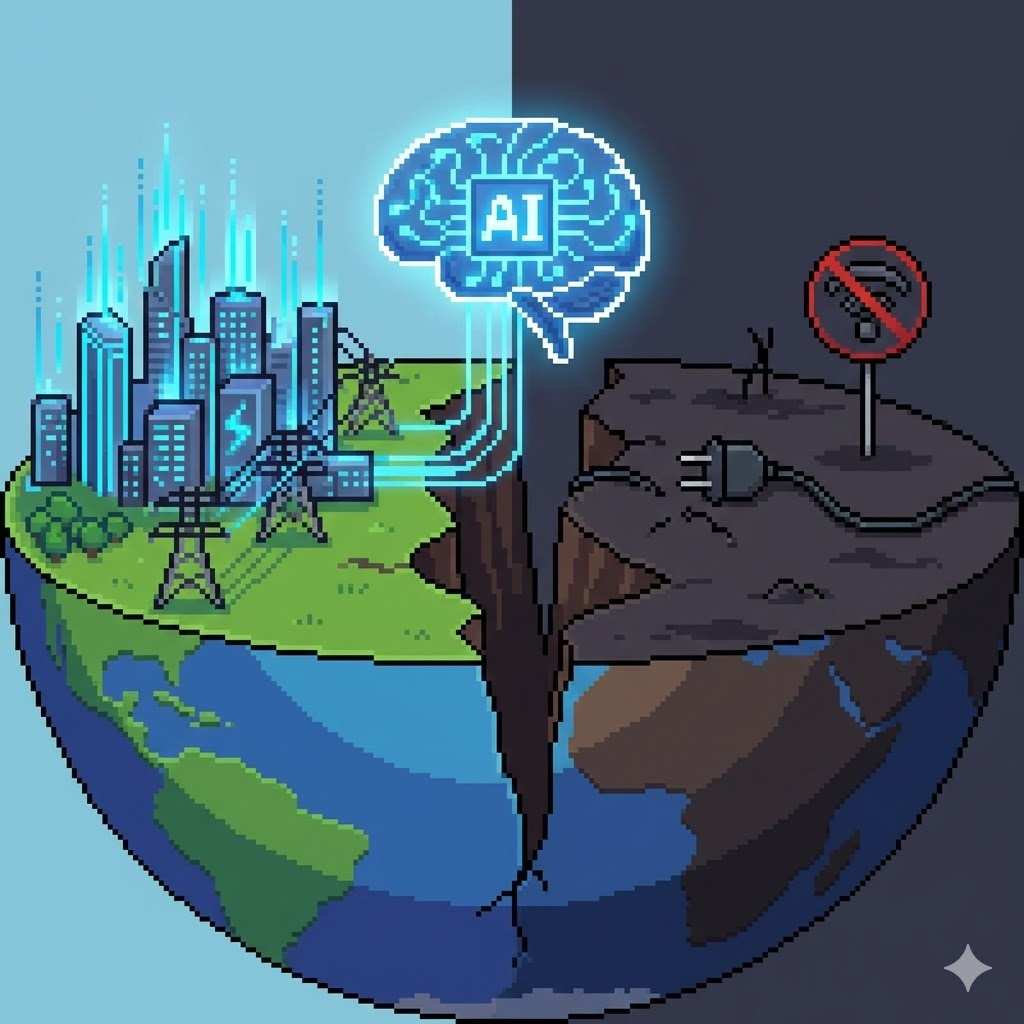
A new UN report warns that AI could trigger a “great divergence,” widening the gap between wealthy nations and the global poor. While AI offers transformative potential for healthcare and disaster response, the lack of infrastructure (electricity and connectivity) in many regions means they risk being “stranded on the wrong side of an AI-driven global economy.”
✅ Putting It into Practice:
- Broaden the Perspective: Share the UNDP findings with students to highlight that “AI equity” isn’t just about software access, but about the underlying energy and data resources.
- Focus on Localized Data: Support initiatives that include rural and indigenous communities in training datasets to prevent algorithmic bias and exclusion from essential services.
- Identify “Low-Data” Tools: Explore AI tools designed to work on lower bandwidth or older hardware to support more inclusive learning environments.
Source: Phys.org / UNDP | Author: UN News
📗 Seeing into the Future: Tech for Accessibility
🔥 The Big Idea:

Despite the environmental costs, AI remains a lifeline for accessibility. Comedian Chris McCausland’s documentary reveals how Meta’s smart glasses and AI-driven apps aren’t just conveniences for the visually impaired—they provide a “whole new level of independence,” describing the world in real-time and even potentially replacing photoreceptor cells in the future.
✅ Putting It into Practice:
- Explore Assistive Features: Test out “Be My AI” or Meta’s accessibility tools to see how they can support students with visual or learning disabilities in your classroom.
- Balance the Tension: Discuss the ethical trade-off: is the environmental cost of AI justified by the life-changing independence it grants to the disabled community?
- Look for Multi-Modal Use: Encourage students to use AI to generate image descriptions or simplify complex text, making content accessible to a wider variety of learners.
Source: The Guardian | Author: Gwilym Mumford
🚨 Tech Alert: The Privacy Revolution
Signal founder Moxie Marlinspike has unveiled Confer, an end-to-end encrypted AI chatbot. Unlike mainstream bots that “read” your data to train or advertise, Confer uses Trusted Execution Environments (TEEs) to ensure your conversations remain unreadable to everyone—including the platform itself. This marks a significant shift toward “Zero-Knowledge” AI for privacy-conscious users.
🎧 Must Read / Listen To
- An Open Letter to My Students about AI – Jon Bergmann’s roadmap for thriving in the age of AI.
- Is AI Good for the Planet? – A nuanced look from JSTOR Daily on the climate trade-offs of the technology.
- Britain’s AI Gold Rush Hits a Wall – The Register explores why lack of electricity is stalling AI progress in the UK.
🛠️ Notable Gen AI Tools
- Confer: The ultra-private, encrypted assistant from the creator of Signal.
- MedGemma: Google’s open models designed specifically for ethical health AI development.
- Willow Voice: A private, open-source voice assistant designed to replace invasive smart speakers.
- PDF.beauty: An AI tool for transforming cluttered PDFs into clean, readable, and structured documents.
- Vellum.ai: A professional-grade sandbox for testing and deploying reliable AI prompts at scale.

Another Think Coming by MGuhlin.org
Discover more from Another Think Coming
Subscribe to get the latest posts sent to your email.
 Another Think Coming