Need a way to teach critical thinking and problem-solving? Learn to tackle problems and make decisions. This session offers strategies to assess ideas and arguments. Discover resources to teach middle schoolers about fact-checking and critical thinking.
View session slide deck (updated 1/30/24)
AI MegaPrompts for Critical Thinking
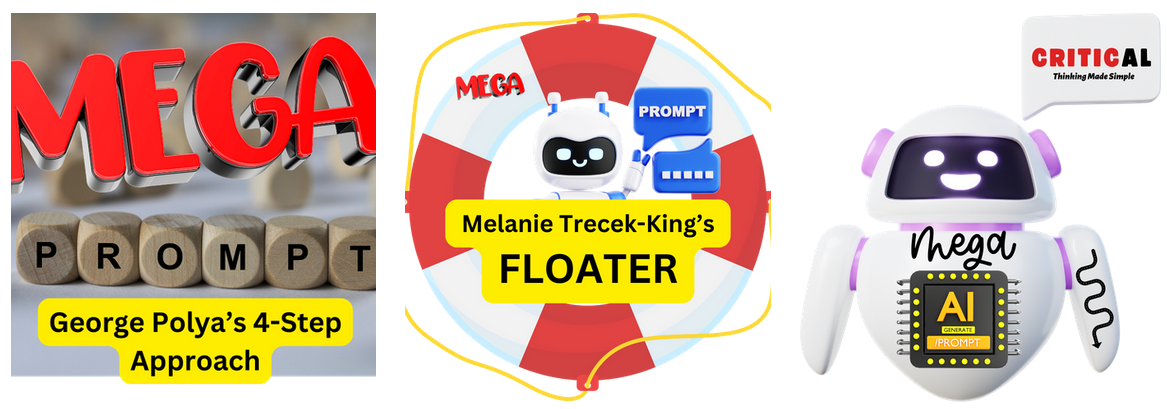
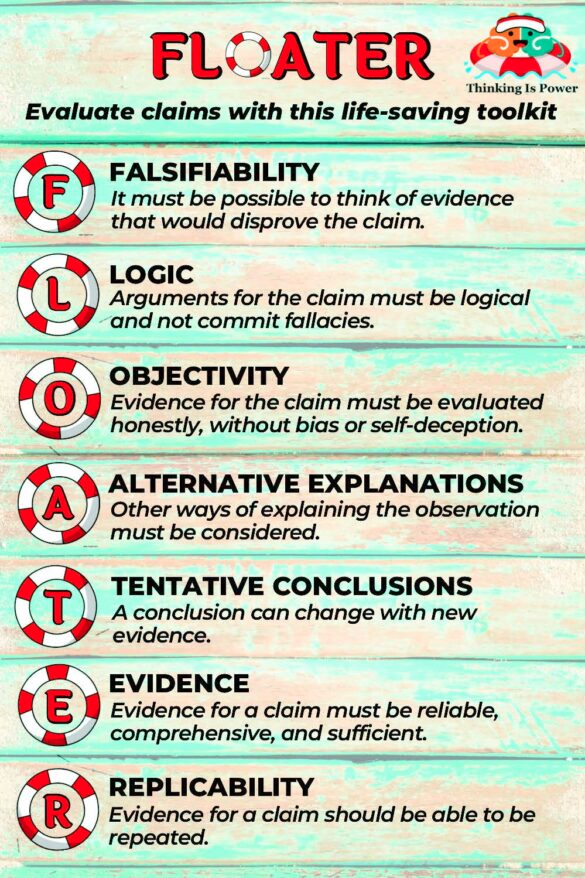
George Polya’s 4-Step Approach | Melanie Trecek-King’s FLOATER | CRITIC
Find links to THREE critical thinking megaprompts. Feel free to adopt them for your own. Be sure to cite the original authors and mention them when you use their work. Please keep in mind that if a megaprompt doesn’t work perfectly, that’s probably due to my poor prompt construction and does NOT reflect in an way on the original authors. Or, we can blame it on the chatbot’s hallucinations. 😉
Quote to Ponder
“If we teach only the findings and products of science – no matter how useful and even inspiring they may be – without communicating its critical method, how can the average person possibly distinguish science from pseudoscience?” -Carl Sagan
Examples of Testable Claims
Consider using FLOATER or CRITICal Thinking Made Simple infographics to assist you assessing the veracity of claims made in these videos. The CRITIC infographic appears below the videos.
Adapted from TCEA Responds: Science Denial, Flat Earth, and the Power of Questioning blog entry; read it for more details.
- Marshmallow Farming
- Milking Almonds
- Cotton Candy Farming
- Rare Blue Strawberry Plant
- Spaghetti-Harvest in Ticino
- Pig Rescues Baby Goat
- Lake Superior Whales – Spring Narwhals
Critical Thinking: Myth vs Reality
Myth #1: Teaching Critical Thinking Takes Time Away from Core Content
- Reality: Integrating critical thinking into the curriculum can enhance students’ understanding and retention of core content. It encourages students to engage more deeply with the material and apply their knowledge in various contexts, rather than just memorizing facts.
Myth #2: Critical Thinking Skills Develop Naturally Without Explicit Instruction
- Reality: While some aspects of critical thinking might develop through general life experiences, explicit instruction and guided practice in schools are essential for students to develop strong critical thinking skills. Educators play a crucial role in modeling and teaching these skills through structured activities and discussions.
Myth #3: Some Students Just Aren’t Good at Critical Thinking
- Reality: All students have the potential to develop critical thinking skills. While individuals may have different starting points and learning styles, with the right instruction and opportunities, every student can improve their ability to think critically.
Myth #4: Critical Thinking is Just for Older Students
- Reality: Critical thinking skills can and should be taught at all age levels. Young children are naturally curious and can start learning basic critical thinking skills through inquiry-based learning and age-appropriate problem-solving activities.
Myth #5: Critical Thinking is Only About Logic and Reasoning
- Reality: While logic and reasoning are important aspects of critical thinking, it also involves creativity, intuition, and an open-minded approach to exploring multiple perspectives and solutions. Critical thinking in education encompasses a broad range of cognitive skills and dispositions.
CRITICal Thinking Made Simple
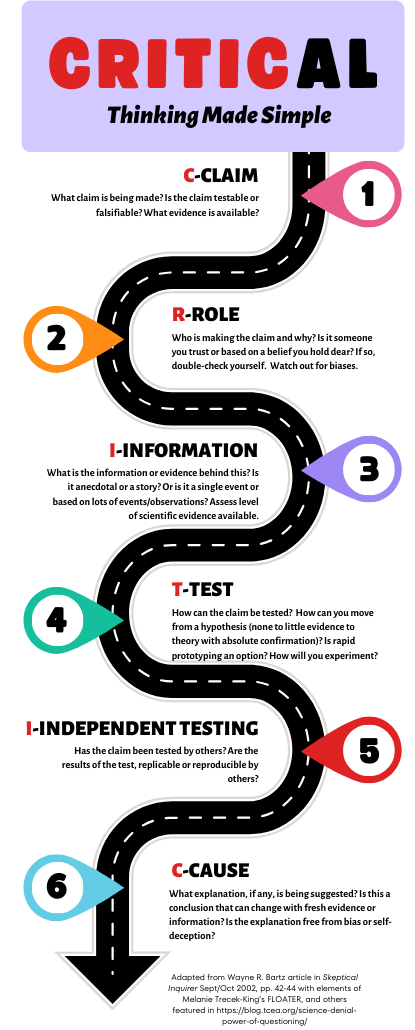
View Full Size or Get a Copy of the Infographic
Get a copy of this infographic via this Canva template link. Or view it full size.
The infographic above was adapted from Wayne R. Bartz‘ article (read article) from Skeptical Inquirer Sept/Oct 2002, pp. 42-44 with elements of Melanie Trecek-King’s FLOATER, and others featured in TCEA’s blog on science denial. It was put into this infographic format by Miguel Guhlin as a way to simplify and add context.
C–Claim
What claim is being made? Is the claim testable or falsifiable? What evidence is available?
R– ROLE
Who is making the claim and why? Is it someone you trust or based on a belief you hold dear? If so, double-check yourself. Watch out for biases.
I–INFORMATION
What is the information or evidence behind this? Is it anecdotal or a story? Or is it a single event or based on lots of events/observations? Assess level of scientific evidence available.
T–TESTABLE
How can the claim be tested? How can you move from a hypothesis (none to little evidence to theory with absolute confirmation)? Is rapid prototyping an option? How will you experiment?
I–INDEPENDENT TESTING
Has the claim been tested by others? Are the results of the test, replicable or reproducible by others?
C–CAUSE
What explanation, if any, is being suggested? Is this a conclusion that can change with fresh evidence or information? Is the explanation free from bias or self-deception?
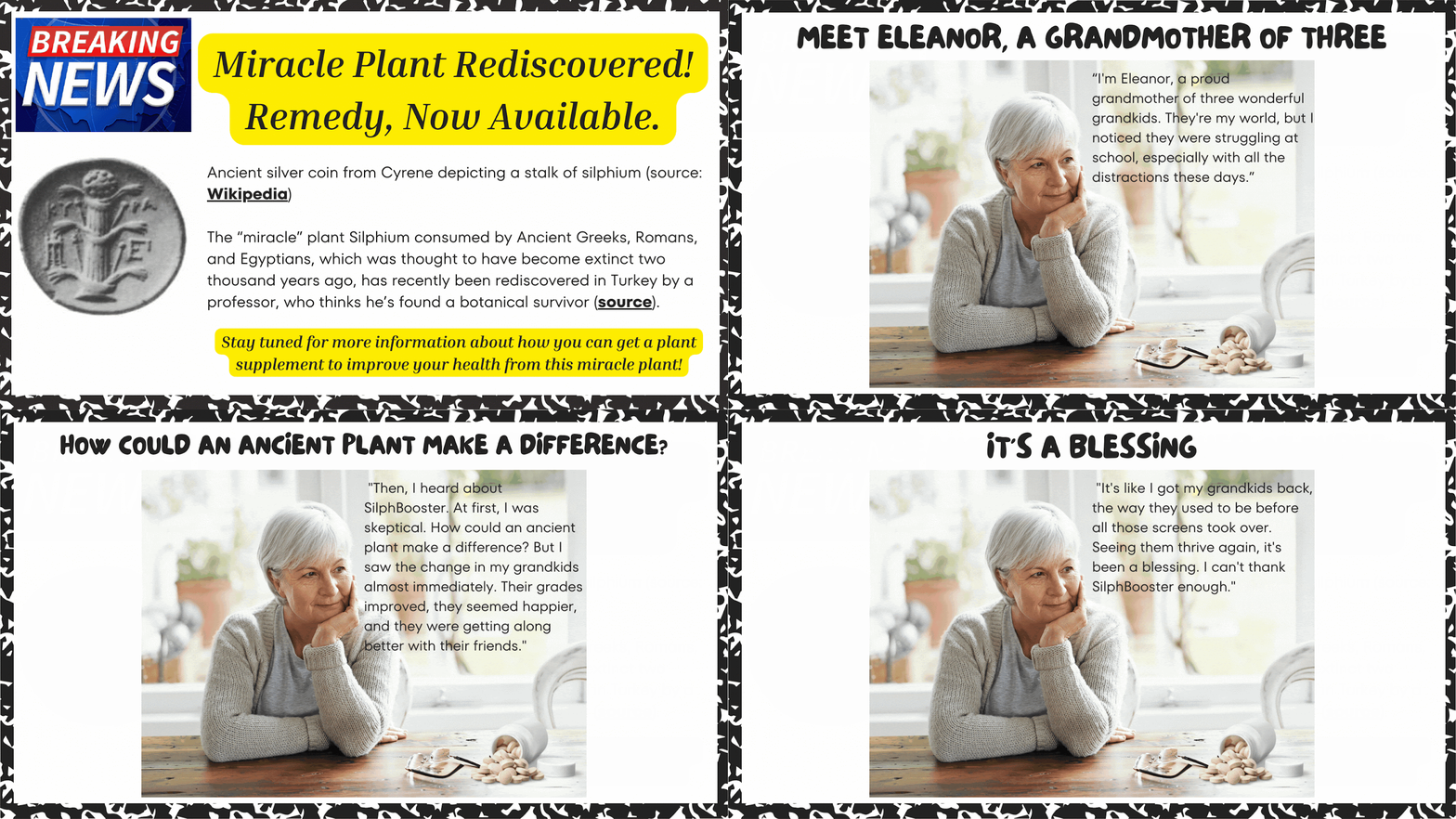
The Silph Booster (Pseudoscience Example)
Why Do We Think As We Do?
Believing is easier than knowing. Pseudoscience relies on beliefs that sound scientific but are not. That’s because we seek to affirm what we believe or our worldview.
Why do people do that? Beth Daley and
- trust the source (e.g. a family member, close friend, colleague). What we believe and what we share flows from whom we identify with. If those we identify with disagree with an aspect of science, we do as well.
- are convinced by the reasons offered (e.g. you accept reasons without critically analyzing them). Thinking is hard. It’s easier to assume something is true because it’s what we want, and we don’t have to think about it, even if it is false.
- are helped by these beliefs (e.g. you feel relief or better because of them). We all have beliefs that are certain. It’s that certainty that is the problem. Scientists are more tentative about what is held to be true since new evidence can change that truth.
- you may have biases that interfere with your reasoning. If you have a bias, failing to identify it can skew your reasoning when examing evidence. That means your bias can lead you to the conclusion you want rather than the conclusion the facts point to.
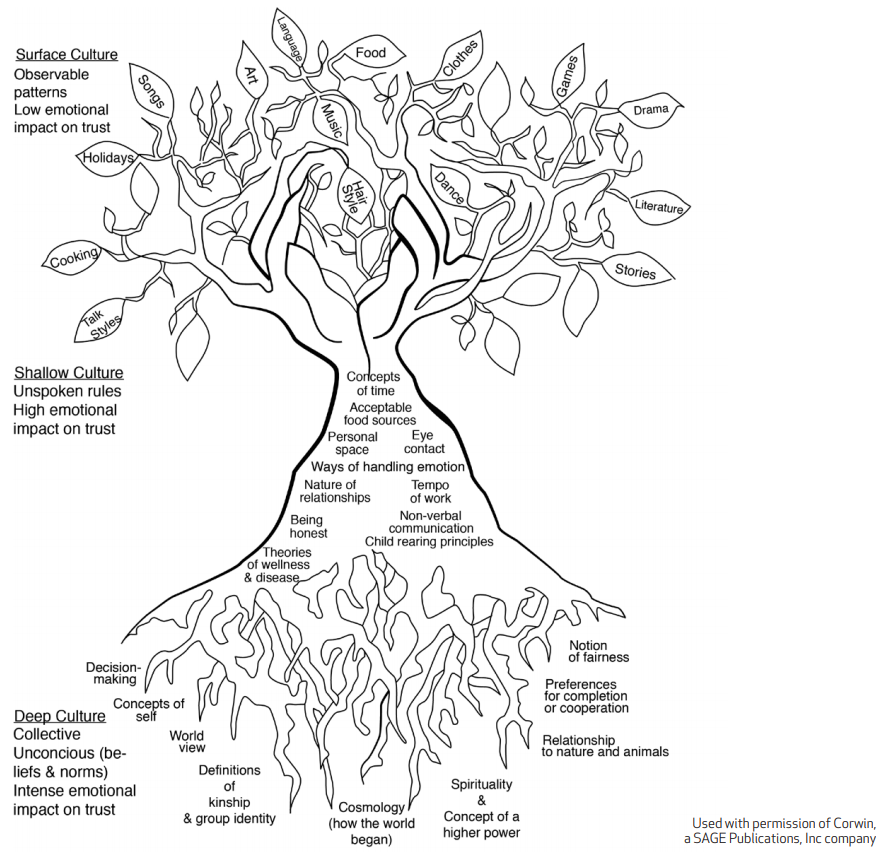
Most of our worldview lies in deep and shallow culture (see Zaretta Hammond’s The Culture Tree). If someone we trust tells us something, we’re inclined to believe it.
Biases All of Us Have
- Confirmation Bias: We are more likely to seek out and agree with judgements or analses that fit our worldview rather than anything that challenges it.
- Negativity Bias: Our brains try to protect us from threats, and it is aware of negative things.
- There are many types of cognitive bias. See a LONG list here. (another representation)

“It’s Flat, isn’t it?”
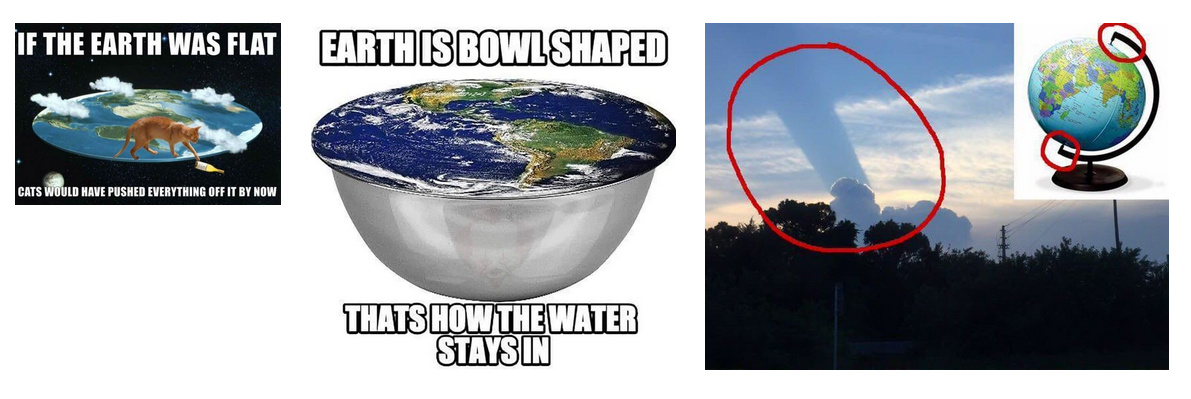
A lack of critical thinking in the classroom may reflect a low level of trust in general. Consider this:
Many people don’t trust the society around them, most notably the representatives of that society. That trust often falls even further when it comes to elite representatives of that society, which include government officials, members of academia, and scientists like me. By claiming that Earth is flat, people are really expressing a deep distrust of scientists and science itself. So if you find yourself talking to a flat-Earther, skip the evidence and arguments and ask yourself how you can build trust. (source)

Three Cognitive Styles
People tend to rely on three cognitive styles that are essential for evaluating, and conspiracy theories result from a lack of one or more of these three cognitive styles (source).
Analytic thinking
This involves breaking complex tasks down into manageable parts to reach a working solution. Think of computational thinking or George Polya’s approach.
Critical Thinking
A mode of thinking that involves raising questions and problems, gathering relevant data, interpreting that information to reach a well-reasoned conclusion and solution, then testing that solution in an iterative process. You might enjoy TCEA’s blog entry on Design Thinking or Engineering Design Process.
Scientific Reasoning
This involves observing something, developing an explanation of what is happening, and creating an experiment to test your explanation. Read TCEA’s blog entry on Interactive Science: Labs to Master the Scientific Method.
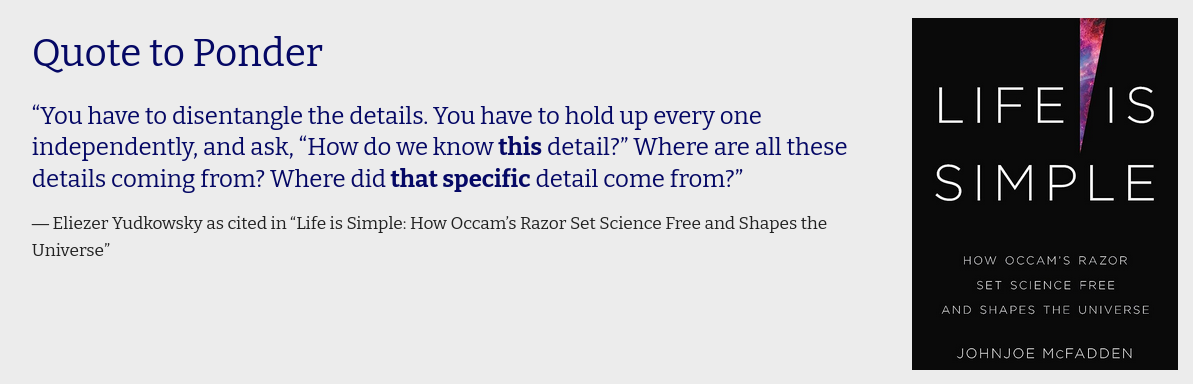
Where the Details Come From
In education, how do we find science-based conclusions that are based on research and evidence? Let’s take a few moments to review some key ideas and see.
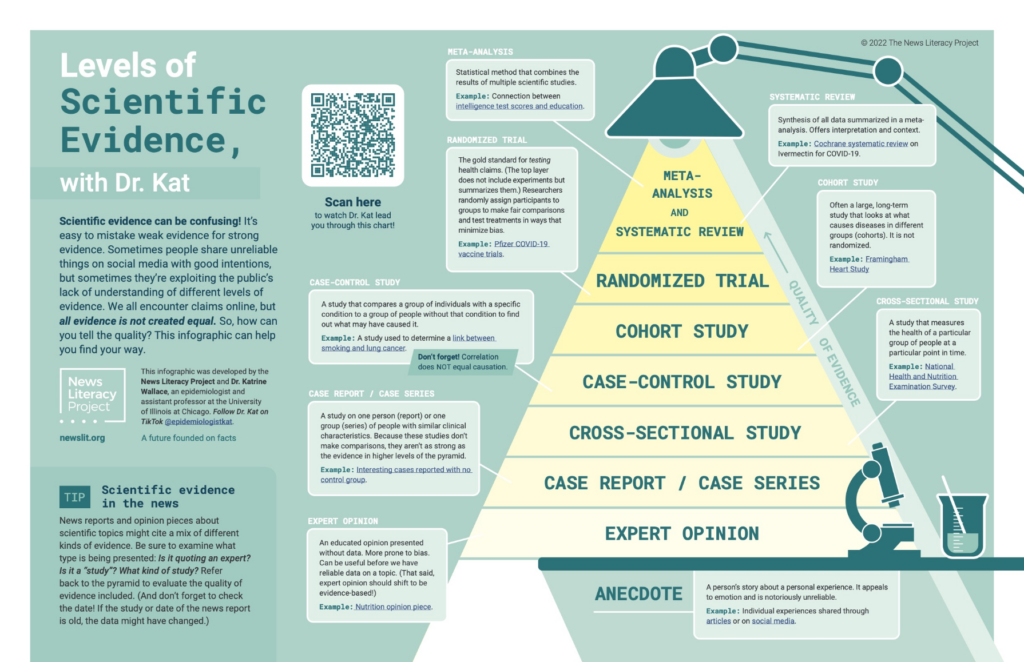
Source: News Literacy Project
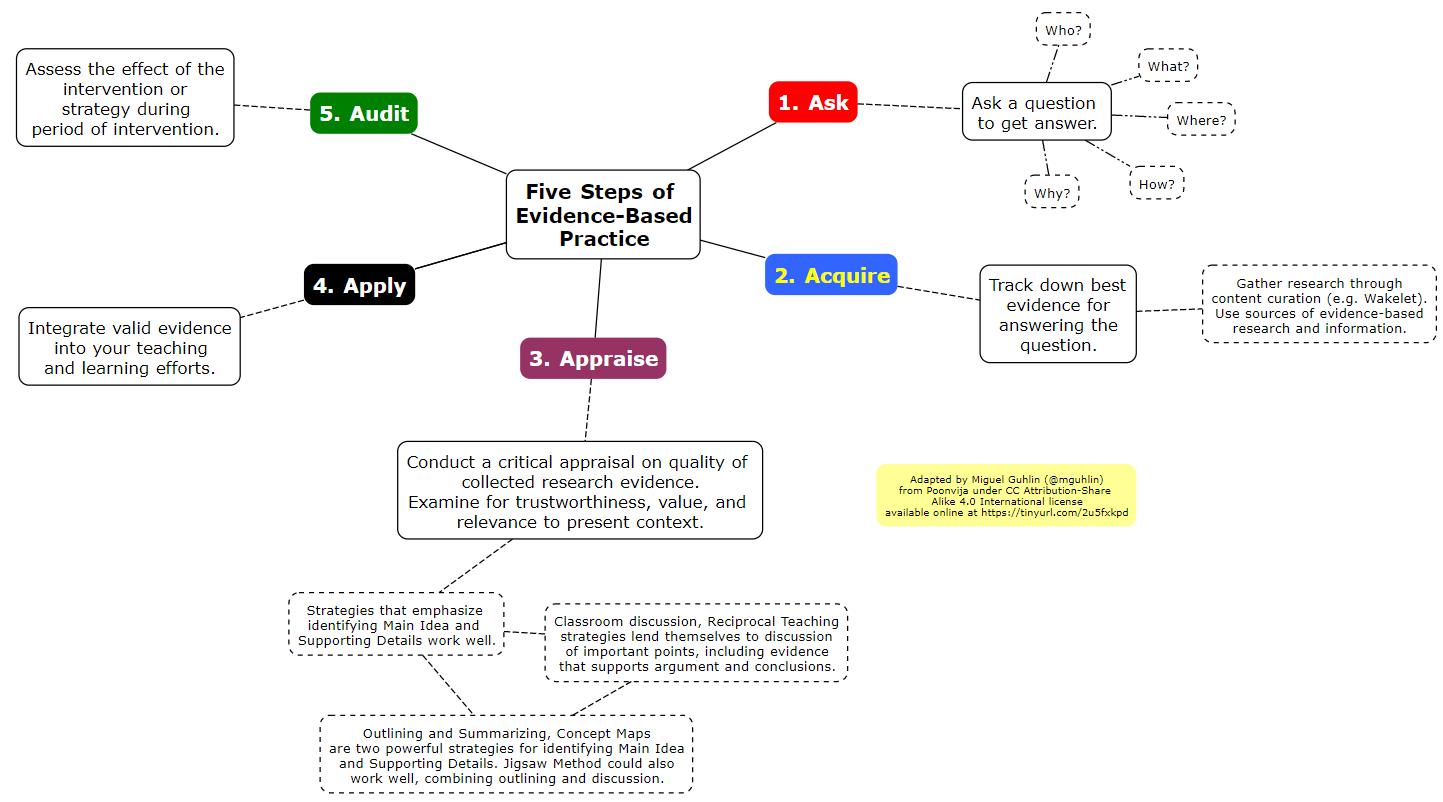
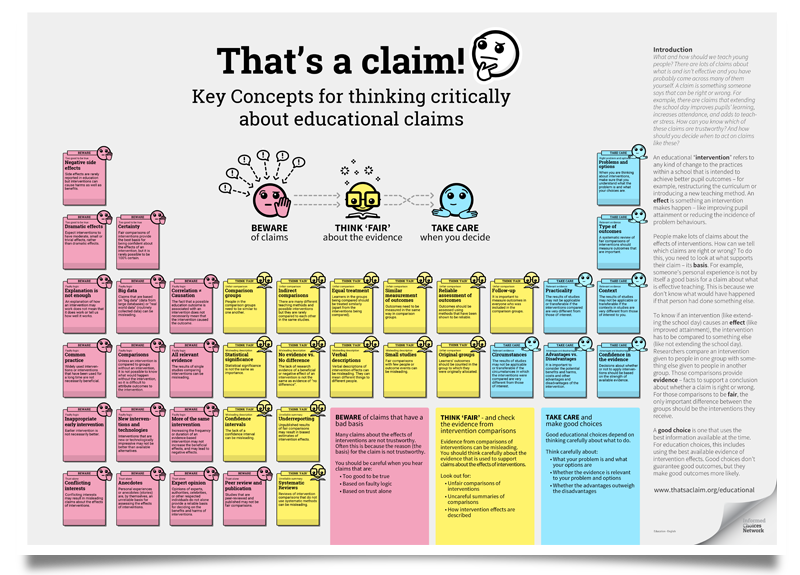
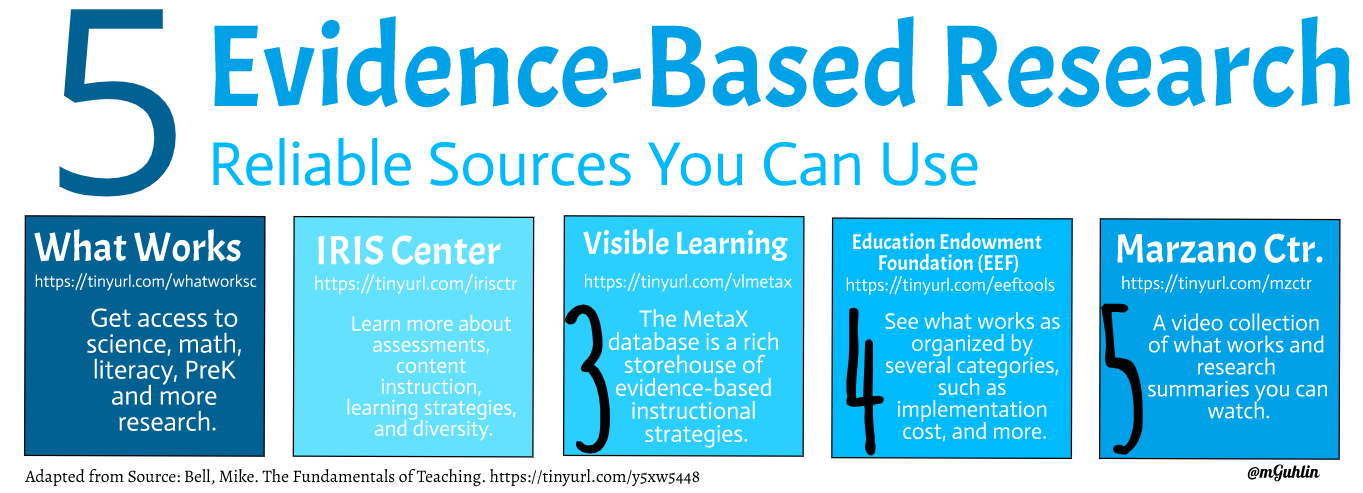
Problems with Doing Your Own Research
That’s not what research is.
Research is a systematic process of investigation. Evidence is collected and evaluated in an unbiased manner. Those methods have to be available to other scientists for replication.
Science is a process.
It is an attempt to understand reality, and recognize how biased and flawed the human brain is. Real research is about trying to prove yourself wrong, NOT right.
You’re not as smart as you think you are.
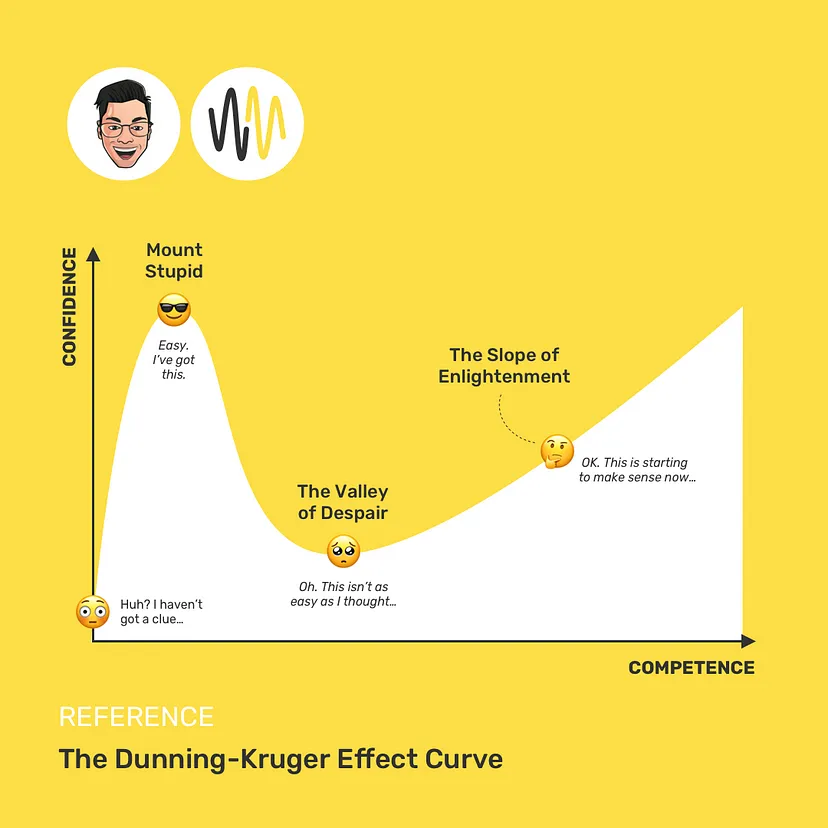
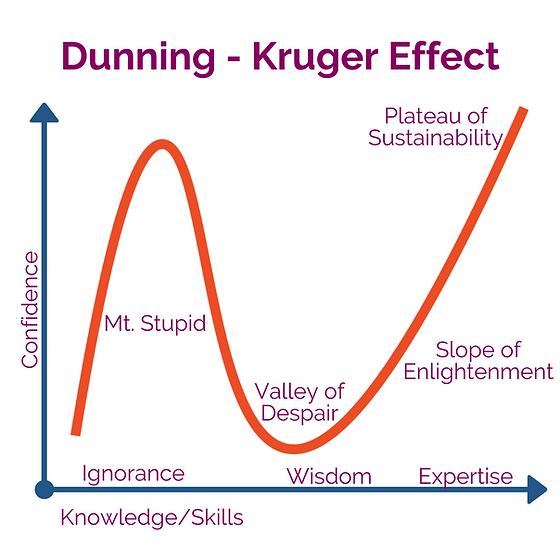
Consider the Dunning-Krueger Effect…when those who are least competent at a task overestimate their abilities. If you’re incompetent, you can’t recognize how incompetent you are. (Source: Melanie Trecek-King)
How To Teach Critical Thinking
“Why don’t kids know critical thinking or scientific reasoning?” asks Professor of Biology, Melanie Trecek-King. She encourages teachers and students to engage in scientific skepticism:
- Insist on evidence before accepting a claim.
- Then, match the strength of our belief to the strength and quality of the evidence.
- She describes matching the strength of your belief to evidence quality as “proportioning.”
Source: Thinking Is Power
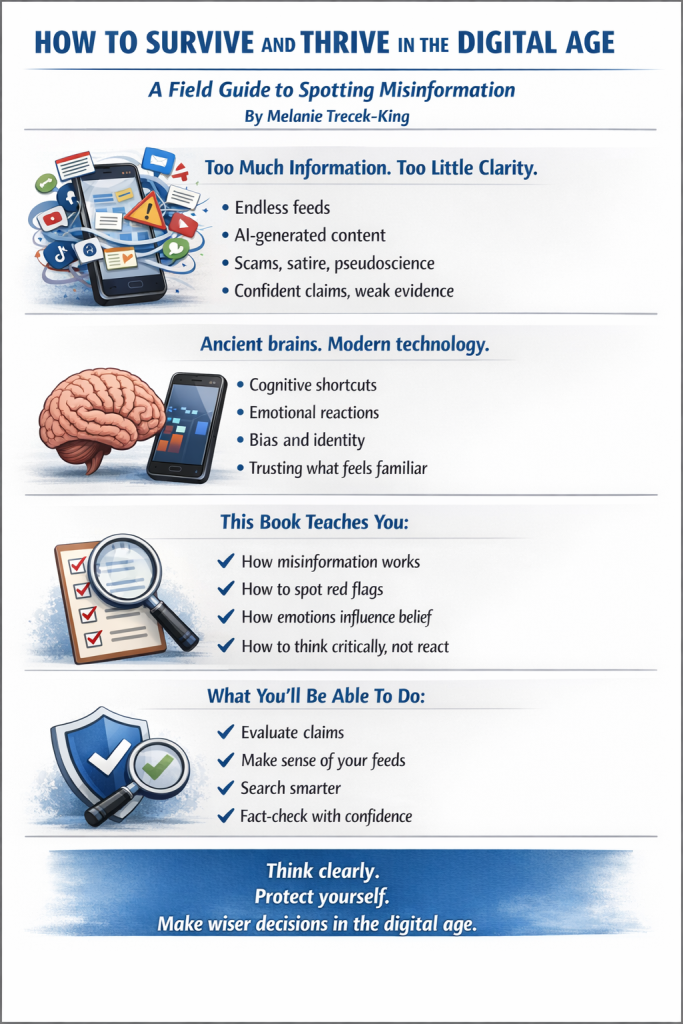
How To Fact Check
- Be skeptical. Stop and ask if it is true. Do this especially if it confirms existing biases or triggers strong emotions (e.g. anger or fear).
- Check TYPE of content. What’s its purpose? Is it advertisement? Satire? Opinion?
- Look laterally. What do others say? Search source, claims, check accuracy and bias with other independent, trustworthy sites.
- Look for RED flags. Any signs of low quality? Is there name-calling, inflammatory language, mis-spellings, grammatical errors, etc.?
Dealing with Disinformation
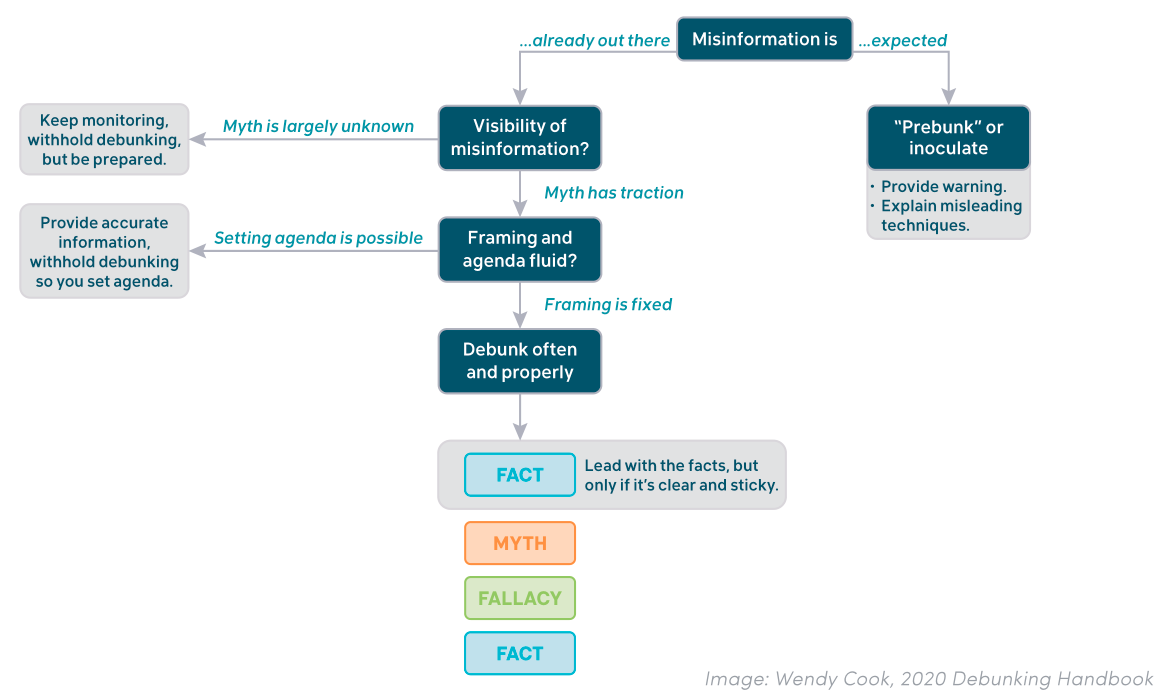
Wendy Cook suggests this simple formula for what to do when the need for debunking arrives:
- Fact. Lead with clear facts that are easy to remember (“sticky”).
- Myth. Share what was false.
- Fallacy. Explain what was false is wrong, and how it differs from facts.
- Fact. Share the facts again in a clear, easy-to-remember approach.
(source: Journalist Field Guide via CAAD)
Teaching Critical Thinking: Resources For You

Thinking is Power is a TERRIFIC resource.
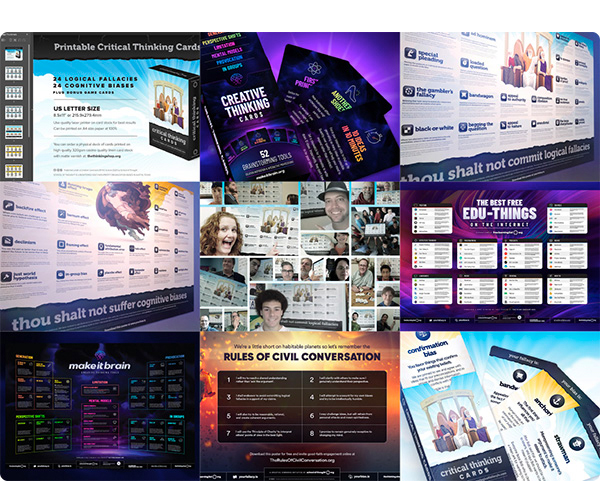
Fill out an email form to get these Critical Thinking Cards, Fallacies and Biases wall posters, and more, from School of Thought. Shared under Creative Commons.
Civic Online Reasoning has free lessons and videos.
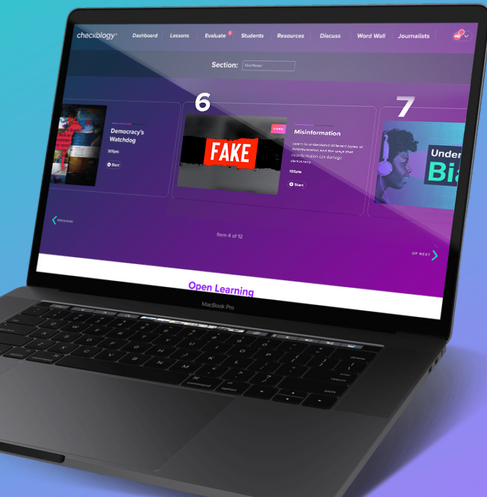
News Literacy Project’s Checkology
Books for You and/or Your Students
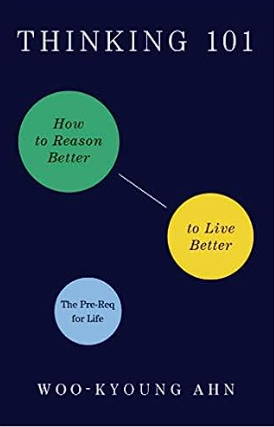
- Thinking 101
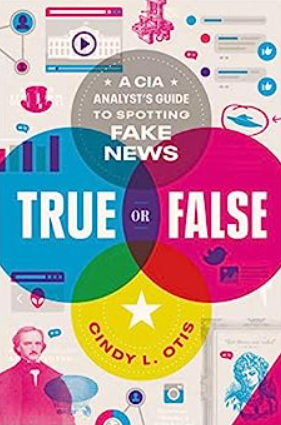
- True or False: A CIA ANalyst’s Guide to Spotting Fake News
- Killer Underwear Invasion! by Elise Gravel
- Developing Digital Detectives: Essential Lessons for Discerning Fact from Fiction in the ‘Fake News’ Era by Jennifer LaGarde and Darren Hudgins
- Fact Vs. Fiction: Teaching Critical Thinking Skills in the Age of Fake News by Jennifer LaGarde and Darren Hudgins
- Two Truths and a Lie: It’s Alive! by Ammi-Joan Paquette, Laurie Ann Thompson, and Lisa K. Weber
- The Nantucket Sea Monster: A Fake News Story by Darcy Pattison and Peter Willis
- Want more resources? Explore this Wakelet by high school teacher, Julie Drewry. She does a wonderful job wrapping up stories and ideas, some of which I’ve included in this blog entry.
Discover more from Another Think Coming
Subscribe to get the latest posts sent to your email.
 Another Think Coming