Wish you had a KPI dashboard? You can vibe code one easily. I did for a blog entry I wrote for TCEA (which you will have to read over there when it comes out) where you upload a dashboard via changes to a markdown text file or Google Sheet. Someone asked me recently, “What about creating tools for nonprofit organization members?” This wasn’t related to my day job, of course, but it did raise the question in my mind. You’ll find one example in this blog entry.
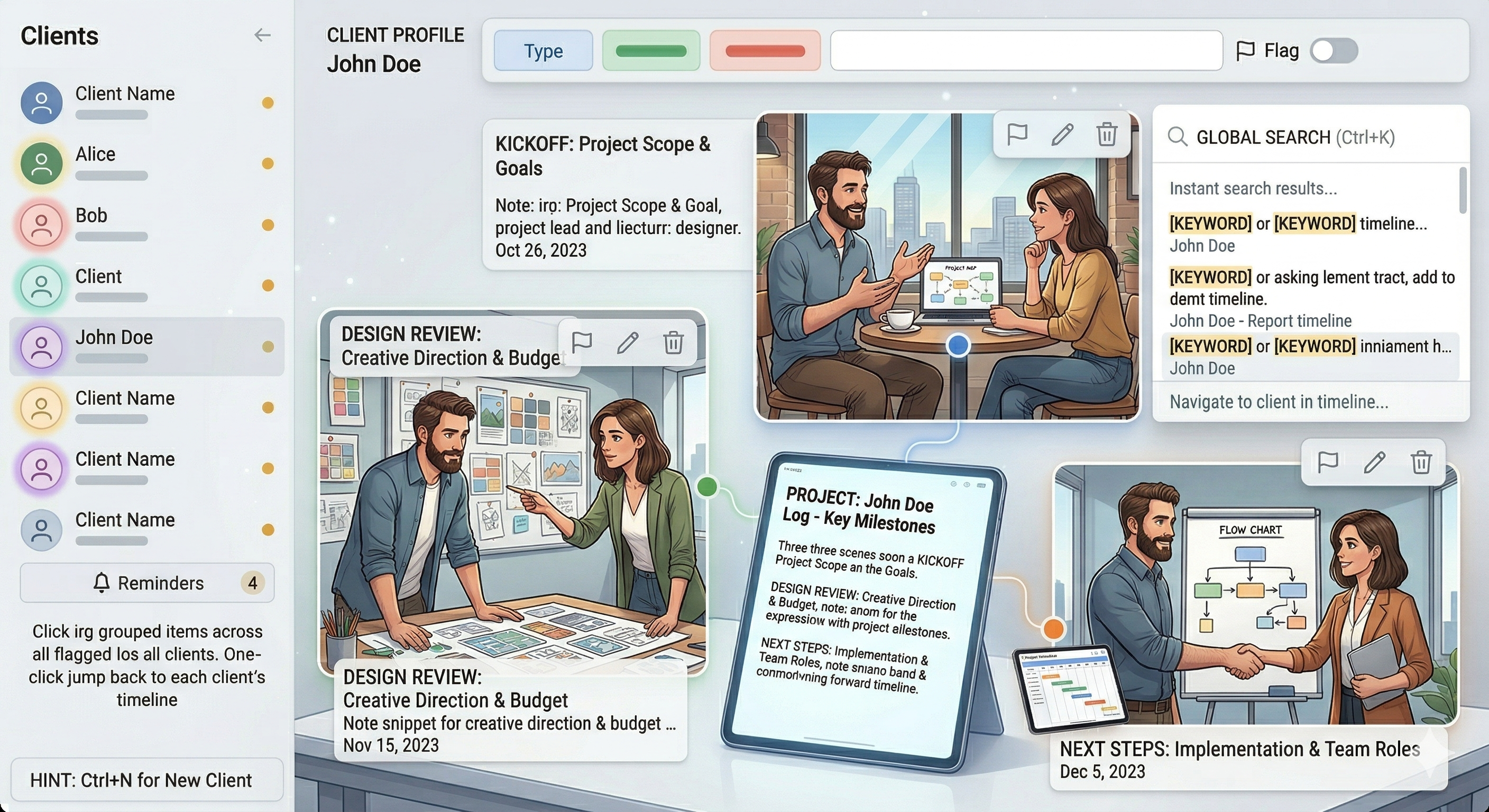
Being able to create solutions that could be sold or marketed to nonprofit organizations, or other clients, sounds like a fun avenue. Would you need to be a Computer Science trained programmer, or is vibe coding enough? I don’t know, I’ve only been a vibe coder for a few projects, and it has been a lot of fun.
A ROADBLOCK
One challenge when working with tools like ChatGPT, Claude, Gemini is that while you can build custom GPTs/bots/Gems with them, users require an account to access them. Worse, in some cases, other people’s use of your creations may actually impact the tokens you can access.
The more popular your solution becomes, the more likely it is to fail when your tokens are exhausted.
A DETOUR
To get past that, you need to create a web-based solution using Gen AI tools that can stand alone. That is, that can be hosted on a web server (pretty cheap), has no recurring impact on your AI tokens, and saves information somewhere (like a Google Sheet). More important, if you host this AI-generated solution on your server as a website in a folder, it is less likely to be blocked since your web address is already a recognized entity. If there’s nothing confidential, you could host it somewhere free (GitHub Pages) then link to it from your website.
But how do you create a standalone website? MindStudio might be one way to do that. Another is to simply use ChatGPT or Claude (my preference since I find Claude works better for my work of creating standalone solutions) to create the solution. Then, you save the solution (download HTML webpages) and put them on your web server.
AN EXAMPLE
For example, MindStudio has as one of its prompts:
Build a workspace where each client has a running timeline of meeting notes, decisions, and next steps. Provide quick note entry, global search, and ‘remind me later’ flags.
This is a relatively simple prompt they use for illustration purposes. Here’s one example I put together in less than 20 minutes. All information is saved to a Google Sheet. The two tools I relied on were Claude Pro Opus 4.6 and Google Sheets (consumer version):
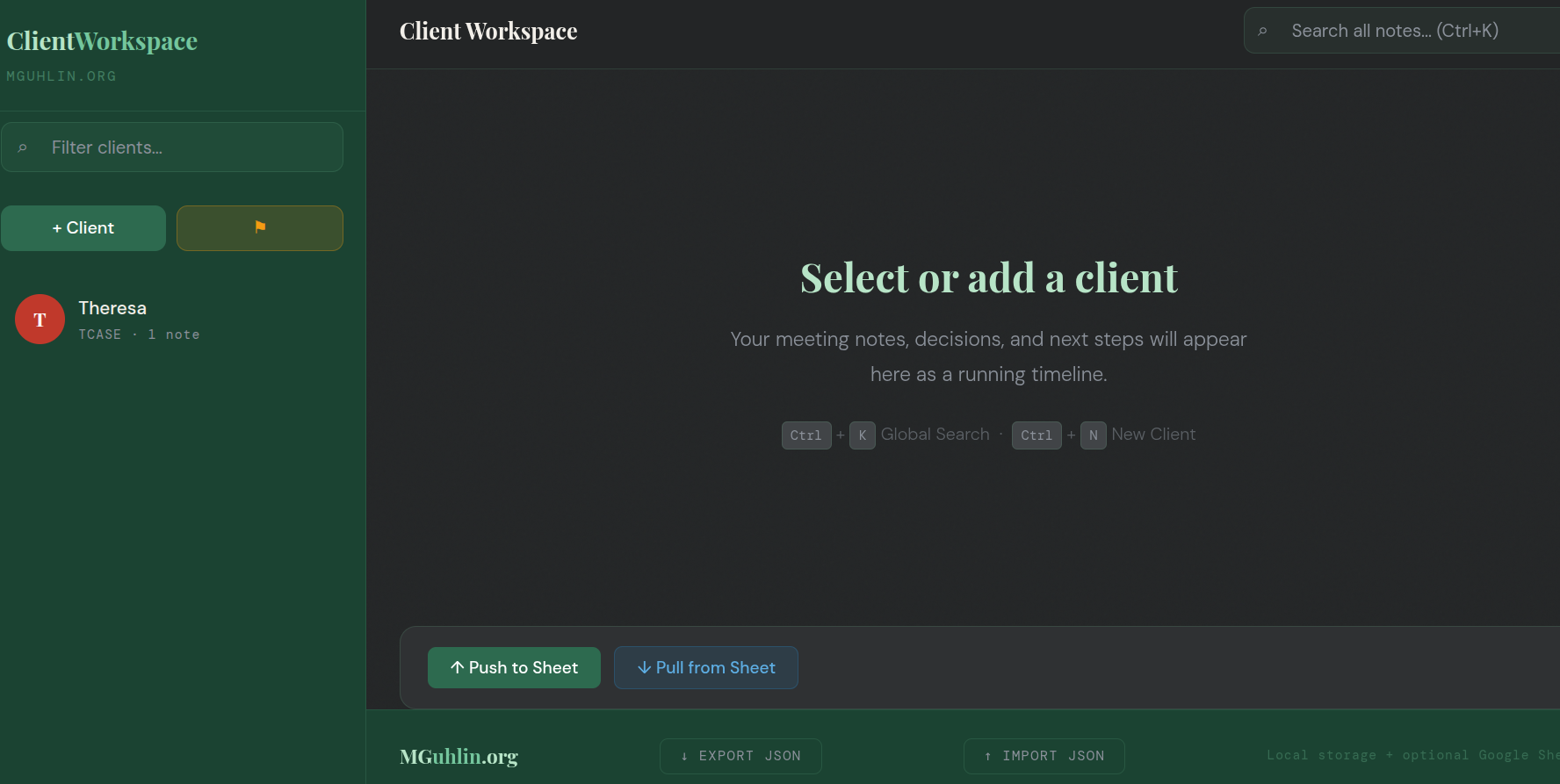
Here’s the explanation from Claude:
What it does:
The left sidebar holds your client roster with avatar initials, note counts, and amber dots flagging clients that have active reminders. The main panel shows a vertical timeline for the selected client, with each entry color-coded by type (meeting, decision, or next step) via the dot on the timeline rail.
Key features:
The quick-entry bar at the top lets you pick a type, write your note, and optionally toggle the ⚑ remind flag before saving. Every entry on the timeline also has its own flag toggle, plus edit and delete. The ⚑ Reminders button in the sidebar pulls all flagged items across every client into a single grouped view, with a one-click jump back to that client’s full timeline.
Global search (or Ctrl+K) opens an overlay that searches all notes across all clients instantly, with highlighted matches and clickable results that navigate you to the right client. Ctrl+N opens the new client modal.
Saving the Notes to a Google Sheet
All the data is saved to a Google Sheet when you click the button, PUSH TO SHEET:
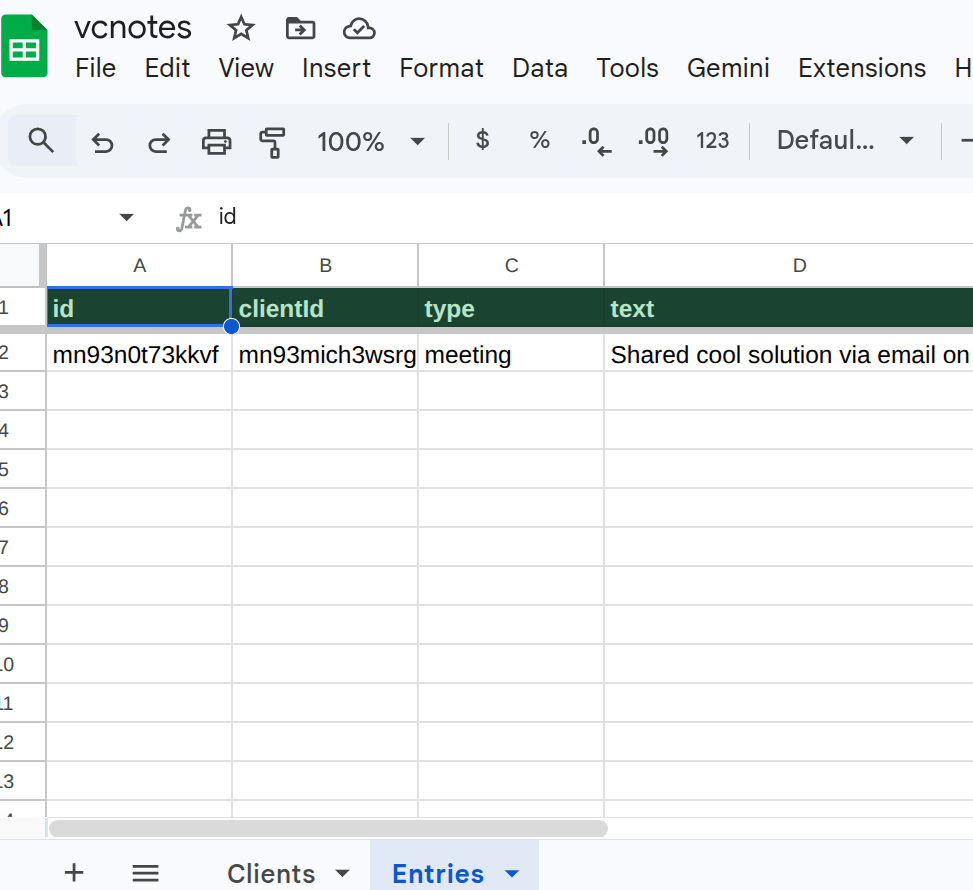
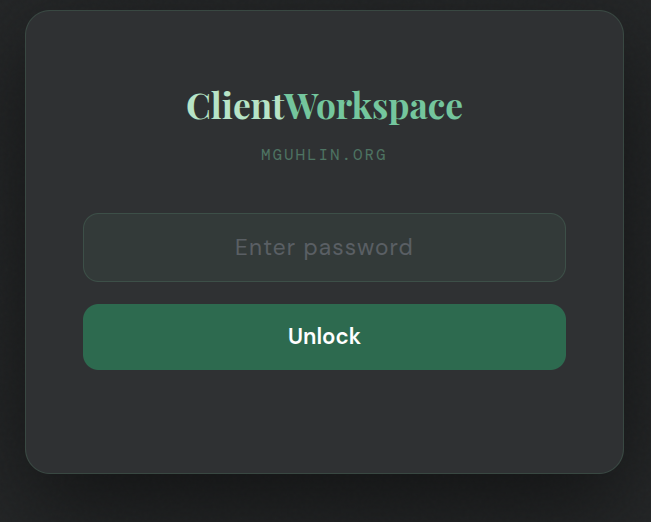
This seems clever to me because I don’t have coding experience. Securing the page, of course, can’t really be done well or at all if your host is GitHub Pages. But you can put an honest person’s lock on the page (that is, one easily hacked):
These could be solutions that you, or they, vibe-code then host on their web servers. What’s nice about these solutions is that once made, there are no recurring fees except the creation tools (e.g. Claude, ChatGPT) and the web host (which you may pay for anyways or can get for free via GitHub).
The real limitation is, “What idea for a member tool you could create that they would want to pay for? And what’s to stop them from vibe coding it themselves?”
Discover more from Another Think Coming
Subscribe to get the latest posts sent to your email.
 Another Think Coming