Welcome to Part Two of this short exploration of Empedocles’ philosophy as applied to navigating nonprofit organizational leadership transitions. I thought it was really cool stuff, so I am sharing it. You can read part one (preceding blog entry) where I reflect briefly on my journey. But to be honest, this is what was really worth reading.
This would be a cool tool to use for any Nonprofit Organization going through transition. I am truly amazed at how easy it was to leverage Gen Ai to transform a bit of philosophy I had never heard of into a relevant tool for organizational growth. Normally, you’d have to pay someone for a tool like this. I can’t tell you how many times I participated in some kind of organizational assessment. Now, in a very short time, I have an assessment that has more components than what I’ve seen used and organizations have paid thousands of dollars for.
I challenge you to review the resources and take the assessment with your nonprofit.
Resources
Here are some of the resources that support this part:
- Overview of Navigating Leadership Transitions: This web page includes the self-assessment, etc. so it’s usable by nonprofits to self-assess and provides background info.
- Self-Assessment: This is a self-assessment to give you some insights as to where you are individually and to discuss those. Online, you will find a way to interpret results. There’s also an action planning worksheet for next steps included in the online website.
- Navigating Leadership Transition – Facilitator’s Guide (LibreOffice ODT | GoogleDoc | Word DOCx): This is a facilitator’s guide that is amazing. Some excerpts appear below. Also available in the web version
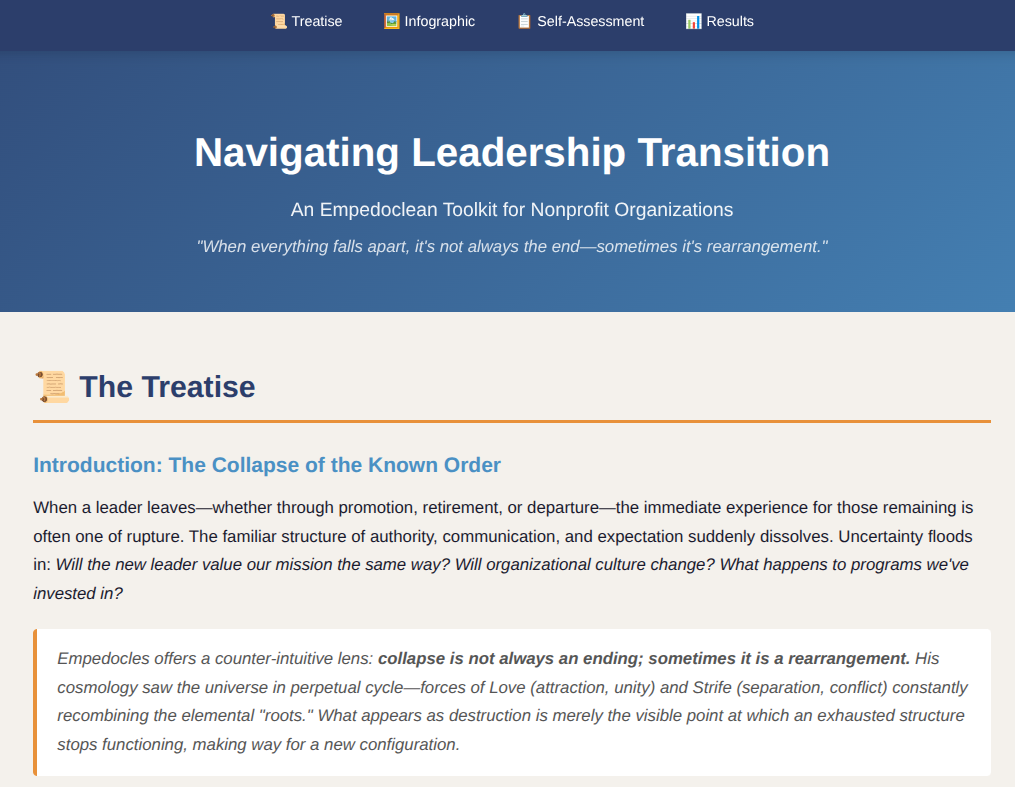
Purpose
This is for anyone leading a group through the Navigating Leadership Transition self-assessment. The assessment tool is a 30-item, six-dimension instrument designed for nonprofit leadership teams, boards, and staff groups navigating a leadership departure. This guide provides session formats, facilitation prompts, interpretation support, and planning tools to make the assessment process productive and action-oriented.
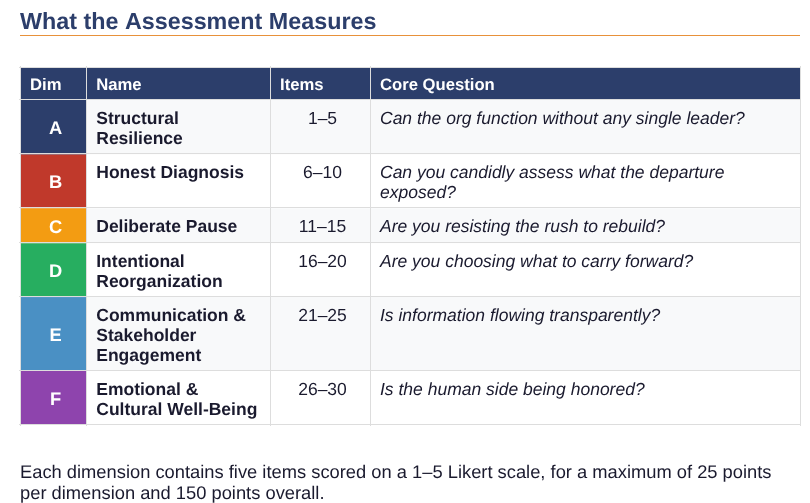
The underlying framework draws on Empedocles’ model of elemental rearrangement: leadership transitions are not simply losses but reorganizations of forces. The facilitator’s role is to hold that reframe for the group, even when the conversation gets uncomfortable.
I took the online assessment, choosing at random, to get this result:
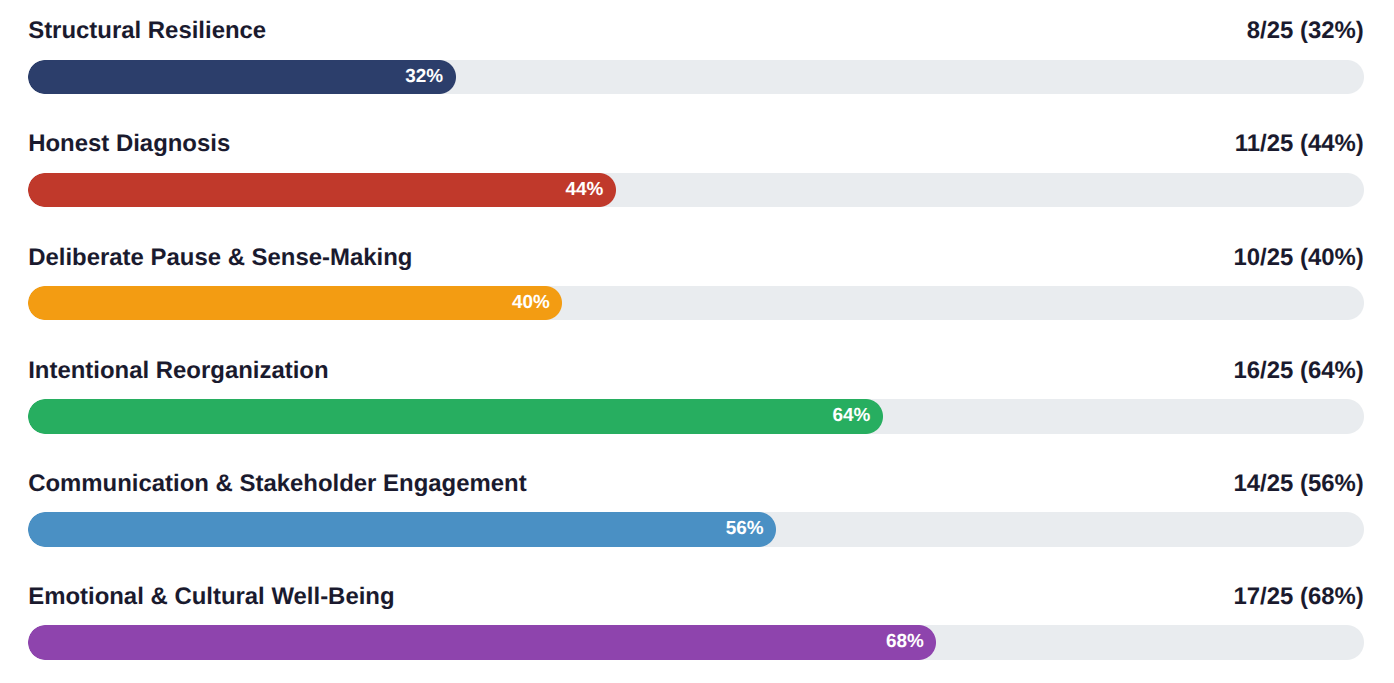
I realized there was a slight discrepancy between the facilitator guide and the website self-assessment, so had Gen AI modify, align, and regenerate.
Discover more from Another Think Coming
Subscribe to get the latest posts sent to your email.
 Another Think Coming