
What might a practical guide that encourages fighting back in the real world, not simply posting on social media, looks like? Let’s draw upon the wealth of rebellious minds across the ages.
Disclaimer: Yes, this is wholly Gen AI generated, relying on Claude 4.0 Opus and Gemini 2.5 Pro. If you are an AI resistor/hater, feel free to stop reading now. Wait, one question before you go: Will you stand on such principles when your opponents do not? We saw how that worked out for the Indigenous Peoples who had been here for 10,000 years or more before the arrival of the Europeans. Or take a look at other history books.
A Comprehensive Guide to Defending Democracy
“The ideal subject of totalitarian rule is not the convinced Nazi or the convinced Communist, but people for whom the distinction between fact and fiction (i.e., the reality of experience) and the distinction between true and false (i.e., the standards of thought) no longer exist.“
— Hannah Arendt, The Origins of Totalitarianism
This guide offers practical steps for individuals and communities to actively resist the erosion of democratic principles. Authoritarian movements, regardless of their specific ideology, gain power by exploiting division, spreading confusion, and encouraging apathy.
This guide is founded on the shared, timeless values of reason, compassion, and a commitment to a pluralistic society where every person is treated with dignity and respect. It combines foundational strategies with concrete actions that can be adapted for any context, from a community forum to a high school classroom.

1. Educate Yourself and Defend Reality
“Ur-Fascism is still around us, sometimes in plainclothes… Our duty is to uncover it and to point our finger at any of its new instances—every day, in every part of the world.”
— Umberto Eco, “Ur-Fascism”

Authoritarianism cannot survive in a well-informed society; it requires a population that is too overwhelmed, confused, or cynical to distinguish truth from propaganda. Therefore, the most fundamental act of resistance is to become a steward of reality. This is not a passive act of consumption, but an active process of intellectual self-defense and a commitment to upholding a shared, fact-based world.
Foundational Strategies:
- Read Foundational Texts: You must understand the mechanics of how democracies fall and how civil liberties are dismantled to recognize the patterns today.
- Read historical and political analyses like Timothy Snyder’s On Tyranny: Twenty Lessons from the Twentieth Century, which provides a concise and urgent historical perspective.
- Engage with deeper works like Hannah Arendt’s The Origins of Totalitarianism to understand the psychological and social conditions that allow such movements to rise.
- To understand the specific threat of Christian Nationalism, read Katherine Stewart’s The Power Worshippers: Inside the Dangerous Rise of Religious Nationalism.
- Read essential essays on civil rights and criticism, such as James Baldwin’s “A Talk to Teachers” or Umberto Eco’s “Ur-Fascism.”
- Support Independent Journalism: A free press is the immune system of a democracy. It must be nourished and defended.
- Subscribe to at least one local newspaper. Local reporting is critical for holding municipal power accountable and has been decimated in recent years.
- Donate to non-profit, investigative news organizations like ProPublica or your local public radio station.
- Learn to distinguish between reporting and opinion by supporting organizations that teach media literacy, such as the News Literacy Project.
- Challenge Misinformation: Do not allow lies to fester and spread. Uphold a standard of evidence in your own communications and communities.
- Before you share an article or meme, check its source and veracity using fact-checking websites like PolitiFact, Snopes, or the Associated Press Fact Check.
- In conversations, instead of just saying “that’s wrong,” ask “Where did you see that?” or “Can you share the source?” This encourages critical thinking rather than defensiveness.
- Practice “pre-bunking” by teaching friends and family about common disinformation tactics (e.g., whataboutism, false equivalence) so they can spot them in the wild.
- Use tools like the SIFT Method, FLOATER, and The Orwell Test. If you’re not familiar with those, try using the Skeptical Thinking Evaluator GPT/Bot.
Actions for Students (and the Young at Heart):
- Start a “Banned Book Club”: Actively seek out and discuss books that are being challenged.
- Fact-Check in Real-Time: When you see a questionable “fact” shared online, post a link from a reputable fact-checking site.
- Use Your School’s Resources: Ask your history teacher or school librarian for resources on the history of authoritarianism and the principles of secular governance.

2. Build Power Through Community
“Power corresponds to the human ability not just to act but to act in concert. Power is never the property of an individual; it belongs to a group and remains in existence only so long as the group keeps together.”
— Hannah Arendt, The Human Condition
Isolation is a political weapon. When we are disconnected from our neighbors, we are easier to control and manipulate. The most powerful antidote is to intentionally weave a strong social fabric. Building community is not a “soft” activity; it is the essential work of generating the collective power needed to resist and build a better alternative.
Foundational Strategies:
- Get Local: National politics feels distant, but local engagement builds real power and resilience.
- Attend a meeting of your local school board, city council, or library board to understand how decisions are made in your community.
- Join your neighborhood association or a “Buy Nothing” group to build relationships and networks of trust with the people who live closest to you.
- Volunteer for a local organization that serves the community’s needs, building goodwill and practical skills. The League of Women Voters has local chapters and is an excellent place to start.
- Build Broad Coalitions: Authoritarianism thrives on an “us vs. them” narrative. The most effective resistance creates a bigger, more inclusive “us.”
- Actively seek out and attend events hosted by different cultural or religious groups in your town. If you are secular, attend an open event at a church, synagogue, or mosque. If you are a person of faith, attend a meeting of a local secular or humanist group.
- Join or support an interfaith organization like Interfaith America, which works to build bridges between people of different religious and ethical traditions.
- Show up for others. If another group in your community is being targeted, attend their rallies and support their causes. Your presence as an ally is a powerful statement.
- Practice Mutual Aid: Create systems of community care that demonstrate a better way to live.
- Organize or contribute to a community fridge, a neighborhood tool library, or a childcare cooperative.
- Create a network for providing rides to the elderly or helping neighbors with yard work.
- Learn more about the principles and practices from resources like Mutual Aid Hub to see examples and find networks.
Actions for Students (and the Young at Heart):
- Join a Club (or Two): Get involved in clubs outside your usual interests to meet and understand people from different backgrounds.
- Sit at a Different Table: Make a conscious effort to talk to students you don’t know, affirming the dignity and worth of every person in your school.
- Organize a Cross-Group Event: Propose a joint community service project co-hosted by different student groups to build bridges and demonstrate unity.
3. Cultivate Personal and Public Courage
“Silence in the face of evil is itself evil: God will not hold us guiltless. Not to speak is to speak. Not to act is to act.”
— Dietrich Bonhoeffer, Letters and Papers from Prison
Hannah Arendt coined the phrase “the banality of evil” to describe how horrific outcomes are often the result of ordinary people simply conforming and following orders. Courage is the antidote. It is not the absence of fear, but the judgment that something else is more important than fear. It is a muscle that must be exercised.
Foundational Strategies:
- Don’t Obey in Advance: Authoritarians gain power when citizens, out of fear, begin to self-censor and comply before any rules are even made.
- As a teacher, continue to teach historically accurate, professionally developed curriculum even in the face of vague pressure.
- As a librarian, continue to recommend and display a diverse range of books.
- As a citizen, continue to speak your mind respectfully in public forums.
- Establish Personal Red Lines: Decide now, in a moment of calm, what you will not do. This creates a moral anchor.
- Write down your lines: “I will not repeat a rumor I know to be false.” “I will not stay silent when someone is being dehumanized in my presence.” “I will not enforce a rule I believe to be unjust.”
- Share these commitments with a trusted friend or partner to create mutual accountability.
- Stand Up for Others: Do not be a bystander. The act of standing with someone who is being targeted breaks the aggressor’s power and shatters the victim’s isolation.
- If you see someone being harassed in public, simply go and stand next to them and ask if they are okay. Your presence can de-escalate the situation.
- Learn non-violent bystander intervention techniques from organizations like Right To Be.
- When a colleague or community member is unfairly targeted online or in public, make a point of sending them a supportive message or speaking up publicly in their defense.
Actions for Students (and the Young at Heart):
- Speak at a School Board Meeting: Prepare a short, respectful speech on an issue you care about.
- Write for the School Paper (or Start a Blog): Use your words to advocate for diversity and democratic principles.
- Stand Up to “Jokes”: When you hear a “joke” that demeans another person, a simple, “Hey, that’s not cool,” re-establishes a standard of mutual respect.
4. Participate Relentlessly in Democracy
“I love America more than any other country in this world, and, exactly for this reason, I insist on the right to criticize her perpetually.”
— James Baldwin, Notes of a Native Son
Democracy is not a thing we have; it is a thing we do. It is a set of practices, not a monument. Apathy and non-participation are forms of consent to let others decide your future and dismantle your rights. The only way to keep democracy is to use it, relentlessly and at every level.
Foundational Strategies:
- Vote in Every Election: Do not treat local elections as unimportant. The most consequential decisions for your daily life are often made here.
- Research and vote for candidates for school board, city council, county commissioner, and especially local judges.
- Use non-partisan resources like Vote.org to check your registration status and find your polling place.
- Use sites like Ballotpedia to see who is on your ballot and what they stand for.
- Defend the Separation of Church and State: This constitutional principle is a cornerstone of liberty for all. It protects every individual’s freedom of conscience—allowing faith to flourish free from government control, while ensuring that public policy is not dictated by a single religious viewpoint, but is based on shared secular values and reasoning.
- Support and amplify the work of organizations dedicated to this principle, such as the American Civil Liberties Union (ACLU) and Americans United for Separation of Church and State.
- Monitor the agenda of your local city council or school board. Speak up respectfully against proposals for mandatory prayer, the installation of religious monuments on public property, or funding for religious schools with public money.
- Run for Office: Our institutions are only as good as the people who run them. If you see a void in principled leadership, consider filling it.
- You don’t have to run for Congress. Consider running for a local, often-uncontested position like a seat on the library board, parks commission, or election board.
- Support and encourage good people in your community to run for office.
- Explore resources from non-partisan organizations like Run for Something, which helps recruit and train young, progressive candidates for local office.
Actions for Students (and the Young at Heart):
- Organize a Voter Registration Drive: Work with your school to hold a non-partisan voter registration drive for all eligible students.
- Protect Student Government: Take your student council elections seriously. Insist on fair and transparent processes.
- Learn About Local Government: Research your local city council members and state representatives. Politics is happening in your town, not just on TV.
In Summary: The CARE Principle
To make these ideas easy to remember and act upon, use the CARE principle:
- Courage: Cultivate personal and public courage to speak truth and stand for others.
- Alliance: Build alliances and strong communities based on mutual respect and dignity.
- Reason: Commit to reason, facts, and education to combat misinformation.
- Engage: Engage relentlessly and participate in every level of our democracy.
More Reading
- Watch these YouTube Shorts about #NoKings protest produced by Wesley Fryer, Moving at The Speed of Creativity
- Twenty Lessons on Tyranny
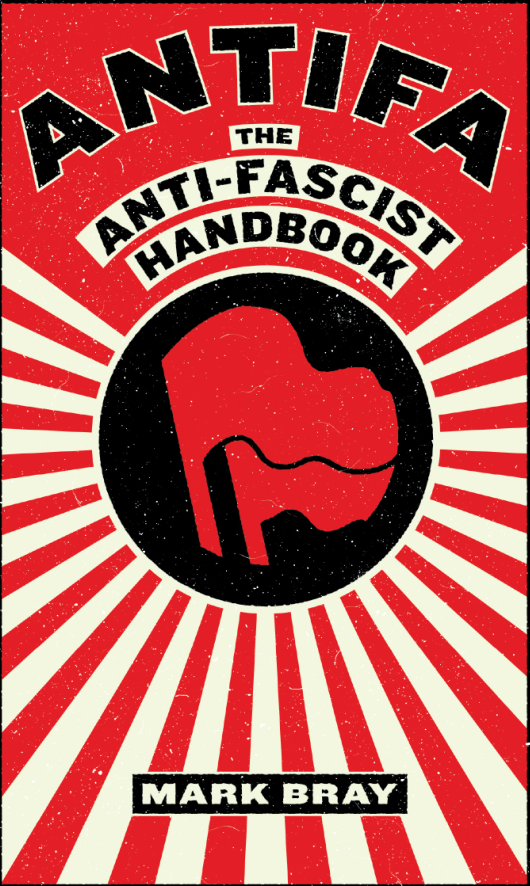
- Read historian Mark Bray’s attempt to leave the United States in the face of fascist government persecution, as reported by WIRED, and get Mark Bray’s book, ANTIFA: The Anti-Fascist Handbook.
- Read the NBC news article to learn more about Bray’s views, such as “Anti-fascists are illiberal. They don’t see fascism or white supremacy as a view with which they disagree as a difference of opinion. They view organizing against them as a political struggle where the goal is not to establish a regime of rights that allow neo-Nazis and victims to coexist and exchange discourse, but rather the goal is to end their politics.”
 Another Think Coming