 |
| Source: http://www.instablogsimages.com/images/2008/02/09/eeepc-kindle_5913.jpg |
In response to this blog entry, Dorothy from Australia asks the following:
I am hoping you might be able to help us. We are using an Ubuntu OS on our ASUS eeePC netbooks at our school in Auckland, New Zealand. We really need an eBook reader for our netbooks – especially one that handles DRM for books loaned from our school library system.
Do you have any suggestions of software we should try? I wasn’t sure whether to contact you via your blog or the GCT forum, so apologise if there was a better way to ask. I did think that if anyone would have a good suggestion it would be you 🙂
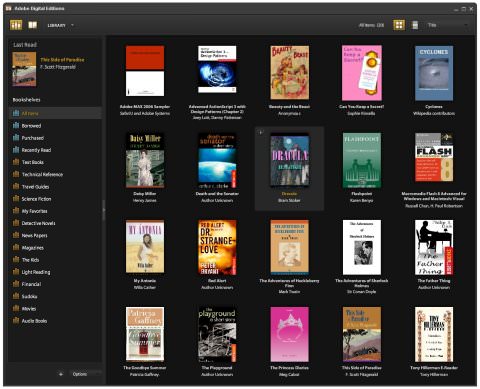
I’m guessing Dorothy is asking about what to do with Overdrive books available via libraries, which was in a bit of controversy back in March, 2011. Overdrive uses Adobe Digital Editions as their primary tool to handle DRM’d ePub books:
Adobe® Digital Editions is a free application used to read EPUB eBooks. Additionally, Adobe Digital Editions support eBooks in the PDF format, but results have been known to vary occasionally based on a number of factors including the complexity of the book (novels tend to render beautifully while complex text books with graphs and charts may render oddly) and the quality of construction of the actual PDF file. (Source: Overdrive)

DRM is used by publishers to restrict what you can do with your ebooks. DRM controls which devices you can use to read your ebook, and stops you converting your ebooks from one format to another. DRM makes buying and using ebooks harder. When you first start using ebooks, you might not notice the restrictions very much. But the restrictions are there.
There are several different DRM schemes. Ebooks with one DRM scheme can’t be read on a device that uses a different DRM scheme. Some DRM schemes limit ebooks to one device only, so if you want to read that ebook on a different device, it’s necessary to download the ebook again. Others require new devices to be authorised by a central server on the Internet.
When you want to use a different ebook reader, or if the supplier stops supporting the ebooks you’ve bought, you may lose access to your DRMed ebooks.
So to be able to read your ebooks on all the devices you have now, and to be sure that you will still be able to read your ebooks in the future, you will want to remove the DRM.
 |
| Source: http://www.file-extensions.org/imgs/app-picture/3869/adobe-digital-editions.jpg |
a) Download it here – http://goo.gl/xubiX
b) sudo apt-get install wine on your Ubuntu netbooks
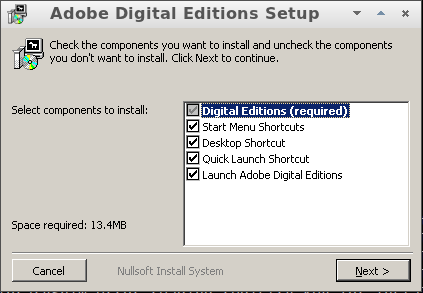
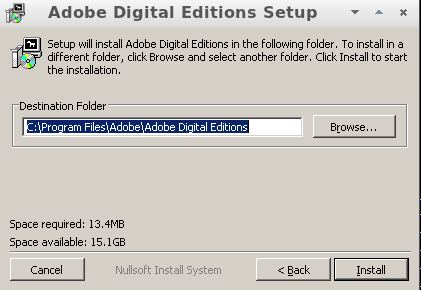
c) open the Adobe setup.exe file with WINE. At the command line, this would look like this:
wine setup.exe
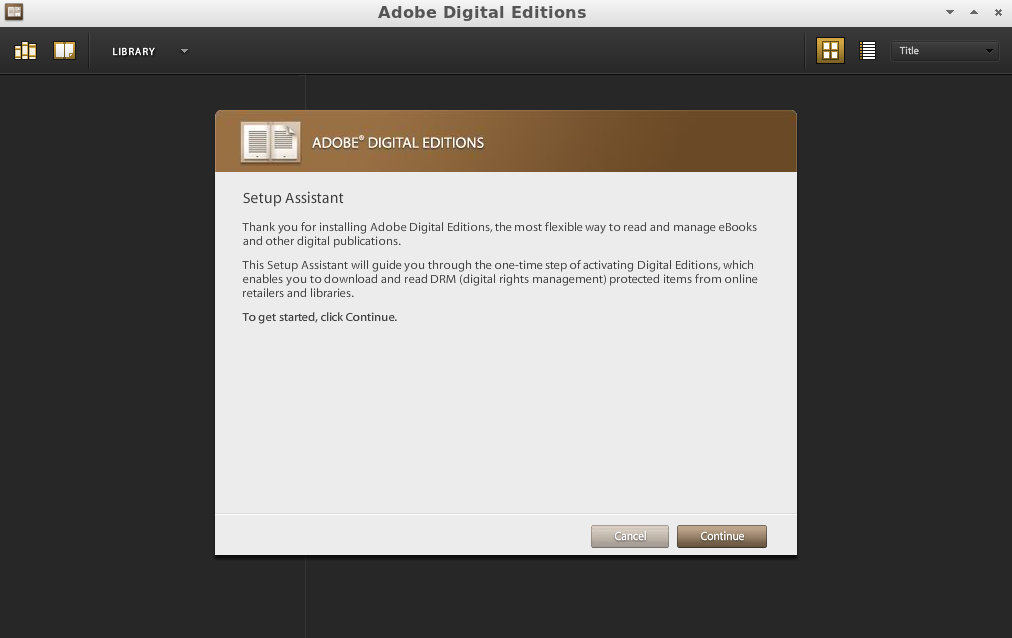
d) Here’s what the installation will look like:
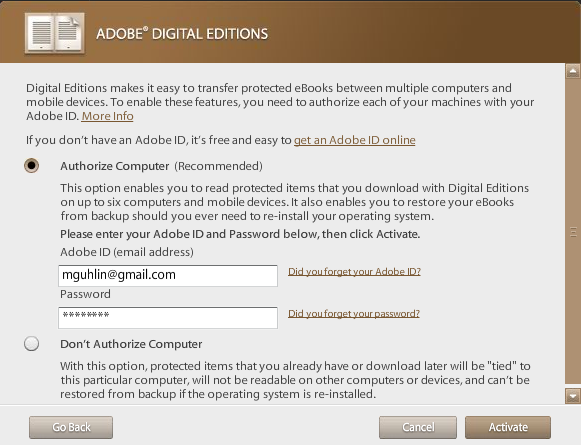

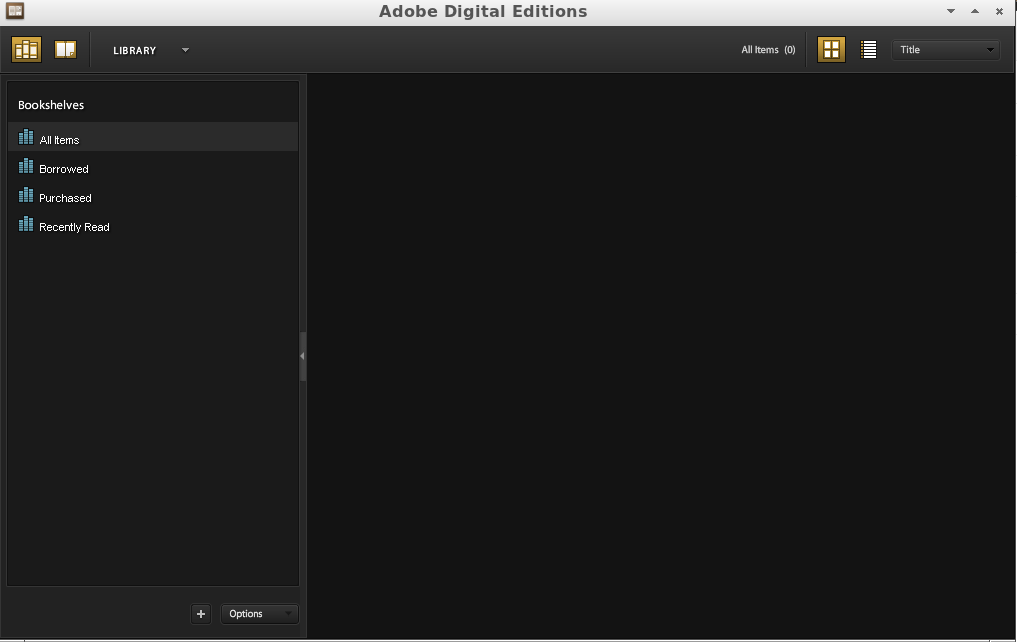
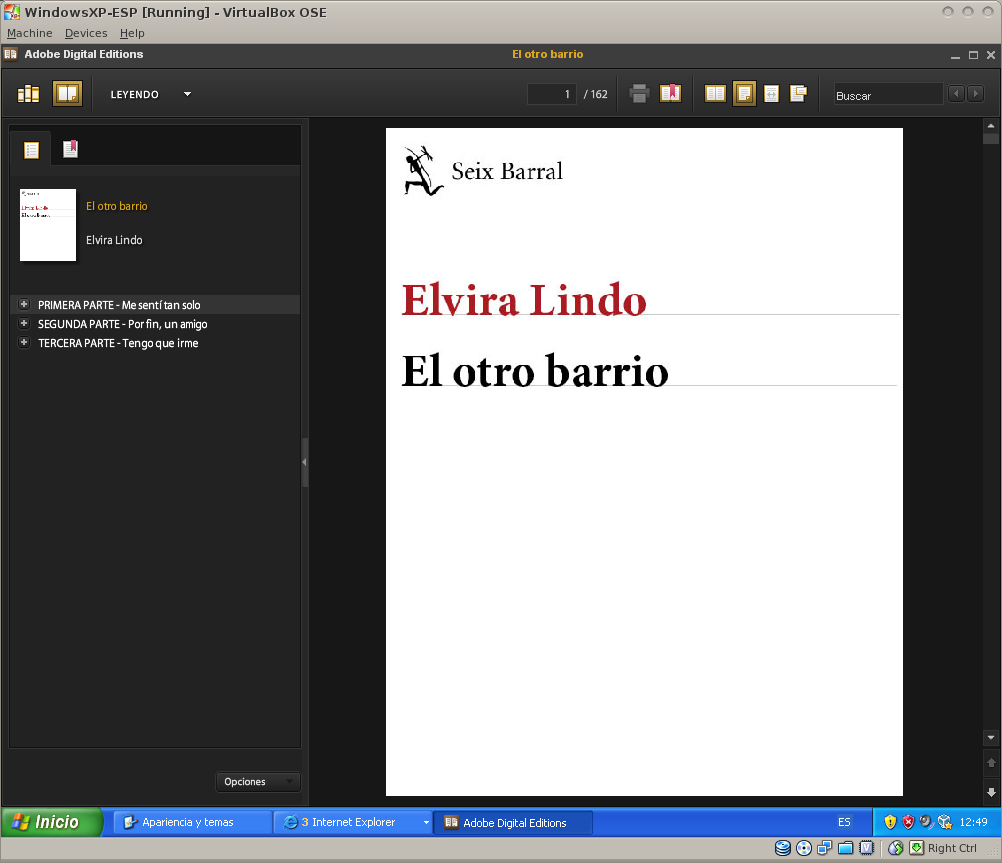 |
| Source: In Spanish- Adobe Digital Editions via Windows in Virtualbox environment |
a) Install Virtualbox on each of your Ubuntu netbooks. You can get the appropriate installer here:
https://www.virtualbox.org/wiki/Linux_Downloads
b) Setup a Windows virtual box–where you install Windows.
c) Install and authorize Adobe Digital Editions for Windows in the virtual box you just created.
d) Copy the Virtualbox files to an external USB drive then put it on multiple netbooks. This assumes you have multiple Windows licenses (to stay legal). I’m not sure how this would affect the authorized Adobe Digital Editions (whether Adobe would “catch on” that it had been duplicated across multiple machines or not).
Enter your email address:
Delivered by FeedBurner


Discover more from Another Think Coming
Subscribe to get the latest posts sent to your email.
 Another Think Coming
Thanks heaps for this Miguel. I am digesting this and sharing it with people who know more than me and will respond more fully soon. I really appreciate the in depth reply and the time you have taken.Dorothy
@Dorothy, so what did you decide?
Hi Miguel,This fell into my court.I won't go with Wine as it opens up a world of pain (i.e. if you have X windows application running on the netbooks, why can't I have Y application?). That's enough for me not to go through the licensing terms (a 1/2 day or so of picking at bits in EULA's is never all that fun).And of course, the licensing cost around Windows for a virtual machine makes that a non-goer.There was another way to remove DRM – extracting some files from ADE and using them with calibre (from memory – it was quite a long time ago now) but of course, that's got the legal issues (as for ethical, the jury's still out. Is it more ethical to respect the publisher's rights or to give kids access to learning materials?).One of the distributors wanting to sell ebook systems to the school libraries in the cluster had said they were hiring a full time developer who would be looking to put together a Linux reader but that was over a year ago with no contact.So if DRM'd ebooks are a non-starter on Linux, I'm curious about other emerging (Linux based) platforms. Android? Chromebooks?
Thanks heaps for this Miguel. I am digesting this and sharing it with people who know more than me and will respond more fully soon. I really appreciate the in depth reply and the time you have taken.Dorothy
@Dorothy, so what did you decide?
Hi Miguel,This fell into my court.I won't go with Wine as it opens up a world of pain (i.e. if you have X windows application running on the netbooks, why can't I have Y application?). That's enough for me not to go through the licensing terms (a 1/2 day or so of picking at bits in EULA's is never all that fun).And of course, the licensing cost around Windows for a virtual machine makes that a non-goer.There was another way to remove DRM – extracting some files from ADE and using them with calibre (from memory – it was quite a long time ago now) but of course, that's got the legal issues (as for ethical, the jury's still out. Is it more ethical to respect the publisher's rights or to give kids access to learning materials?).One of the distributors wanting to sell ebook systems to the school libraries in the cluster had said they were hiring a full time developer who would be looking to put together a Linux reader but that was over a year ago with no contact.So if DRM'd ebooks are a non-starter on Linux, I'm curious about other emerging (Linux based) platforms. Android? Chromebooks?