 |
| Image adapted from http://goo.gl/LF7U5 |
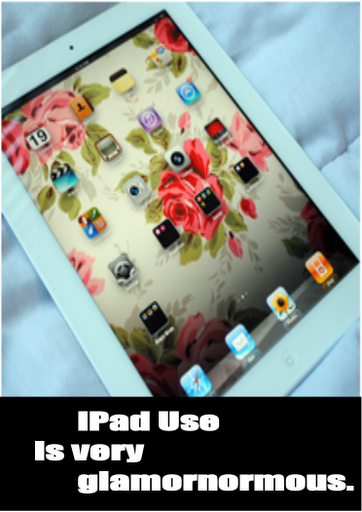
When I glanced at the list of blog entries in Google Reader, Doug “Blue Skunk” Johnson’s blog title “Gianormous Project” registered as “Glamonormous.” It immediately caught my attention because I thought Doug had read my mind again–all the way from MN, USA–and written about something I’d been reflecting on for the last few weeks.
Glamornormous (13 unlucky letters?) –
adjectivean enormous project, full of glamour; an exorbitantly expensive project–usually involving some magical technology–that is charmingly or fascinatingly attractive to school administrators looking to score points with the community, allowing the casual disregard of “purchasing rules” and “common sense.”
The school saved money by getting rid of its computer labs, abandoning plans to build a new language lab and deciding it would no longer buy new textbooks. Larkin said they didn’t throw away the old books, but no longer need to buy new ones, since students and teachers can find everything they need online.
 |
| Image adapted from http://goo.gl/L5U7e |
- Does the project impose a cost greater than the organization can endure over time?
- Does the project appeal to technology as a magical, mystical force for transformation that is not warranted in the research?
- Were stakeholders involved in the decision to invest in the glamornormous project PRIOR to the decision to embrace it?
- Did advance planning try to answer the question, “What is the instructional purpose of bringing in this technology and back it up with research and serious reflection?” (and will these ideas hold water when facing scrutiny or will school leaders postpone deployment of an initiative until the time it is politically viable?).
- Does this project continue to damage the learning ecology of the schools it is in? If it is change, not damage, what are the long-term effects?
 |
| Image adapted from http://goo.gl/PlCJG |
5 Tips to overcome glamornormous giganticus fever:
- Play with new technology in an instructional setting and see if YOU can do what others are saying is possible with that technology.
- Control your thoughts. Don’t fall for the marketing, the buzz of technology. Instead take deep breaths, exhale, and ask, “Do we really need this technology or will existing, less expensive tools do the job?”
- Visualize yourself successfully using technology and encourage others to as well.
- Do everything you can to learn about how others are using the technology.
- Use a variety of technology solutions, not just the one you’re considering.
Enter your email address:
Delivered by FeedBurner



Discover more from Another Think Coming
Subscribe to get the latest posts sent to your email.
 Another Think Coming
My name is Kaylan Shepherd and I am a student at the University of South Alabama. I am a Education major and found your post particularly interesting. The definition that you coined for "glamornormous" hit it just right. Such a perfect aid as technology, should not have to be so costly and 'take over' our teaching strategies. I really enjoyed reading over your blog. I look forward to reading more!
My name is Kaylan Shepherd and I am a student at the University of South Alabama. I am a Education major and found your post particularly interesting. The definition that you coined for “glamornormous” hit it just right. Such a perfect aid as technology, should not have to be so costly and 'take over' our teaching strategies. I really enjoyed reading over your blog. I look forward to reading more!
Hi, I'm Emily Russell in EDM310 at the University of South Alabama.Reading your post reminds me of a video we had to watch, The iSchool Initiative, which argues in favor of using an iTouch as a base for education in schools, replacing textbooks, paper, and pencil with it. What do you think? Is this Glamornormous? It seems like a perfect description for what he's talking about.Though he says it will save the school money on textbooks by buying and using the iTouch, digital copies of textbooks still cost money, and then there's maintenance costs, replacement costs for broken or lost ones, and in the end it seems more complicated and expensive than it's really worth.I liked your blog post, it put a word to something I've been thinking about for a long time.
Hi, I'm Emily Russell in EDM310 at the University of South Alabama.Reading your post reminds me of a video we had to watch, The iSchool Initiative, which argues in favor of using an iTouch as a base for education in schools, replacing textbooks, paper, and pencil with it. What do you think? Is this Glamornormous? It seems like a perfect description for what he's talking about.Though he says it will save the school money on textbooks by buying and using the iTouch, digital copies of textbooks still cost money, and then there's maintenance costs, replacement costs for broken or lost ones, and in the end it seems more complicated and expensive than it's really worth.I liked your blog post, it put a word to something I've been thinking about for a long time.
You may consider an alternative word, "Glam-normal-us" after reading Larry Cuban's post about why research and clear objectives just don't matter to decision-makers.He states:, "When it comes to research supporting major purchases of laptops, tablets, and similar devices, such a cumulative body of evidence is missing-in-action.So if the research pantry is nearly empty, why do districts buy iPads? They want to use hardware and software to solve difficult problems. But school boards and superintendents also buy high-tech devices because they want to be seen as technologically innovative and ahead of other districts. In this culture, the value of technology is equal to social and economic progress."http://larrycuban.wordpress.com/2012/03/10/answering-the-big-question-on-new-technology-in-schools-does-it-work-part-1/See…? Glamnormalous
You may consider an alternative word, “Glam-normal-us” after reading Larry Cuban's post about why research and clear objectives just don't matter to decision-makers.He states:, “When it comes to research supporting major purchases of laptops, tablets, and similar devices, such a cumulative body of evidence is missing-in-action.So if the research pantry is nearly empty, why do districts buy iPads? They want to use hardware and software to solve difficult problems. But school boards and superintendents also buy high-tech devices because they want to be seen as technologically innovative and ahead of other districts. In this culture, the value of technology is equal to social and economic progress.”http://larrycuban.wordpress.com/2012/03/10/answering-the-big-question-on-new-technology-in-schools-does-it-work-part-1/See…? Glamnormalous