At the TCEA 2025 Convention and Exposition, I had the opportunity to attend Diana Benner’s and Peggy Reimers’ session on Instructional Coaching. As you probably know, a lot of folks struggle with instructional coaching. It requires a lot of expertise in a variety of areas, as well as how to build rapport with classroom teachers who may NOT be excited to connect with someone who wants to sit in and support lesson delivery, assessment, and more. In this blog entry, you’ll find some key ideas, as well as coaching strategies to assist teachers in learning.
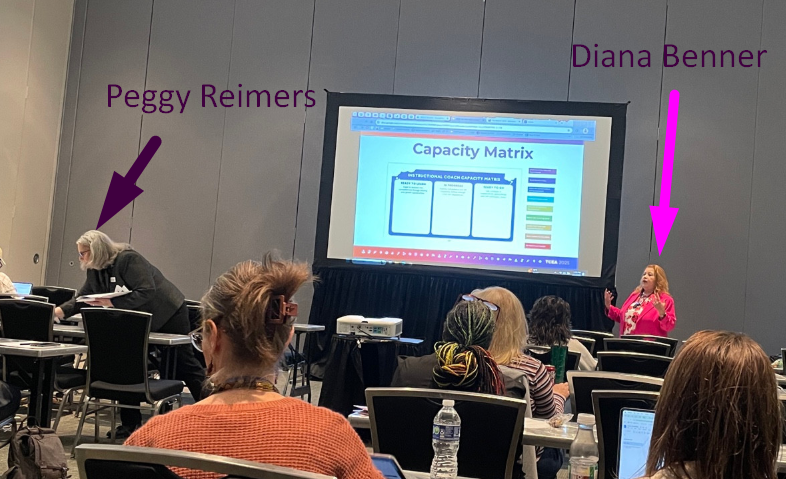
Diana and Peggy had a great activity they kicked off the session with based on a capacity matrix:
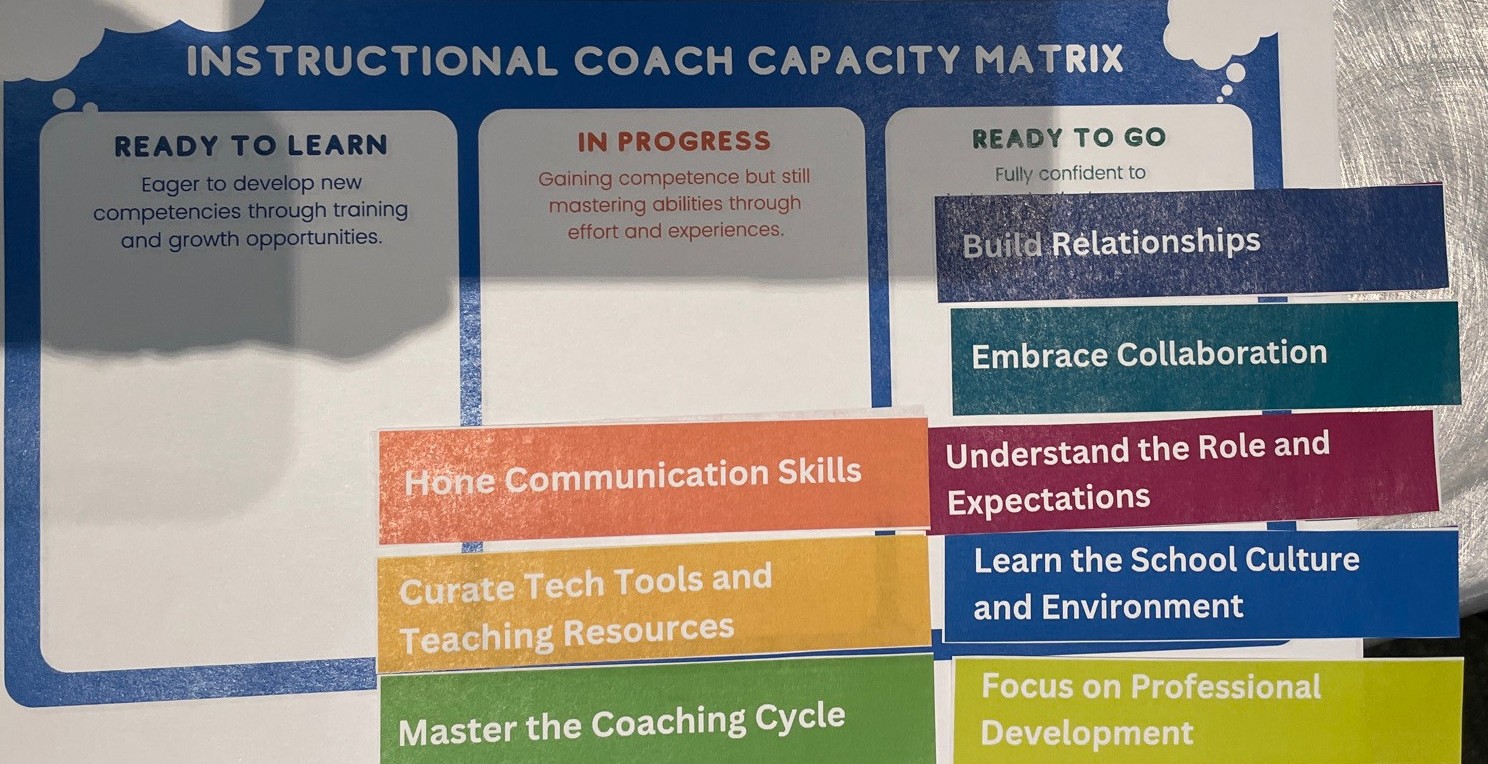
Concepts Shared
A panel presentation featuring coaches from Texas and Delaware shared their responses to coaching questions. I took some notes while they spoke and share that below. Some of the concepts shared include the following:
I. Key Ideas
- Resources are important, such as people (e.g. technical staff)
- Organizer tools (e.g. calendar organizers)
II. Conversation Starters
- Jim Knight’s The Impact Cycle includes questions
- Ask teachers, “What’s your super power?” to coach to people’s areas of strength
III. Coaching Books
- The Impact Cycle by Jim Knight
- Bold School by Weston Kieschnick
- AI Tools for Teachers and Coaches (via ISTE)
- Evidence-based Teaching by Geoff Petty
- The Fundamentals of Teaching by Mike Bell
- Culturally Responsive Teaching by Zaretta Hammond
IV. Coaching Strategies
This is the category that caught my attention and is well-worth revisiting. The panelists shared a few strategies, but I’ve added a few more for your consideration.
- Future-Ready Committee to attract people who are willing to try new things out and participate in pilot deployments of strategies or technologies
- Lunch and Learns are a great way to share just-in-time professional learning opportuniteis with teachers.
Here are a few more:
- Micro-credential Challenges are a way to encourage folks to sign up for online, self-paced courses or earn badges through short sessions. Consider doing this in combination with others.
- Lesson Study Groups are a great way to engage in collaboration on lesson planning, teaching, reflection cycles where teachers analyze student work, and refine lessons together.
- Coaching walks are non-evaluative walk-n-talk visits where teachers and coaches explore instructional practices together.
- Teacher Talk Podcasts offer the opportunity to share best practices, strategies, reflections from their classrooms. I love this idea because it is so easy to use a tool like Voxer, Padlet Video Recording to grab video and share it.
- Strategy Swaps might be teacher meet-ups where teachers share high-impact strategies they have tested in their classrooms.
- Digital Playlists for professional development are self-paced learning playlists with a mix of video, readings, and reflection prompts. I like the idea of self-paced learning playlists a la choice board.
- Reflective Video Coaching is a cool way to have teachers record lessons and use a structured protocol (e.g. Diane Sweeney’s Results-Based Coaching Tool) to analyze and refine their practice.
- Instructional Rounds reminds me of medical rounds that doctors do in hospitals. Groups of teachers visit classrooms with a focus on specific instructional goals or implementation of a strategy.
- Fail-Forward Sessions are amazing since they involve teachers sharing “lesson fails” and what they’ve learned. I’m sure this one would require a high level of trust and risk-taking, and you probably wouldn’t want your evaluative observation admin listening in.
- One Thing Meeting lets you have short PD sessions where each teacher commits to trying ONE actionable item.
Are there any coaching strategies you would add?
After the amazing panel discussion featuring instructional coaches from different places, I had to hit the road to go to my duty station on Level 3, but no doubt, there are a ton of great ideas out there.
Coaching Models
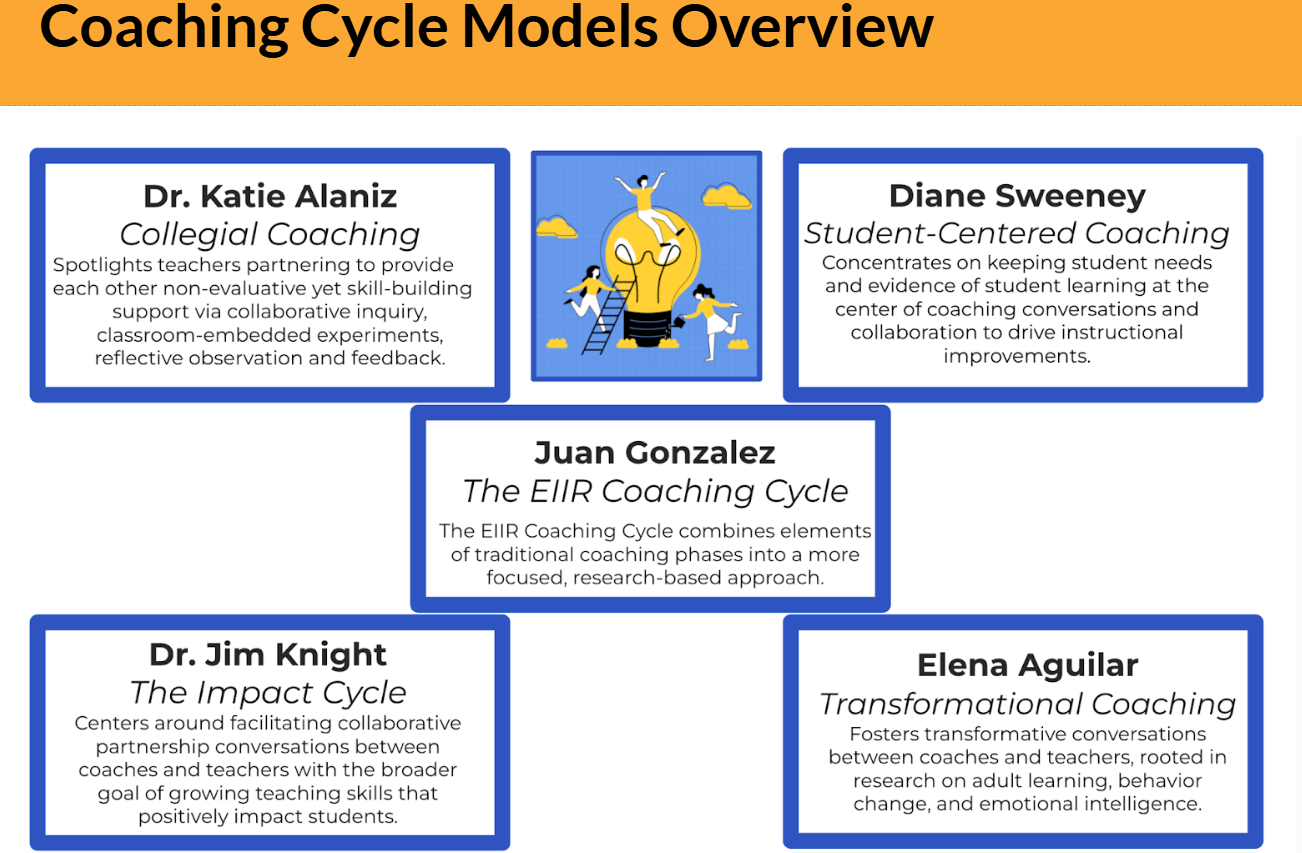
I was really hoping to get to speak about the Coaching Models, especially Juan Gonzalez’ EIIR Coaching Cycle. Diana and Peggy spoke to a few of those ideas but the EIIR Cycle is the one that TCEA features in their Instructional Coaching Certification (you can earn 33 hours of CPE credit) course.:
Instructional Coach Certification ($349) – Fuel your passion for teacher development with TCEA’s Instructional Coach Certification! Dive into coaching cycles, tech tools, communication, and more.
Discover more from Another Think Coming
Subscribe to get the latest posts sent to your email.
 Another Think Coming
[…] #TCEA #Coaching Strategies for Teachers #EduSky […]