Menu | #1: Ethics | #2: Prompting | AI in 5 Series | #3: Automating
This foundational session will explore the responsible use of AI in the scholarship field, focusing on student data protection, bias mitigation, and ethical considerations when using automated tools in student selection, outreach, and communications. At the end, you will have earned your badge of Gen AI Ethical Strategist.
Short link to this page - https://tinyurl.com/mgnspa1
Agenda Highlights
- Understanding privacy risks and how to safeguard student data when using AI
- Identifying and mitigating bias in AI-generated recommendations or content
- Building internal policies and team awareness around ethical AI use
Access Google Drive folder with all resources
All resources shared under Creative Commons BY SA
Session Slides and Handouts
- Slide deck | PDF of slides only (no notes) | Google Docs Participant Handout
- StrawPoll: What GenAI Platform?
- Get Table Top Exercises for Team Discussions (PDF) or get Canva Template
- ETHIC CARE Coach, a custom GPT
- Bonus Content to Read and Ponder
- Hyperdoc, self-paced versions:
- The Guardian’s Quest: Forging an Ethical Oracle. A fantasy-oriented exploration of custom GPT creation with a fantasy twist (instead of a GPT, it’s an Oracle).
- GenAI Trek: The Scholarship Officer’s Mission. A Star Trek’s version of custom GPT creation (instead of a GPT, it’s an Ethical Heuristic AI)
- Google Gemini NotebookLM Content:
- Podcast: Listen to this Gemini NotebookLM GenAI hosted chat (m4a) or
- Video: Watch this NotebookLM generated video
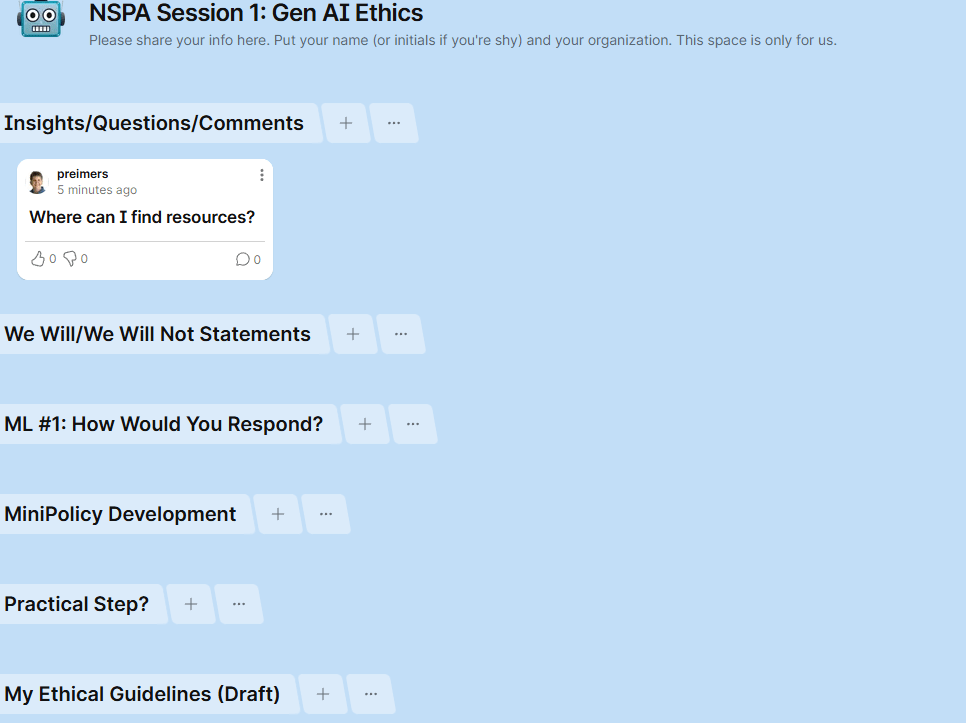
Padlet - Share All Your Creations Here
Access the Padlet to share your responses to activities.
“The critical lesson from history is that ethical technology use requires continuous vigilance—not one-time solutions—to counter humanity’s tendency to prioritize convenience over conscience”
Gen AI chatbot
The Difference Between Human and Gen AI Ethics
Ethics for Humans:
Ethics is a system of moral principles that guides individuals in distinguishing right from wrong and informs responsible behavior within society. It is grounded in rational inquiry, shared values, and a commitment to fairness, justice, and respect for others.
Human ethics arise from personal conscience, cultural values, and philosophical reasoning, guiding individuals’ choices and intentions.
Ethical AI:
Ethical AI refers to artificial intelligence systems designed and operated according to principles such as fairness, transparency, and accountability, with safeguards to prevent harm and discrimination. These systems are engineered to align with human values and societal norms, ensuring responsible and trustworthy outcomes.
Ethical AI is implemented through programmed rules and protocols that ensure AI systems behave in ways aligned with human values and societal standards.
Jigsaw #1: Shifting from Ethical AI to Ethical Use
Skeptical about the claims in these recent news articles? Explore them them the filter of a Critical Thinking Framework like the SIFT Method, FLOATER, or the Orwell Test. Or, ask one of these custom GPTs/bots to do it for you: Skeptical Thinking Evaluator (ChatGPT or BoodleBox). Take some time to read and take notes (by hand). Here’s a handy Notes Organizer (PDF) (get Canva version) you can print and use.
- Poisoned for Progress: How AI is Quietly Draining Black Communities: As AI demands skyrocket, so does water and energy use. In Black neighborhoods, the environmental cost is real—and rooted in a legacy of systemic neglect.
- Texas Investigates AI Chatbot Companies for Deceptive Mental Health Service Aimed at Children: Investigation builds upon a probe into Character AI’s data privacy and safety practices announced in December.
- Meta’s AI Policy Just Crossed a Line: Allows permissive instructions on what its AI bots could say and do. That includes engaging children in romantic or sensual conversations, generating racist pseudoscience, and creating false medical claims, as long as the content avoided certain language or came with a disclaimer.
- They’re Stuffed Animals. They’re Also A.I. Chatbots. New types of cuddly toys, some for children as young as 3, are being sold as an alternative to screen time — and to parental attention.
- Fear Of Super Intelligent AI Is Driving Harvard And MIT Students To Drop Out: College students, including from elite universities, are abandoning school now to work full-time on preventing it from turning on humanity.
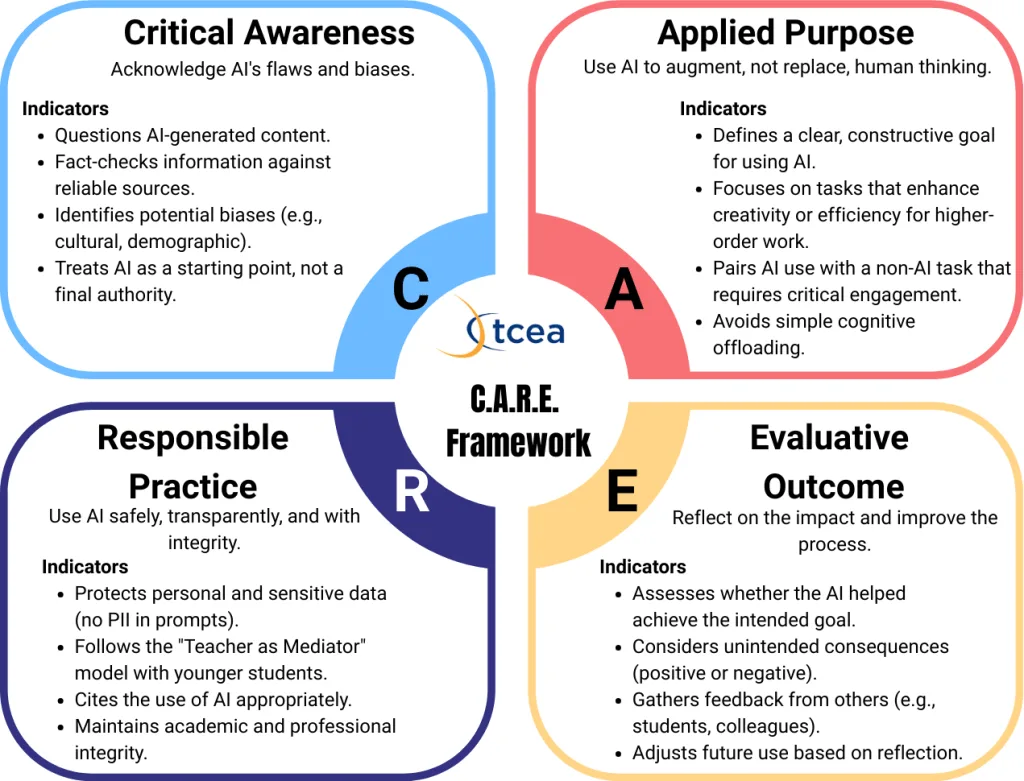
The CARE Framework
- Critical Awareness. This is the foundational step of acknowledging the tool’s limitations and problematic origins. It means understanding that AI outputs can be biased, inaccurate, or incomplete. It involves maintaining a healthy skepticism and never treating the AI as an absolute authority.
- Applied Purpose. This principle demands that we use AI intentionally and for a constructive reason. The goal should be to augment human capability, solve a specific problem, or increase efficiency for a meaningful task—not simply to replace human thought or effort. The question is always, “What good am I trying to achieve with this?”
- Responsible Practice. This is about the how. It involves the practical ethics of using the tool. This includes citing the AI when used, fact-checking its outputs against reliable sources, protecting personal or sensitive data, and refusing to use it for plagiarism or to create misinformation.
- Evaluative Outcome. This is the reflective step. After using the AI, we must assess the result. Did it help achieve the intended purpose? Did it create any unintended negative consequences? Did it deepen understanding or create a shortcut that hindered learning? This closes the loop and informs future use.
MiniLesson #1

Action checklist
- Hard rule: No PII in consumer/free AI.
- Standardize on an approved assistant (Copilot EDU or Gemini EDU) and publish the allowlist/blocklist.
- Use local tools for recordings/IEP notes/transcripts when possible.
- Train staff: “Would you email it unencrypted? If not, don’t paste it into free AI.”
MiniLesson #2: Bias
- Can we trust AI and algorithms to hire people fairly and inclusively?
- What Are the Risks of Algorithmic Bias in Higher Education?
- Example 1: Study Reveals Gender Bias in AI Systems for Social Care Decisions and
- Example 2: AI Penalizes Black Women’s Natural Hairstyles as Less Professional
- The impact of AI errors in a human-in-the-loop process
- How human–AI feedback loops alter human perceptual, emotional and social judgements
Human-AI Bias
AI amplifies small human biases in its training data, and through repeated interaction, humans adopt and further amplify the AI’s biases. This leads to an increase in bias over time rather than its reduction. Unlike human-human interactions, human-AI feedback loops intensify initial biases significantly as humans learn to trust and adopt AI’s biased judgments, sometimes without adequately acknowledging this influence (source)
| Concept | Description | Effect or Example |
|---|---|---|
| AI Confirmation Bias | AI favoring data/patterns that match prior beliefs in training data. | AI outputs perpetuate existing biases, reinforcing stereotypes (e.g., over-representing certain demographics) 3. |
| Human Confirmation Bias | Humans accepting AI outputs only if consistent with their own beliefs; rejecting contradictory AI results. | Doctors rejecting AI diagnosis that contradicts their experience 1. |
| Human-AI Feedback Loop | AI amplifies human bias in training data; humans further amplify AI’s bias after interacting with it. | Over time, human judgments become more biased after using AI systems repeatedly 2. |
| Anchoring/Automation Bias | Humans overly trusting AI output when it’s presented before their own assessment. | Excessive compliance with AI recommendations causing errors 4. |
| Mitigation Strategy | Humans provide their own judgment before viewing AI output to reduce bias and increase decision accuracy. | Forcing explicit judgment first reduces anchor bias and automation bias 4. |
Mini-Lesson #3: Building Guidelines
Designing Use Cases should consider:
- Data Governance: What specific data will be used, and what Personally Identifiable Information (PII) will be explicitly removed before prompting?
- Human Oversight: What is the mandatory, non-negotiable human review step after the AI provides its analysis?
- Bias Mitigation: What specific question must the human reviewer ask themselves to check for potential AI bias in the output?
Ethic CARE Coach - Custom GPT
Access the Ethics CARE Coach to assess your Will Do/Will NOT do statements and more using the CARE Framework.
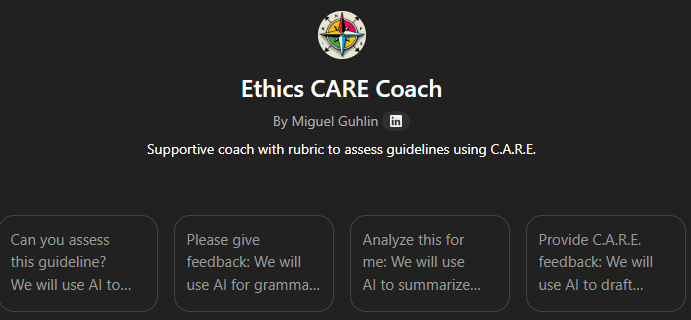
Ethics in AI can’t really be about programming morality into machines, it has to be about empowering users to make ethical choices and about teaching us humans to interact with these systems thoughtfully, transparently, and with accountability.
Bonus Content to Read and Ponder
- ChatGPT is ethically unreliable
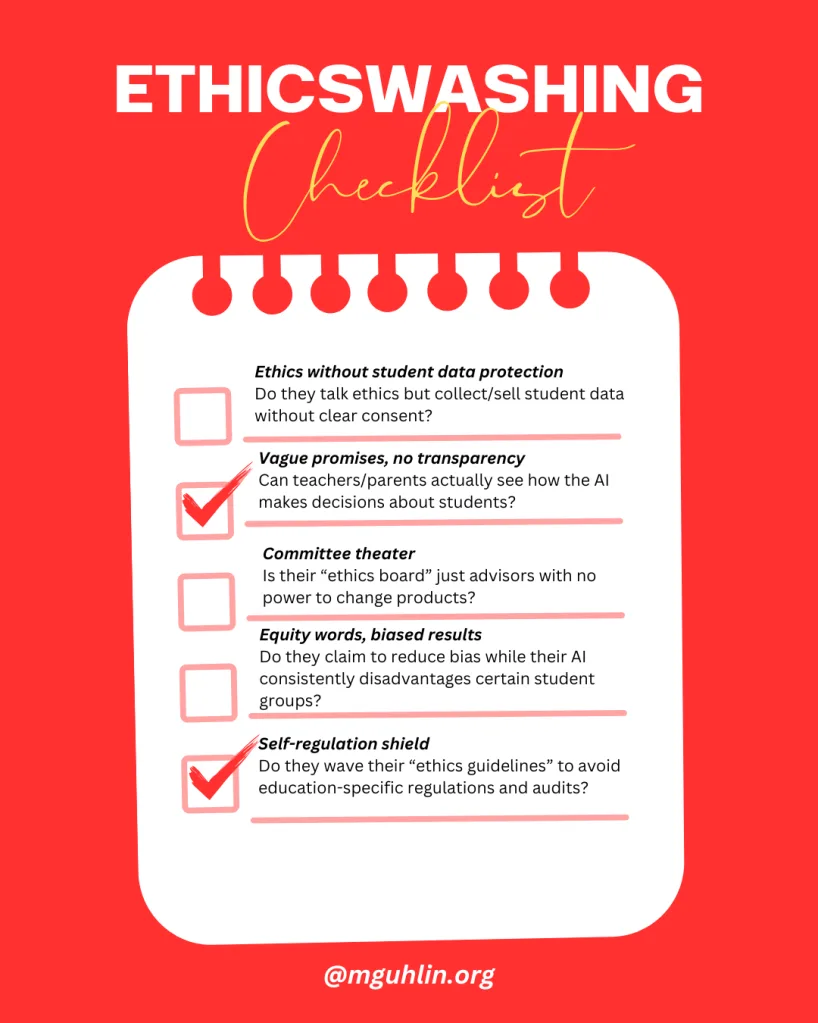
- Ethics White Washing Checklist
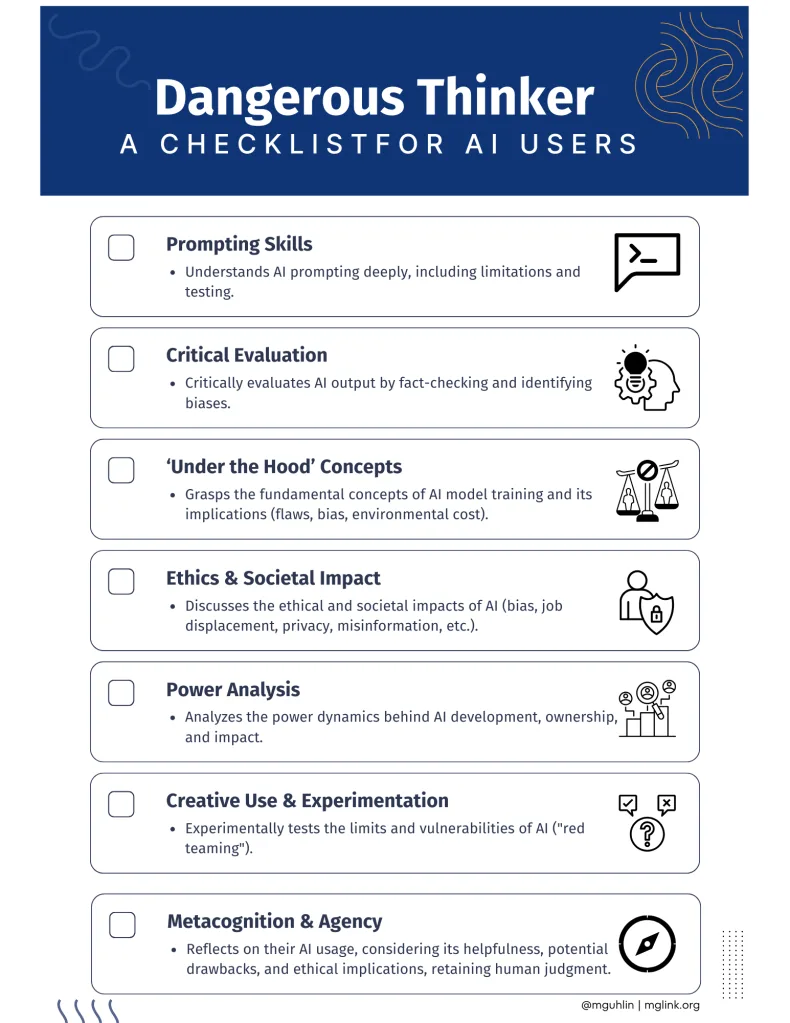
- Dangerous Thinking
- What is Ethical AI?
- Ethical AI vs Ethical Coffee Production
- To Post or Not to Post: AI Ethics in the Age of Big Tech – Communications of the ACM
- View of Generative AI in Design Thinking Pedagogy: Enhancing Creativity, Critical Thinking, and Ethical Reasoning in Higher Education
- AI in the Classroom: Panic, Possibility, and the Pedagogy in Between
- My Ethical AI Principles
- On Ethical AI Principles
- We need a new ethics for a world of AI agents
- What Gödel’s incompleteness theorems say about AI morality | Aeon Essays
- AI Ethics in the Content Areas
- How the Vatican Is Shaping the Ethics of Artificial Intelligence
Capabilities & Ethics of AI Found in Middle Grades Fiction - Digital ethicswashing: a systematic review and a process-perception-outcome framework - AI and Ethics
- AI Ethics, Ethics Washing, and the Need to Politicize Data Ethics
- AN ETHICAL WIN-WIN-WIN
- The Most Important Skills for the 4th Industrial Revolution? Try Ethics and Philosophy
- Facebook And The Ethics Of User Manipulation
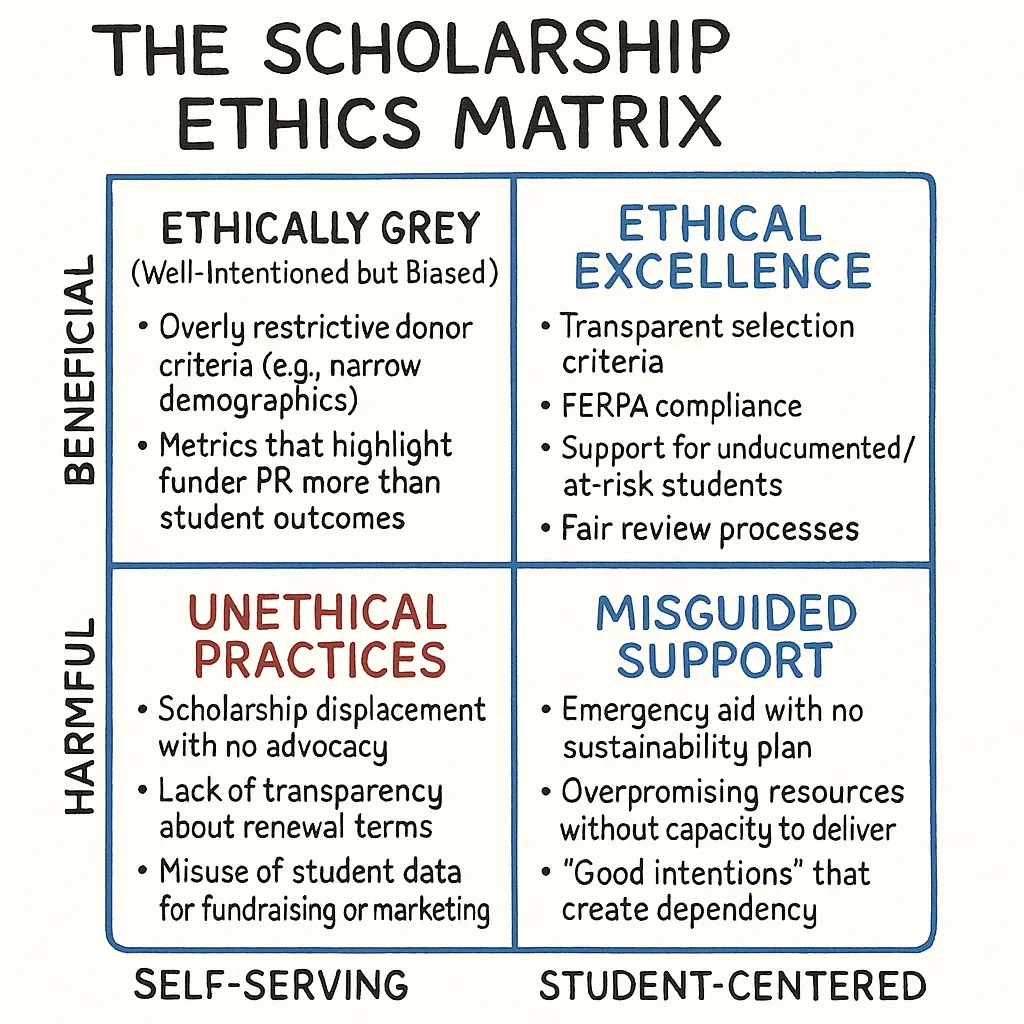
ChatGPT Generated…how accurate is this to your experience and knowledge?
FAQ by Notebook LM of This Preso
The following was generated by Google Gemini’s NotebookLM:
1. Why is the focus shifted from “ethical AI” to “ethical use of AI”?
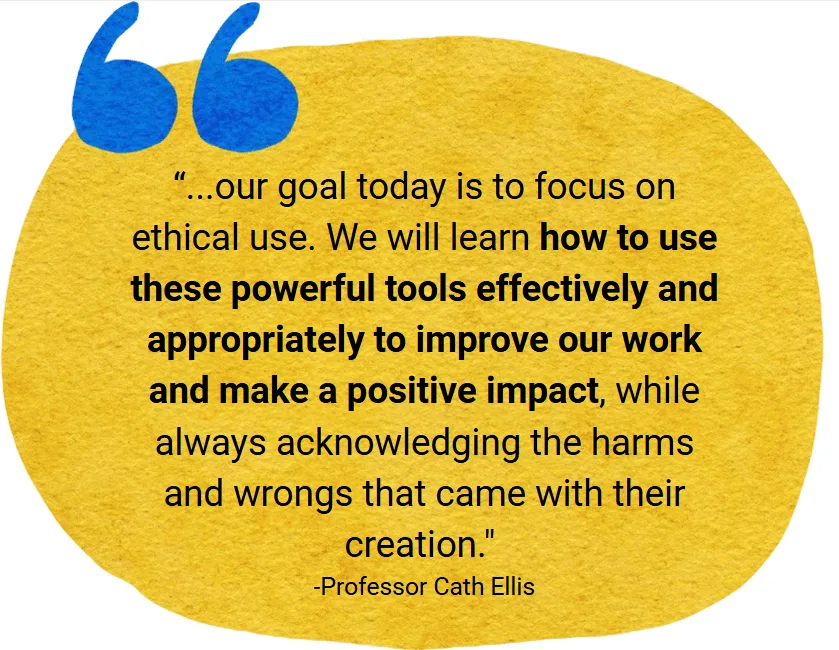
The shift in focus from “ethical AI” to “ethical use of AI” is prompted by the understanding that current AI models are built on vast amounts of data, often collected without clear consent. This flawed foundation means that AI models themselves cannot truly be called “ethical” or “responsible.” Instead of ignoring these inherent problems, the National Scholarship Providers Association (NSPA) emphasizes teaching users how to employ these powerful tools effectively and appropriately. The goal is to maximize the positive impact of AI in fields like scholarships while acknowledging the “harms and wrongs” associated with their creation, such as data privacy concerns, inherent biases, and potential for misuse. This approach, advocated by Professor Cath Ellis, encourages responsible human agency in navigating the complexities of AI technology.
2. What are the main ethical frameworks relevant to AI use, and which are most emphasized for practical application?
The sources introduce three main ethical frameworks:
- Consequentialism (including Utilitarianism): Focuses on outcomes, advocating for actions that produce the greatest good for the greatest number of people.
- Pragmatic Ethics: Evaluates actions based on their practical application and success in solving problems, emphasizing what works in a given context rather than rigid principles.
- Deontological Framework: Concentrates on duties and rules. It might argue against using AI if its creation involved unethical acts (e.g., non-consensual data use), deeming any subsequent use morally wrong regardless of positive outcomes.
While all frameworks are mentioned, the NSPA’s approach leans heavily towards Pragmatic Ethics in its emphasis on “ethical use.” The focus is on developing practical guidelines and responsible practices that work to mitigate the known flaws of AI (like bias and data privacy issues) while still harnessing its benefits. The “We will…” and “We will not…” statements, and the C.A.R.E. Framework, exemplify this practical, action-oriented ethical approach.
3. What is the C.A.R.E. Framework, and how does it guide ethical AI implementation?
The C.A.R.E. Framework is a four-principle guide for the ethical use of AI:
- Critical Awareness (C): Acknowledging AI’s flaws, biases, and limitations. It involves maintaining a healthy skepticism, fact-checking AI outputs, and identifying potential biases. Users should treat AI as an augmentative tool, not an absolute authority.
- Applied Purpose (A): Defining clear, constructive goals for AI use that augment human capabilities rather than replacing human thinking entirely. It focuses on using AI for efficiency, creativity, or solving specific problems, avoiding “cognitive offloading.”
- Responsible Practice (R): Implementing safe, transparent, and integrity-driven AI usage. Key aspects include protecting personal and sensitive data (e.g., no PII in prompts), citing AI use, and maintaining academic and professional integrity.
- Evaluative Outcome (E): Reflecting on the impact of AI use and improving processes for the future. This involves assessing whether the AI achieved its intended goal, considering unintended consequences, and adjusting future practices based on feedback and reflection.
The C.A.R.E. Framework provides a structured approach for individuals and organizations to navigate the complexities of AI, moving from understanding its inherent limitations to implementing practical, human-centered guidelines.
4. What is the critical distinction between free/consumer AI tools and enterprise/education AI platforms regarding data privacy?
The critical distinction lies in the contractual safeguards and data handling practices.
- Free/Consumer AI Tools (e.g., ChatGPT Free, Google Gemini consumer, Meta AI): These tools are often ad-supported or personal accounts. Users should assume that prompts and uploaded data may be reviewed, retained, and used to train and improve the AI models. There are typically no Data Processing Agreements (DPAs) or strong administrative controls. Crucially, student Personally Identifiable Information (PII), FERPA-protected data, or other sensitive information should never be entered into these platforms.
- Enterprise/Education AI Platforms (e.g., BoodleBox Unlimited, Google Workspace with Gemini Education, Microsoft 365 Copilot EDU): These are school-managed accounts or dedicated enterprise versions that come with contractual shields. Key safeguards include:
- Data Not Used for Training: The vendor contractually agrees not to use organizational data to train public models.
- Ownership & Control: The organization retains ownership of prompts and AI outputs.
- Encryption: Data is encrypted in transit and at rest.
- Compliance: Platforms are built to support compliance with regulations like FERPA and HIPAA and often hold security certifications.
Using enterprise solutions is non-negotiable for any task involving sensitive student data to ensure privacy and compliance. However, even with enterprise tools, users still have personal responsibilities like data minimization and understanding terms of service.
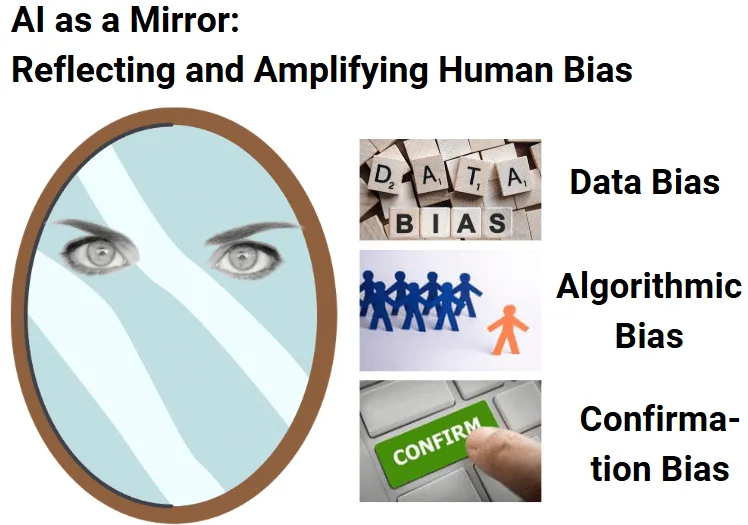
5. What types of bias can manifest in AI, and how can they be mitigated?
Three main types of bias can manifest in AI:
- Data Bias: Occurs when certain groups are underrepresented or inaccurately represented in the vast datasets used to train AI. If the training data lacks diversity, the AI will be less knowledgeable or accurate concerning those underrepresented groups.
- Algorithmic Bias: Arises from how the AI model is programmed to make connections and process information, potentially leading it to reinforce stereotypes or make discriminatory associations.
- Confirmation Bias (or Human-in-the-Loop Bias): This is human bias, where users tend to accept AI outputs that confirm their existing beliefs, inadvertently overlooking or ignoring potential inaccuracies or biases generated by the AI.
Mitigating AI bias is primarily a human responsibility, as enterprise privacy protections do not remove foundational model bias. Strategies include:
- Mandatory Human Oversight: AI should never make final decisions; all AI-generated content (summaries, letters, recommendations) must be reviewed by a person.
- Diversified Reviewers: Employing multiple human reviewers from diverse backgrounds helps create a stronger “human filter” to catch subtle biases that a single individual might miss.
- Critical Evaluation of Outputs: Treating all AI-generated content as a “flawed first draft” that requires critical human judgment and an equity lens. Users should actively question AI outputs for potential biases, missing perspectives, or factual errors.
6. How should organizations build internal policies for ethical AI use in a scholarship context?
Building internal policies for ethical AI use in a scholarship context requires a human-centered framework that bridges awareness of risks with actionable practices. An effective policy should be built upon five key pillars:
- Approved Tools & Use Cases: Clearly define which specific enterprise AI tools are approved and for what precise tasks (e.g., summarizing essays, drafting outreach emails).
- Data Governance: Establish strict protocols for handling data, especially Personally Identifiable Information (PII). This includes data minimization (only providing the necessary data) and explicitly outlining what PII must be removed before prompting AI.
- Bias Mitigation: Mandate specific steps for checking AI outputs for bias, such as requiring human reviewers to ask critical questions about fairness and representation.
- Transparency: Determine when and how the use of AI should be disclosed to stakeholders, including applicants or students.
- Human Oversight: Define clear lines of accountability, specifying at what points human staff must make final decisions and reviews, ensuring AI is an assistant, not a replacement for human judgment.
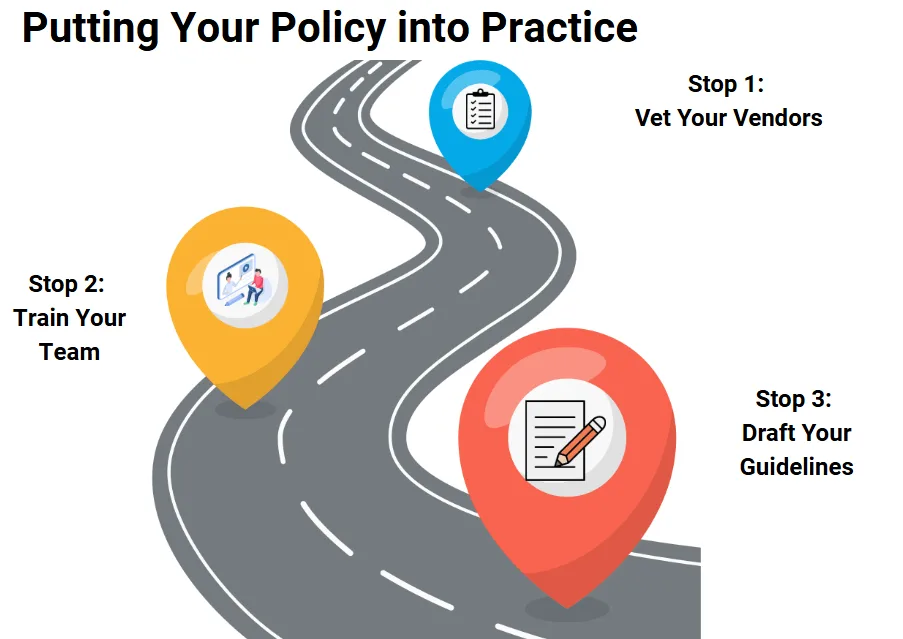
Before drafting guidelines, organizations must also vet their vendors (involving IT and legal teams to review security, privacy, and terms) and train their teams on the policies and the C.A.R.E. framework to build a culture of responsible practice.
7. What are practical “We will…” and “We will not…” guidelines for common scholarship tasks using AI?
The “We will…” and “We will not…” structure provides clear, actionable guidelines for ethical AI use, balancing applied purpose with responsible practice.
For Summarizing Applicant Essays:
- We will… use the AI assistant to generate concise, bullet-point summaries of applicant essays to help our reviewers quickly grasp the core themes before their own in-depth reading.
- We will not… include any personally identifiable information (PII) in the prompt, nor will we use the AI-generated summary as the sole basis for any evaluation or decision.
For Drafting Rejection/Acceptance Letters:
- We will… use the AI assistant to generate first drafts of acceptance and rejection letters based on pre-approved templates, ensuring a consistent and compassionate tone for all applicants.
- We will not… allow the AI to generate personalized feedback or reasons for rejection, and every letter must be reviewed and sent by a human staff member.
These examples demonstrate how to define the positive intent (applied purpose) while establishing clear boundaries and safeguards (responsible practice) to protect student data and ensure fairness.
8. What is the ultimate responsibility of an “Ethical AI Strategist” and why is it important to acknowledge the problematic origins of Gen AI?
An “Ethical AI Strategist” is entrusted with the commitment to explore positive and responsible ways to use Generative Artificial Intelligence. This role goes beyond uncritical adoption or outright rejection. It demands engaging critically, acting responsibly, and seeking opportunities to align AI use with human values and contribute to well-being.
It is crucial for an Ethical AI Strategist to acknowledge the problematic origins of Gen AI because:
- Inherent Flaws: Gen AI is built on vast datasets that often lack clear consent, carry biases, reflect inequities, and come with environmental costs and human impacts. Ignoring these foundational flaws leads to irresponsible use.
- Mitigation Requires Awareness: Understanding that AI models are not inherently “ethical” or “neutral” is the first step in actively mitigating risks like data privacy violations and algorithmic bias.
- Human-Centered Approach: Acknowledging these issues reinforces the need for a human-centered approach, where human oversight, critical awareness, and responsible practices are paramount to ensure fairness, privacy, and accountability.
By accepting this responsibility, an Ethical AI Strategist chooses the “harder path” of critical engagement to leverage AI’s benefits while consciously working to counteract its inherent harms.
NotebookLM Video Overview
Watch video
Hyperdocs
The Guardian’s Quest: Forging an Ethical Oracle
A Self-Guided HyperDoc for Scholarship Providers

GenAI Trek: The Scholarship Officer’s Mission
A Starfleet Self-Guided Mission for Scholarship Programs Officers

Microsoft Copilot Licensing Options for Scholarship Providers - Data Privacy Focus
| License Type | Can Use Copilot? | Your Data Privacy - What Actually Happens | Key Features in Plain English | Who Should Use This | What You DON’T Get |
|---|---|---|---|---|---|
| Microsoft 365 E3 | ✅ Yes (must buy Copilot separately) | YOUR DATA IS PROTECTED: • Microsoft CANNOT see your data • Your data NEVER trains their AI • Your data stays in YOUR organization only • Everything stays private to your organization • Meets standard business privacy laws • You can add SharePoint Advanced Management (a tool that gives you more control over your documents and who sees them) | • Basic security tools • Standard email and document protection • Can track who accesses files • Can set basic rules about data sharing • Good enough for most organizations | Organizations that handle normal business data and want solid protection without breaking the budget | • Advanced threat detection • Sophisticated data leak prevention • Advanced legal discovery tools • Premium security analytics |
| Microsoft 365 E5 | ✅ Yes (must buy Copilot separately) | YOUR DATA IS PROTECTED (PLUS MORE): • Everything from E3 PLUS • Advanced monitoring of data access • Can detect unusual employee behavior • Better protection against hackers • More detailed audit trails • Still NEVER used to train AI | • Everything from E3 PLUS • Automatic detection of risky behavior • Advanced protection against data leaks • Better tools for legal compliance • Can automatically classify and protect sensitive documents • Phone system included | Organizations handling very sensitive data (SSNs, financial records, health info) or under strict regulations | • More expensive • Has many features smaller organizations won’t use • Requires more IT expertise to manage |
| Microsoft 365 A3 (Education) | ✅ Yes for teachers/staff only (must buy Copilot separately) | YOUR DATA IS PROTECTED: • Same privacy as E3 • Complies with education privacy laws (FERPA) • Student data is protected • Microsoft CANNOT use your data • Data NEVER trains their AI | • Same as E3 but cheaper for schools • Designed for education privacy laws • Basic security and compliance • Good document and email protection | Schools and education-focused scholarship organizations with standard needs | • Students can’t use Copilot • No advanced threat protection • Basic data protection only |
| Microsoft 365 A5 (Education) | ✅ Yes for teachers/staff only (must buy Copilot separately) | YOUR DATA IS PROTECTED (MAXIMUM): • Same as E5 privacy levels • Meets strictest education regulations • Advanced monitoring and protection • Complete audit trails • Still NEVER used to train AI | • Same as E5 but cheaper for schools • Maximum security for education • Advanced analytics about data use • Automatic threat detection • Phone system included | Schools handling very sensitive data or large scholarship organizations in education sector | • Students can’t use Copilot • Still expensive even with education discount • Complex to set up and manage |
Simple Recommendations for Scholarship Providers
| Your Situation | Best Choice | Why This Makes Sense |
|---|---|---|
| Small scholarship foundation (under 50 people) | E3 | Protects your data completely, costs less, has everything you need |
| Large scholarship organization (50+ people) | E5 | Better monitoring tools, helps prove compliance, worth the extra cost for peace of mind |
| School-based scholarship program | A3 | Education discount, meets school privacy laws, saves money |
| Scholarship program handling very sensitive financial data | E5 or A5 | Maximum protection, best audit trails, helps you sleep at night |
THE BOTTOM LINE ON DATA PRIVACY:
- ALL these licenses protect your privacy completely
- Microsoft NEVER uses your organization’s data to train Copilot or any AI
- Your scholarship data, applicant information, and internal documents stay 100% private
- The main difference is HOW MUCH monitoring and control you get, not whether your data is private
Important: Copilot itself costs extra (about $30 per person per month) on top of any of these licenses.
Bonus Content