The short version
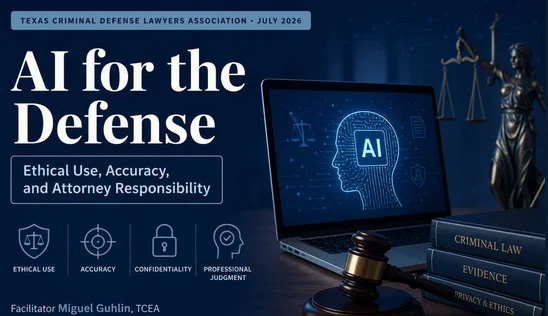
Explore my professional learning resources for the Texas Criminal Defense Lawyers Association summer event, CLE in the Sun.
Welcome to the session materials for my session, AI in Law: Tools, Tactics, Ethical Traps & Practical Prompting.
Handy Short Links To Bookmark
Here are the links you need to keep track of for this presentation and access resources:
- This Page - https://go.mgpd.org/tcdla26
- Resources - https://mglearn.github.io/legalai
- Glossary - https://mglearn.github.io/legalai/handouts/glossary.html
One Thing
Draft with the tool, and decide as the lawyer. Generative AI can produce a great deal of text quickly. Your value is knowing which of it is true, which serves this client, and which to cut. If you keep only one habit from the session, make it this one:
Open the source and verify the citation, every single time.
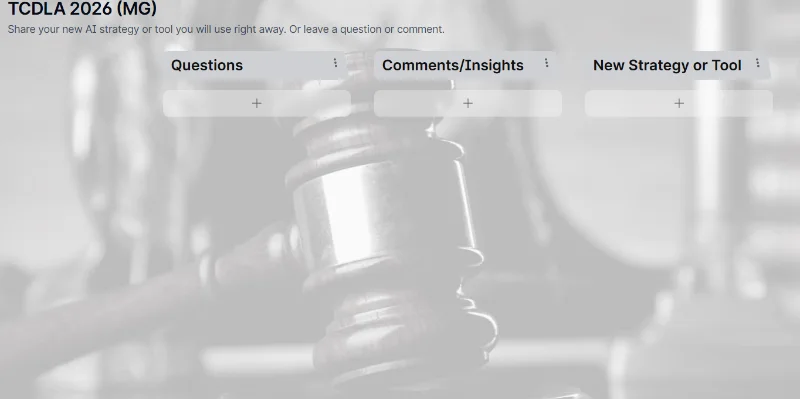
Share Your Questions - Padlet

Resources for You
Access the Session Walkthrough
This resource provides an overview of the day with links to all activities. It’s a great place to start to see the outline of the day.
AI Fluency Assessment
Five quick questions that place your practice on a four-level ladder. A good gut check.
- Complete the AI Fluency Assessment
- Plan to discuss your results with someone across the room and respond to the reflection question(s)
Slide decks
The presentations. Four short, self-contained slide decks you can reopen any time: an overview, Ethical Foundations, Risk-Reducing Practices, and Guardrails and Takeaways. Each one carries its own speaker notes, so they read cleanly even without a presenter.
Website and Handouts
- Website with all resources
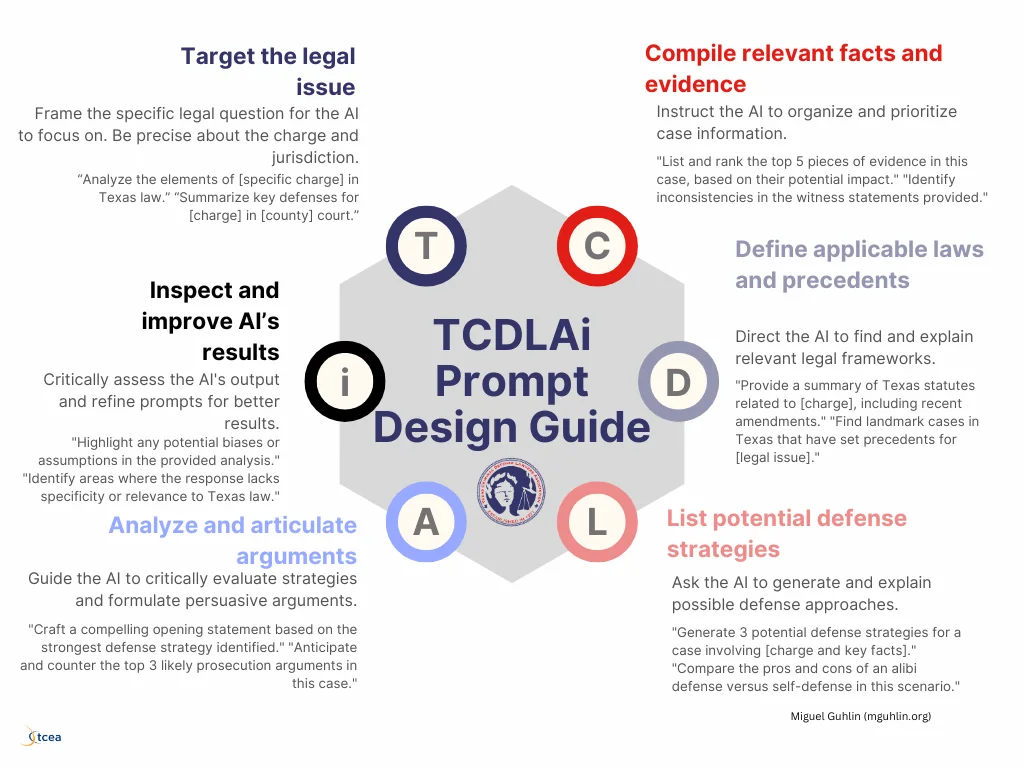
- TCDLAi Prompt Design Guide
- Ethical Guardrail Checklist - Run this before any AI-assisted work leaves your desk.
- CARE Framework for Gen AI - Want to explore more about ethics and Gen AI? Read this blog entry and consider the CARE Framework.
- Legal Ethics Scenario Randomizer - Explore a variety of legal ethics scenarios.
- PBL Scenario Lab - This is where you work a fictional fact pattern from a weak prompt to a strong, source-grounded one and watch the risk drop at each step.
- Scenario Bank - Fifty more fictional Texas fact patterns, each with a ready to run prompt and a link to the actual statute. A place to keep practicing after today.
- Legal Prompt Library - This library is sorted by task, every prompt written to push you toward verification.
Inspired by Session(s)
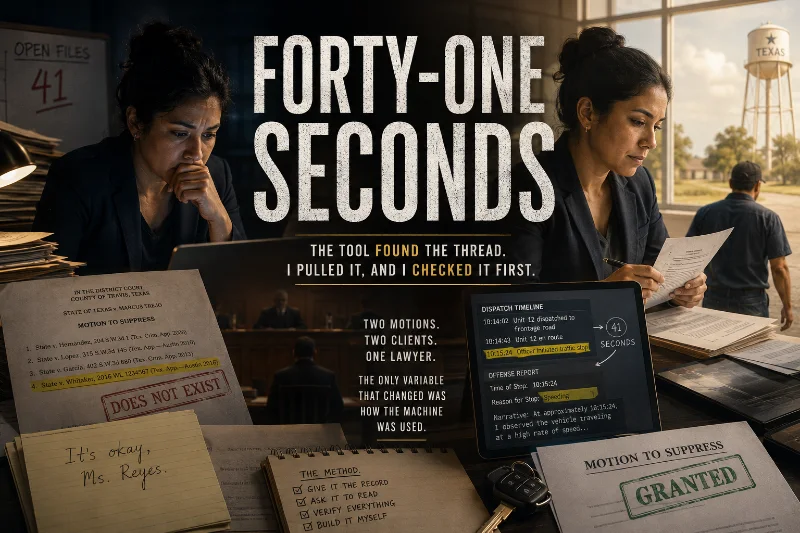
- Storytelling for the Defense - This resource was inspired by Monique Spark’s presentation on Storytelling. I thought it might be fun to see what Gen AI could do with extending those ideas.

Bots and Custom GPTs
These are ready-made, defense-focused assistants with the framework and the guardrails built in. Prefer to build your own copy in Claude, ChatGPT, or another tool? Download the bot files as a single zip from the resources page and upload the pieces. Remember that if you’re using the free version of an AI chatbot, you have no assurance of confidentiality.
- BoodleBox Bot - Legal AI - Use free code provided to get free access (requires sign-up with a credit card) to a Pro level bot.
- OpenAI ChatGPT Custom GPT - Legal AI
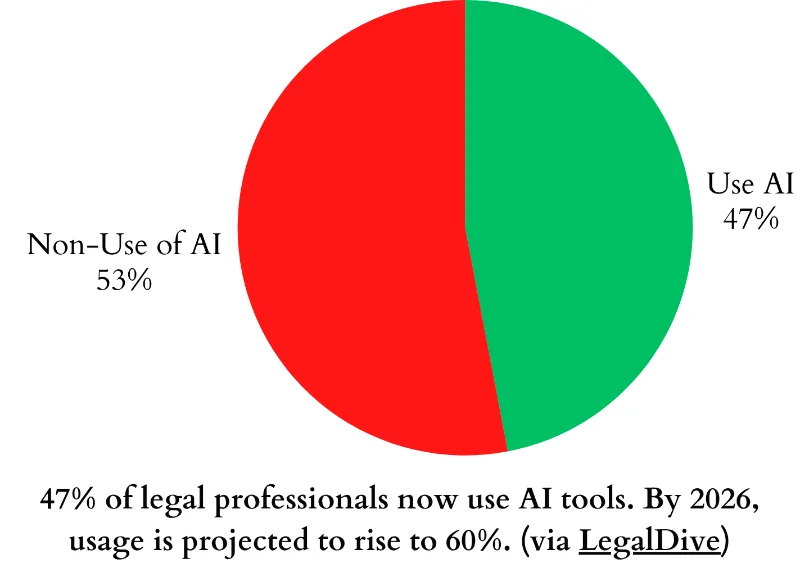
AI could free 266 million hours annually for U.S. lawyers, translating to $100,000 in billable time per lawyer (Thomson Reuters Legal).
Miscellaneous Resources
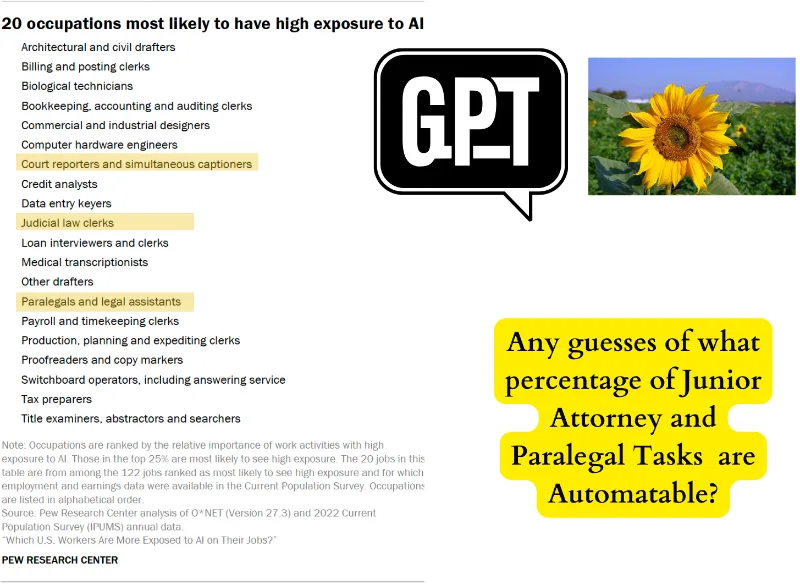
- JobsGPT (direct link to ChatGPT. To use it, you must be logged into ChatGPT with a free or plus account). This is Marketing AI Institute Founder and CEO Paul Roetzer’s custom GPT that breaks down how AI might affect your job and forecasts new roles emerging in your field. Learn more about it.
- View Presentation #1: AI in Law - Tools, Tactics, Ethical Traps
Explore how to ethically leverage AI tools to boost productivity and avoid critical errors in your legal practice. Through practical examples and cautionary stories, you’ll learn to integrate AI effectively for research, drafting, and presentations, all while navigating essential ethical responsibilities. The TCDLAi Prompt Design Guide is shared. - Watch video of Presentation #1
Practice Safely
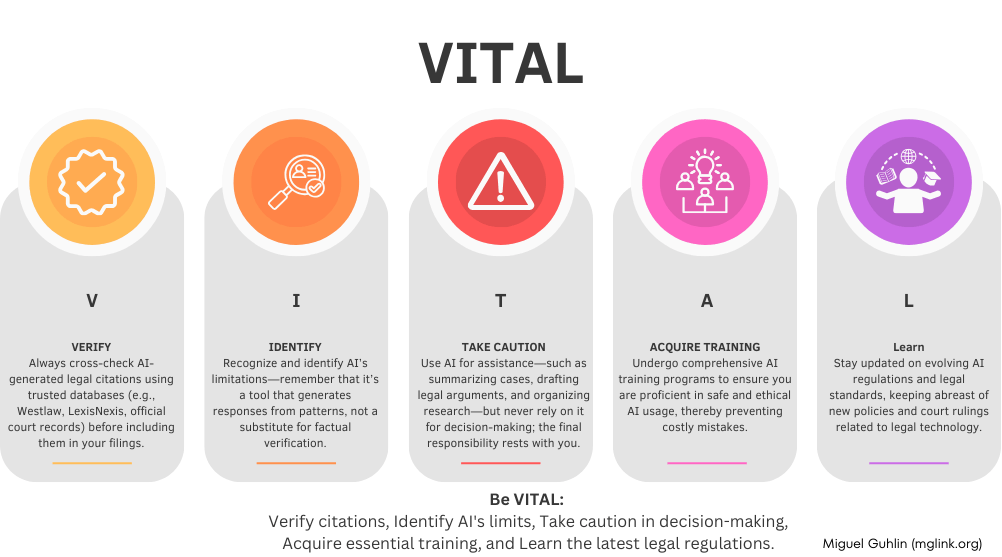
Every scenario on the site is fictional, and it is fictional for a reason. Never put confidential, privileged, or client-identifying facts into a consumer chatbot. Strip the identifiers, or use a stand-in, and save real client material for tools with proper data terms. When AI hands you a case, treat it as a lead to verify, not an authority to cite. Courts across the country have sanctioned lawyers who filed briefs built on citations the machine invented. That habit, opening the source yourself, would have saved every one of them.
Choosing the Right Tool
Any of these free chatbots will carry you through everything on the site: Claude, ChatGPT, Z.ai, or Mistral. If you have none set up, the BoodleBox bot above is the fastest way to start. Remember to get the code from the facilitator.
IMPORTANT: Even paid tools like Anthropic Claude, Google Gemini, Microsoft CoPilot, OpenAI’s ChatGPT will use your data for training purposes. You should use a chatbot that you have an enterprise level agreement with to ensure your data is protected. BoodleBox, at $20 a month, has enterprise agreements in place and safeguards your data, making it the best secure option. Again, remember to de-identify your data before putting it in any chatbot.
Multi-lingual Resources
The resources page reads in several languages, so it is easy to share across your office. The non-English translations are AI-assisted and pending review, and the underlying materials are in English. If a paralegal, an investigator, or a newer attorney wants a low-stakes way to try structured, verifiable AI, the Scenario Bank and the fluency self-check are a friendly place to begin.
Take it with you
Bookmark mglearn.github.io/legalai, run the checklist before anything leaves your desk, and keep exploring the Scenario Bank when you have ten minutes. Use the tools well, keep the judgment yours, and stay accountable.
These materials are for education and are not legal advice. Rule and statute references are illustrative; confirm the current text before you rely on them.
Gen AI Tools Specific to Law (no endorsement implied)
- Explore the Legal Gen AI Market Atlas - A current, evidence-weighted guide to credible legal generative-AI products: where they fit, what they cost, what users report, and where human verification still matters.
- AI Tools for Email, Legal, Chat, and Project Management - A curated list of AI tools for note-taking, legal, email, project management, and more. This is changing constantly.
- AI-Powered Audio/Video Transcription for Free - Whisper is a free, open-source application that leverages OpenAI’s Whisper model for offline transcription. It supports GPU acceleration and can transcribe audio and video files or live audio from a microphone.
Some additional items for your consideration:
- Bloomberg Law Brief Analyzer
- Briefpoint (Contact for pricing)
- Casetext CoCounsel (~$400/month)
- Grata
- Harvey (Contact for beta program pricing)
- LexisNexis Precision (Enterprise pricing)
- Luminance
- Paxton AI (Contact for pricing)
Infographic - TCDLAi Prompt Design Guide
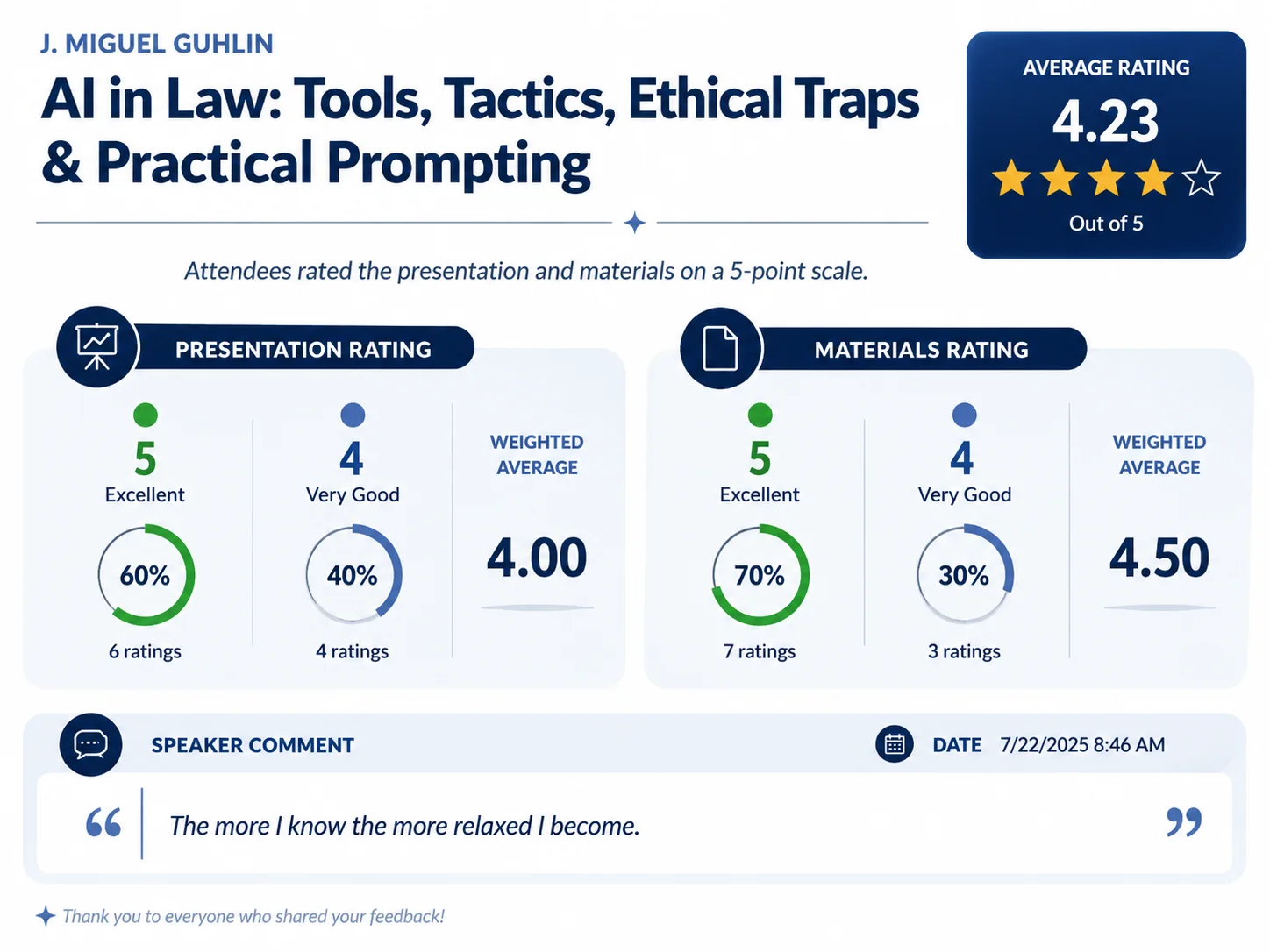
Feedback on Session
Thanks to TCDLA for sending me feedback on the session. Here’s what ChatGPT did with the data: