Given the concerns raised, I asked Gemini “What the scientific consensus was on screen time effects on K-12 students?”
The result:
- The “Displacement” Effect: The primary risk is that digital use replaces essential activities like sleep, exercise, and face-to-face interaction. source
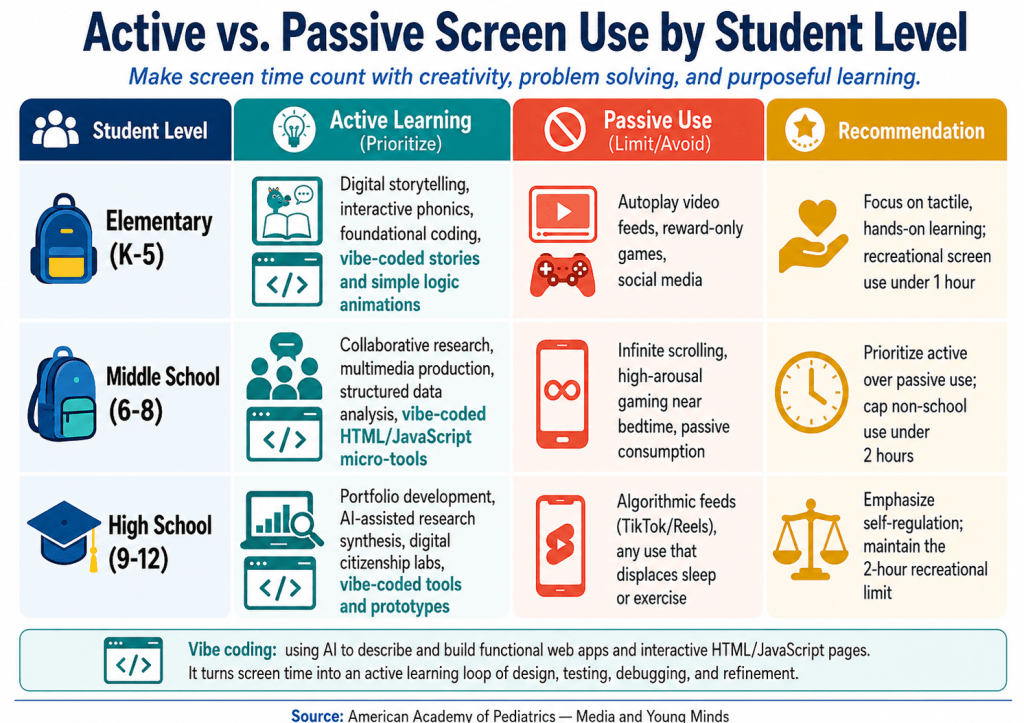
- Active vs. Passive Usage: “Active” use (content creation, coding) is associated with better cognitive outcomes than “passive” consumption (scrolling social media). source
- The Two-Hour Threshold: Recreational use exceeding two hours daily is linked to a measurable increase in mental health risks for adolescents. source30278-5/fulltext)
- Sleep Disruption: Blue light and high-arousal content within an hour of bedtime suppress melatonin and delay sleep onset. source
- Reading Comprehension: Students often demonstrate higher retention and deeper comprehension when reading long-form text on paper versus a screen. source
- The “Technoference” Factor: The mere presence of a smartphone can reduce cognitive capacity; performance improves when devices are in a separate room. source
- Social Media and Self-Image: Social media usage is more strongly correlated with negative well-being than other screen activities due to social comparison. source
- Physical Health Risks: Excessive screen time is consistently linked to sedentary behavior and an increased risk of obesity. source
- Executive Function in Early Childhood: For younger students, high screen use is linked to delays in impulse control and executive function development. source
So, what should we be doing with tech in schools?
Discover more from Another Think Coming
Subscribe to get the latest posts sent to your email.
 Another Think Coming