This article just blew my mind (sigh, I need a new expression of astonishment):
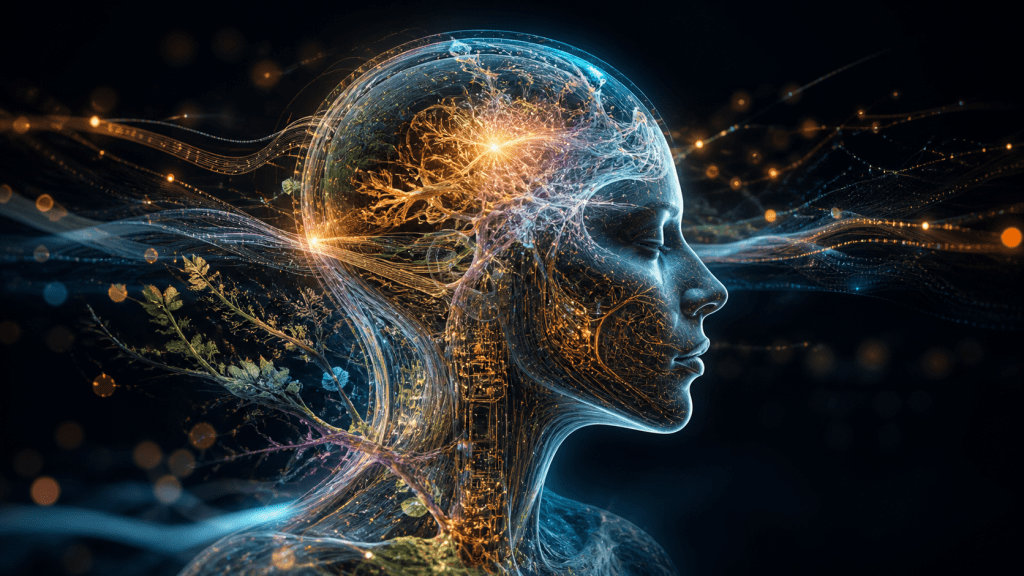
Minds are neither software nor hardware—they are execution states.
In computing, an execution state is the complete configuration of a running process at a particular moment in time. It’s not the program code (software) that defines what could happen, nor the physical circuits (hardware) that make computation possible. It’s the active, temporally unfolding activity that determines what’s happening now.
…Minds are not the hardware, not the software, but the ongoing collaboration of the body’s components.
Read the article, It’s like this: Why perceptions are our realities-Minds do not create experience, experience creates minds, by Matthew Sheffield over at Flux.
So my takeaway is that once the body’s components suffer sufficient alteration, damage, or cease function, that’s it because the ongoing collaboration changes or ceases. Without the body components, there is no mind, no backup exists or is possible at this time.
The rest of the article is fascinating as well, but this is the idea I came to see elaborated more fully. Sheffield, the author, had referred to it in this article by Richard Dawkins and the AI psychosis.
This idea of the AI as person seems, well, crazy to me. In an article Sheffield references Benjamin Riley’s piece:
as Colin Fraser and Murray Shanahan argue, an LLM is better thought of as a role-playing character, a fictional entity that’s been trained to produce text that’s suggestive of certain personality traits, the same way an actor is trained to say and do things that’s suggestive of their character. LLMs, like actors, create the illusions of personhood.
Alas, I will have to work through this all again with pen in hand. Maybe a nap will do.
Discover more from Another Think Coming
Subscribe to get the latest posts sent to your email.
 Another Think Coming