
6. Is Your Change Process Protecting the Status Quo?
“Be willing to try, learn from failure, and fail forward.”
— Steven Priest, education innovation leader
Committees, listening sessions, pilots, and phased rollouts can support responsible decisions. They can also delay action until the original opportunity disappears.
A pilot without authority, funding, deadlines, or success measures is not much of an experiment. It is a way to look busy without placing existing programs at risk.
Education organizations already know that change is accelerating. CoSN’s 2025 Driving K–12 Innovation report identified Gen AI, AI literacy, and organizational readiness as central issues requiring experimentation, collaboration, and new approaches to leadership.
The answer is not reckless change. It is shorter cycles between evidence, decisions, and action.
One Thing to Do
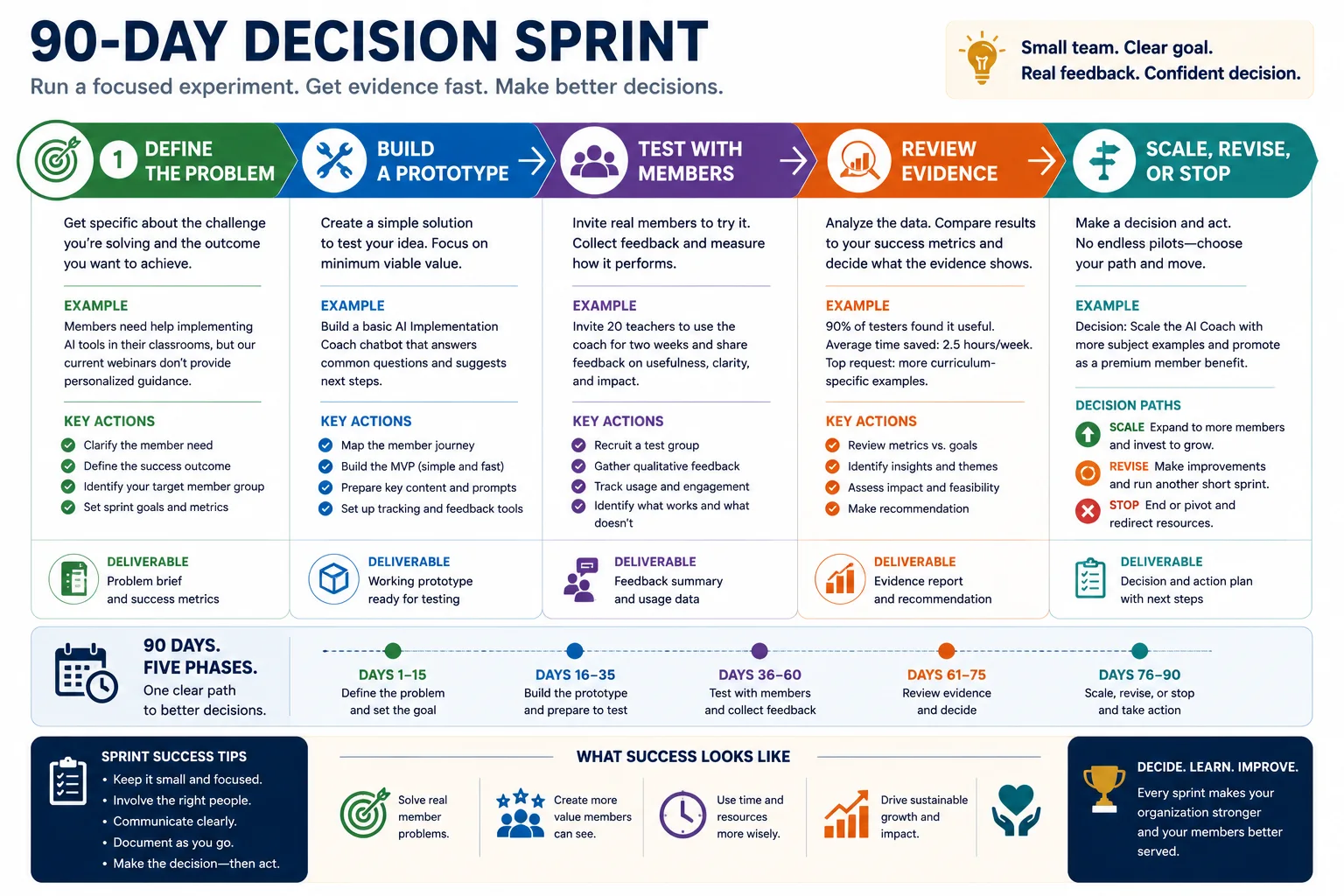
Replace one standing committee with a 90-day decision team. Give it a specific problem, a modest budget, access to the necessary data, and authority to test one solution.
At the end of 90 days, leadership must scale it, revise it once, or stop it. “Continue piloting” should not be an available fourth choice.