
One philosopher that I immediately ignored early on? Bertrand Russell. I read he was an atheist, and thought, “Why would anyone read an atheist’s thoughts on anything?” I doubt my thinking was even that coherent. I simply blocked him out. Out of sight, no harm to me. Oh, I’ve come a long way since that nineteen year old college student.
But even if I have begun reading Bertrand Russell’s comments (conveniently quoted on Facebook via a group I joined), I find applying the wisdom of his words a little more difficult.
“If an opinion contrary to your own makes you angry, that is a sign that you are subconsciously aware of having no good reason for thinking as you do. If some one maintains that two and two are five, or that Iceland is on the equator, you should feel pity rather than anger, unless you know so little of arithmetic or geography that his opinion shakes your own contrary conviction.
The most savage controversies are those about matters as to which there is no good evidence either way. Persecution is used in theology, not in arithmetic, because in arithmetic there is knowledge, but in theology there is only opinion. So whenever you find yourself getting angry about a difference of opinion, be on your guard; you will probably find, on examination, that your belief is going beyond what the evidence warrants.”
— Bertrand Russell, An Outline of Intellectual Rubbish (1943) Image: Bertrand Russell on the grounds of his home at Penrhyndeudreath, Gwynedd, United Kingdom, 3 March 1965.
”Feel Pity Rather Than Anger”
I often encounter these issues in the face of bad leadership and management. I recognize my own unwillingness to think through, and reason out exactly why someone’s (or my own) way of doing things is wrong. The process eludes me, no matter what I read or how many notebooks I fill with handwritten notes.
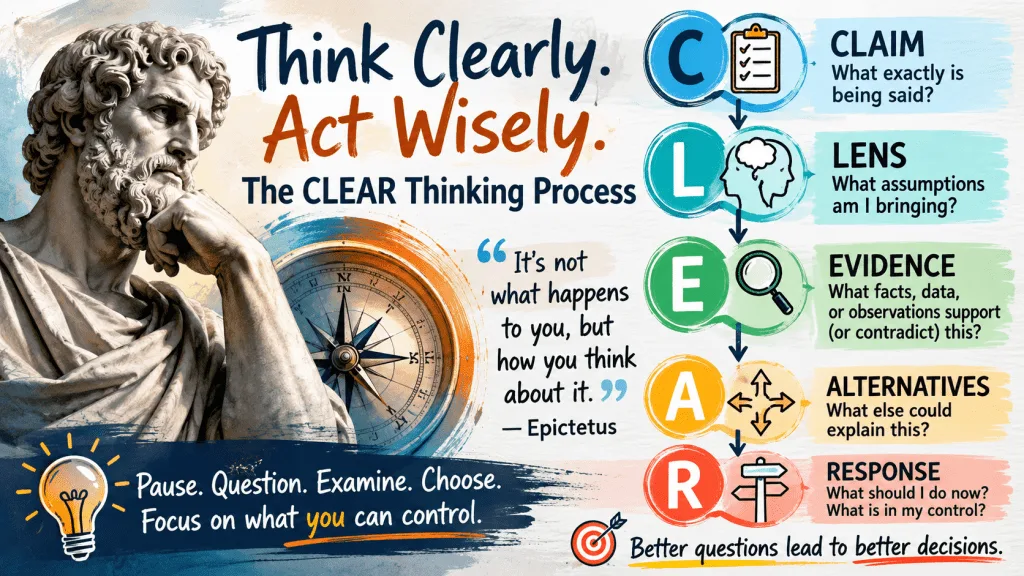
Despite knowing better, I still tend to rely on that instinctive feel of whether an idea is good or bad. But forget to ask, “Good for who? Bad for whom?” (hey, I never remember the correct use of who vs whom).
The problem I have with Russell’s words here are that some people, even if they earn our pity for their incorrect stand, disconnected from evidence, they still have the power to hurt others. I can make a list of people who had institutional power but failed to care for the people they served. Their cavalier attitudes left those people scrambling for jobs, money, and threatened their families. It’s always been like that, but I find that these types of actions kindle my ire.
And, that self-righteous anger is dangerous… because it is almost always based on a feeling of good or bad rather than dispassionate thinking.
Simply, I don’t give a pigeon poop about that type of leader. I find them boot-lickers and schemers trying to find a way to get ahead, promoting their ideas while mis-representing the ideas of others or silencing dissent. Instead, they gather around themselves people who will cheer them on, as if their ideas were the only ones worthy of acclaim.
For me, the only ideas worthy of acclaim are the ones that work, that get the result that works for as many as possible.
Matters As To Which There is No Good Evidence Either Way
When there is no good evidence, the despot leader sets out to find evidence that only matches their goals. Or better yet from their perspective, they work to prevent gathering evidence at all.
That is why you see so little evidence collected in authoritarian states, a condition true in organizations and companies that mirror the fascist state.
A Caution
I must sit a little longer with this quote from Russell.
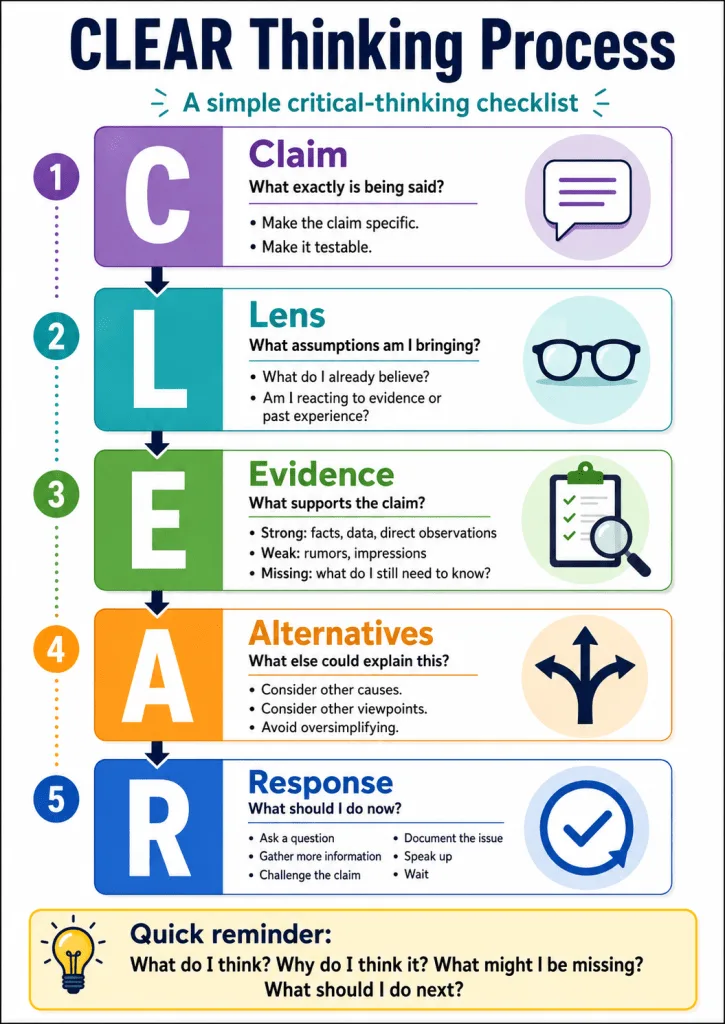
“What do I think, why do I think it, what might I be missing, and what should I do next?”
Ask an AI a question and you get an acronym. To solve my dilemma of clear thinking, it suggests…